The complete guide to brand consistency across channels and teams in 2026


TL;DR
Most teams that struggle with brand consistency already have brand guidelines, and everyone involved in creating content has seen them. The brand still drifts, because it passes through dozens of small interpretations between the guidelines and the published piece: the brief, the writer, the AI tool, the reviewers and the local market. Brand consistency holds when the operation carries the brand at every one of those points, so nobody has to rescue it in review. This guide shows where consistency breaks, what working brand governance looks like, and how to build it, including for AI.
Your brand guidelines run to dozens of pages. The agency has them, your freelancers have them, and they're linked in every brief. Someone has even loaded the approved tone of voice into your AI tools, so everyone who creates content for you has, technically, been told what the brand should sound like.
And yet the LinkedIn post sounds like one company, the blog sounds like another, and the campaign copy has been through six stakeholders and sounds like nobody in particular. Your brand manager is still leaving the same comment on drafts: “this doesn't feel like us”. At that point, adding another page to the guidelines is unlikely to help.
As Penny Warnock, Head of Content at Contentoo, puts it: “It's never really about the content itself, but the process behind it.”
Brand consistency is the practice of making every piece of content reflect the same identity, voice and positioning, wherever and by whomever it's produced. The stakes have grown. Edelman's 2025 research on brand trust, covering 15 markets, found that trust now ranks alongside price and quality as a reason to buy. A brand that sounds like a different company on every channel gives buyers less reason to trust any single version of it, and trust is slow to rebuild once it slips.
The pressure has also changed shape. Contentoo's research, The Rant Report: State of Content Teams, found that 85% of content teams now use AI regularly, so the same handful of guidelines has to survive far more drafts, from far more contributors, than it was written for. Brand consistency was already hard to hold. AI has multiplied the number of places where it can slip.
Why brand consistency breaks even when everyone follows the guidelines
When consistency slips, the usual response is to fix the guidelines. A brand manager spots drift, the brand book gets a refresh, more tone examples are added, the new version rolls out, and a few months later the drift is back. The guidelines improved; the way content gets made stayed the same.
The chain of small interpretations
Follow a single piece of content from guideline to publication and the problem becomes visible. The brief interprets the guidelines one way, often in a single line about tone. The writer reads that line through their own sense of the brand. An AI tool adds its own version, shaped by whatever context it was given. The third stakeholder in the approval chain softens the point of view to avoid a difficult conversation. Localisation smooths out a phrase that only worked in English.
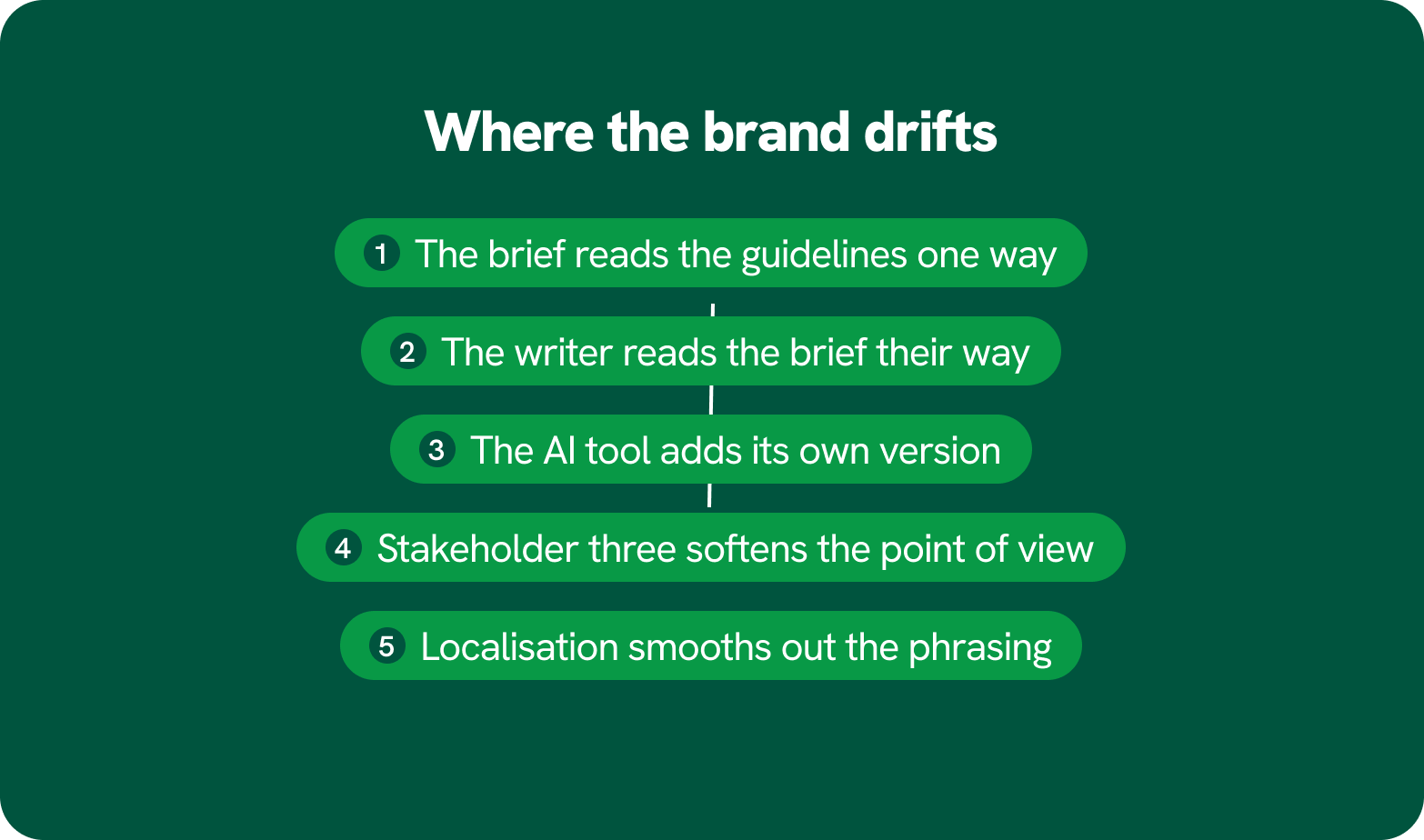
Nobody in that chain ignored the guidelines. Each person made a reasonable decision on their own, and the brand was diluted through dozens of them. Simone Engbo Hansen, Content & Communications Lead at Airtame, described how this feels from the inside in The Rant Report: “Someone had to sign off, then it had to go to the board, and the diluted version came through the manager three months later... That's where a content angel loses her wings.”
The report shows how common that last step is: 40% of teams cite too many stakeholders diluting the message as a quality killer, one of the common enterprise content workflow mistakes that slow content down in larger organisations.
Teams already care about this
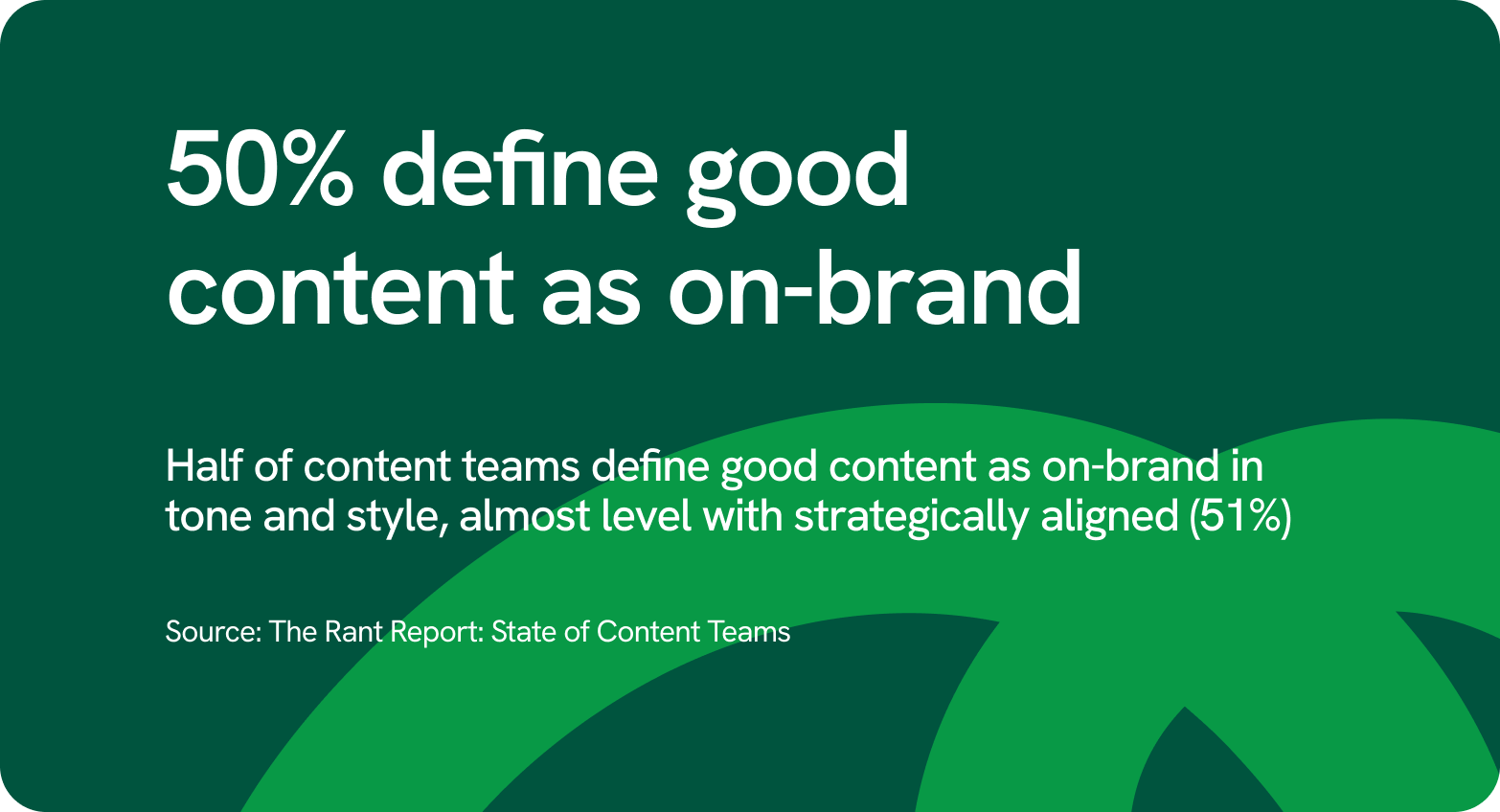
None of this comes from indifference. In the same report, 50% of teams define good content as on-brand in tone and style, putting brand voice almost level with being strategically aligned (51%) and engaging and well-written (51%). Teams know brand consistency matters and are trying to protect it.
It's also tempting to assume the brands you admire have this solved. Most are dealing with the same chain of interpretations, often with more markets and more contributors than you have. The ones that look consistent have usually built something that holds the brand steady between the guidelines and the published piece.
What brand consistency is built on
Brand consistency rests on three layers. Most guides cover the first two in detail and treat the third as an afterthought, yet the third decides whether the first two survive contact with real production.
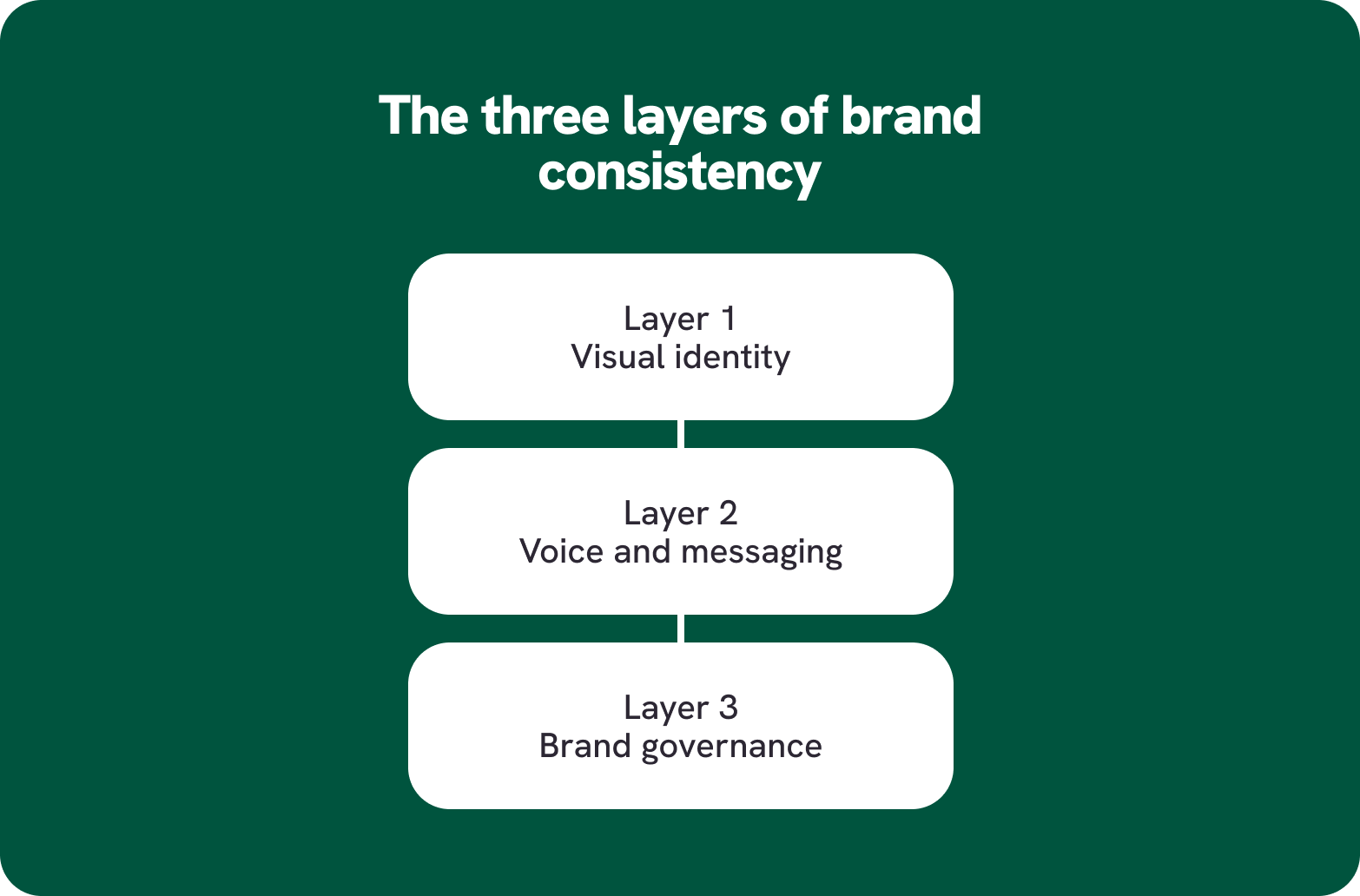
Visual identity
This is the layer most teams get right first: logo, colour palette, typography and brand assets. It's also the easiest to enforce, because a wrong colour or a stretched logo is visible at a glance. Visual identity is necessary for a recognisable brand, and it's rarely where consistency breaks.
Voice and messaging
This layer covers tone of voice, the core brand message, the brand story and the way you describe your customers' problems. It's harder to hold, because two writers can follow the same tone of voice guidance and still sound different, and review often comes down to “this doesn't feel right” without a clear fix. Consistency still leaves room for tone to flex by channel, from a measured whitepaper to a lighter social post, as long as the voice underneath stays recognisable.
Brand governance
Brand governance is the operational layer that carries the first two into every piece of content. It's easiest to understand by picturing two teams on an ordinary Tuesday.
In the first team, a writer receives a brief that names the topic and asks for “our usual tone”. They open the brand book, interpret it, and draft. An AI tool fills in a section from a generic prompt. Three reviewers each comment on tone according to their own sense of the brand, and the draft goes round an unmanaged feedback loop until one of them wins. The localisation partner adapts it for Germany with no guidance on which phrases must survive. The brand manager catches what she can at the end, and the rest goes live.
In the second team, the brief already carries the voice rules, the core message and two examples of the tone done well. The writer and the AI tool work from the same approved brand context. Reviewers check the draft against criteria agreed before writing started, and one named person makes the final brand call. Localisation works from written rules about what can change for each market and what must stay. The brand manager reviews for judgement, and finds little to fix.
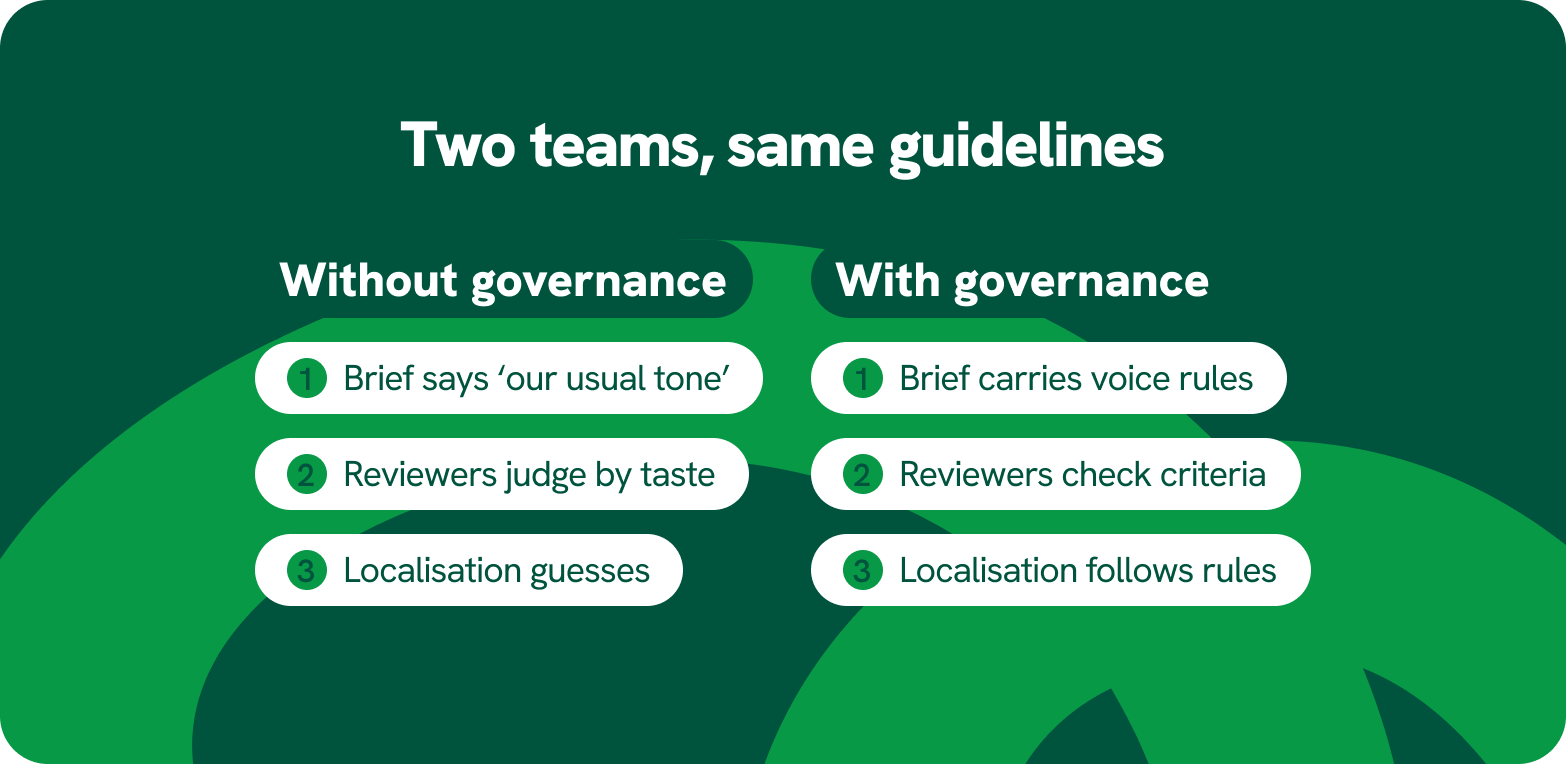
Both teams care about the brand and work equally hard. The difference is that the second team's system makes it difficult to go off-brand in the first place, so the brand doesn't need rescuing in review. That is what brand governance means in practice.
How to build the operation
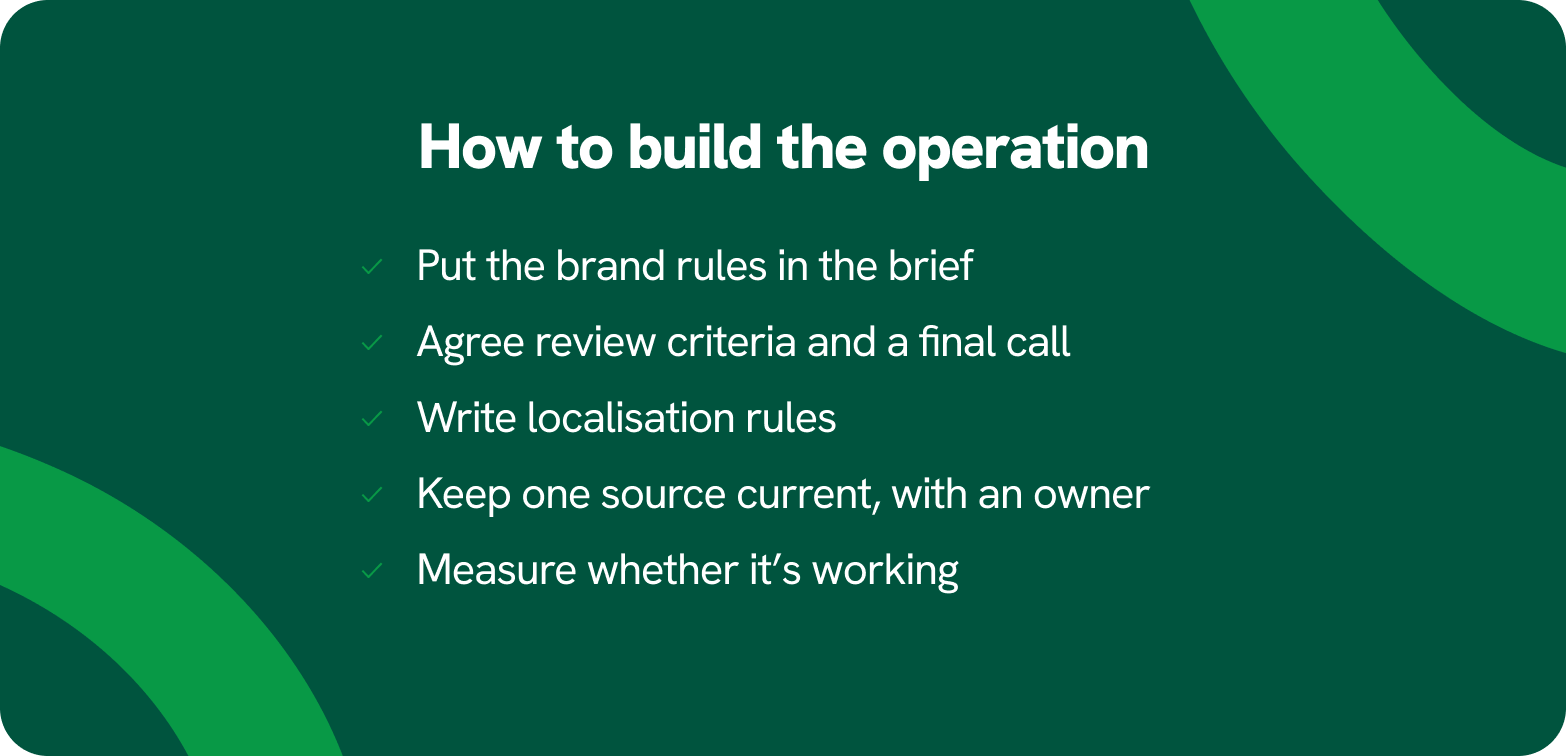
Once the problem is clear, the work is practical. The steps below turn the second team's Tuesday into something you can set up and maintain.
Put the brand rules in the brief
The brief is the first place the brand is interpreted, and The Rant Report found that 56% of teams name poor or incomplete briefs as the top quality killer. Add four fields to every brief: the tone for this piece and audience, with one example of it done well; the core message or positioning line the piece must carry; the terms to use and the ones to avoid; and anything the piece must never say or claim. For a product launch blog post, those fields might read: tone, confident and practical, like last quarter's customer guide; core message, the new feature saves finance teams a day a month; terms, use “workspace” and avoid “platform”; never say, any claim about compliance certification until legal has signed off. Four lines like these give the writer, the AI tool and every reviewer the same starting point, which is where consistency begins.
Agree the review criteria and name one final brand call
Stakeholder dilution happens when every reviewer judges tone by personal preference. Agree three to five review criteria before writing starts, such as “carries the core message”, “matches the tone example”, “uses approved terms” and “makes one clear claim”, and ask reviewers to comment against them. Then name one person who makes the final brand call when reviewers disagree. The difference shows up in the comments themselves. A preference-based comment reads “I'd soften this a bit”, and the writer has to guess what the reviewer wants. A criteria-based comment reads “the second paragraph drops the core message”, and the writer knows exactly what to fix.
Write localisation rules
Localisation is where nuance quietly disappears. For each market, write down what can adapt (examples, idioms, cultural references, formality) and what must stay (the core message, product names, claims and the brand's point of view). In German, for example, the rules might allow a more formal register and local business examples, while requiring the English product names and the exact positioning line to stay as they are. A short rules document per market saves hours of back-and-forth and protects the parts of the brand that matter most.
Marley Spoon shows what this protects. The meal kit company runs two brands with distinct voices, the premium Marley Spoon and the budget-friendly Dinnerly, across eight markets from Australia to Sweden, and localising in-house meant delays of up to two weeks per campaign. Contentoo matched each brand with writers who could adapt to its tone in every market, cutting localisation time from up to two weeks to under one, while both brands kept consistent messaging across all eight markets.
Keep one source current, and give it an owner
Shared templates and asset libraries help, but access alone keeps nothing current. Someone has to own the system: update the tone examples when positioning changes, retire outdated templates, and make sure every agency, freelancer and AI tool works from the latest version. In practice that means a monthly routine: reviewing which review comments keep recurring and turning them into rules or examples, checking that new contributors have the latest version, and retiring anything that no longer matches the positioning. Without an owner, the single source of truth drifts out of date and teams start keeping their own copies.
Know what running it in-house costs
Building this operation internally is a real option, and it's worth costing honestly. The templates and rules are the visible part. The ongoing part is a person, or a share of several people's time, who keeps the brand context current, onboards every new writer, agency and tool, and enforces the criteria across markets as the team changes. That cost repeats every quarter.
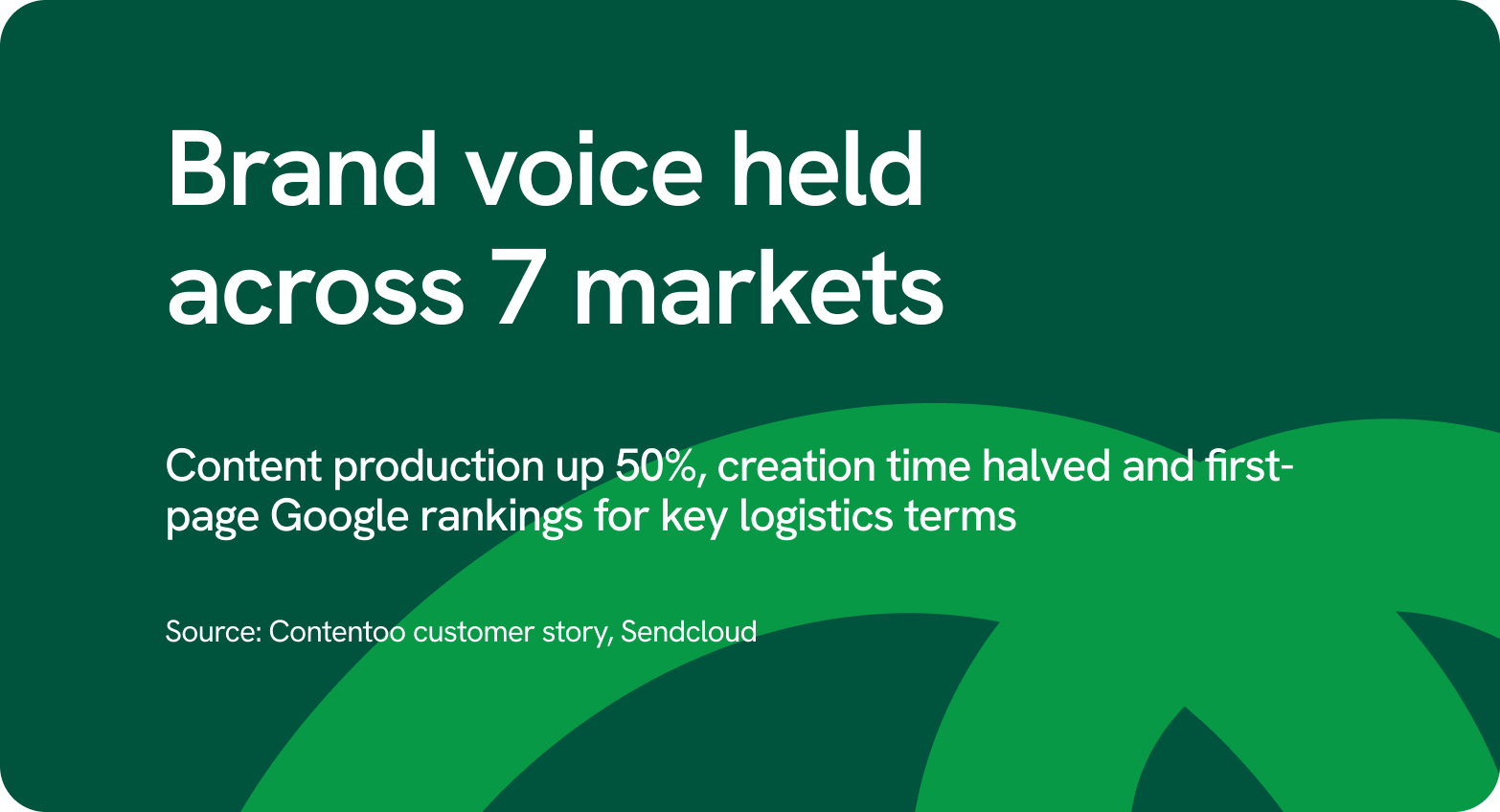
This is the work Contentoo's managed operation is built to carry. Shared brand context reaches every draft, the Compliance & Brand Checker checks voice, tone and compliance, and vetted experts matched by subject and language make the editorial calls. Sendcloud shows what that looks like in practice. As it expanded into seven new markets, including Germany, France and Italy, its small internal content team struggled to keep up with the demand for local content. Contentoo matched it with specialised writers who knew logistics and e-commerce, and tailored the content to each region while keeping it on-brand. Sendcloud's brand voice held across all seven markets, while content production rose by 50%, content creation time halved and the company reached first-page Google rankings for key logistics search terms. The managed model also took the coordination off the in-house team. As Sendcloud's Head of Content, Iris Dings, put it: “Working with Contentoo freed up our team to focus on the big picture.”
Measure whether it's working
Governance needs a few signals that tell you whether the brand is holding. Three are worth tracking from the start: how many review rounds a piece needs before its tone is approved, how many reviewer comments fall outside the agreed criteria, and how often the same tone or messaging correction comes back. A periodic content audit of published pieces adds the reader's view of whether the brand sounds the same across channels. If review rounds fall and repeat corrections disappear, the operation is carrying the brand. If they don't, the gap is usually in the brief or the shared brand context, and that is where to look first.
When AI becomes another contributor to the brand
AI changes one thing about brand consistency above all: it adds a contributor who produces drafts faster than anyone else on the team and knows only what you've given it. Simone Engbo Hansen's description in The Rant Report is a useful way to think about it: “Working with an LLM is like working with a team of juniors. You are in charge of the brief.”
Onboard AI the way you'd onboard an agency
A new agency gets the brand guidelines, examples of work you love, the positioning, the vocabulary, and a clear list of what it must never say or change. AI needs the same onboarding, held in one place every tool can draw on: the approved brand context, a handful of examples of the voice done well, the positioning and core messages, the terminology, and the list of things it must never claim or alter. A never-say list can be short and specific: competitor names in comparisons, guarantees the legal team hasn't approved, outdated product names, and phrases the brand has deliberately retired. The more of that context it receives at the point of writing, the less of the brand gets rebuilt by guesswork.
Hold AI output to the same governance
AI-assisted drafts should meet the same review criteria and the same final brand call as everything else. That keeps the standard in one place and stops a looser AI standard from fragmenting the brand voice across the team.
It's worth keeping the risk in proportion. Only 7% of teams in The Rant Report blamed over-reliance on AI for quality problems, against 56% who named poor briefs. In Contentoo's reading, the gaps that predate AI matter more than the tool itself, and AI sends more content through them. The same report found that about 51–54% of teams that restructured their workflow around AI were very confident in their content quality, compared with about 34% of teams that used AI only to go faster. The data shows an association, and it points the same way as everything above: teams that rebuilt their workflow around AI were more likely to trust their output.
A five-minute brand consistency check
Answer each question with a yes or a no; every “no” points to a section above.
- Does every brief name the tone, the core message, the terms to use and avoid, and what the piece must never say?
- Do reviewers comment against agreed criteria, and is one person named to make the final brand call?
- Does each market have written rules for what can change in localisation and what must stay?
- Is there one current source of brand context that every writer, agency and AI tool works from, with a named owner?
- Does AI-assisted content go through the same review criteria as everything else?
- Do you know what it costs, in time and people, to keep all of this running?
If you answered “no” to the first question, start there, because every later step depends on what the brief carries.
Brands used to be judged on how they looked. Increasingly, they're judged on whether they sound like the same company everywhere they show up, and that's decided in the operation behind the content.
Ready to make brand consistency hold across every channel?
Contentoo runs the operation that keeps your brand consistent: shared brand context in every brief and draft, the Compliance & Brand Checker on voice, tone and compliance, and vetted experts matched by subject and language who own the editorial calls. Your team keeps the strategy and the final say. See how it works for teams managing content complexity across markets and contributors.
FAQs
These are the questions content and brand leaders ask most about brand consistency.
What is brand consistency?
Brand consistency means every piece of content reflects the same identity, voice and positioning, whoever produced it and wherever it appears. It's held, or lost, in the steps between the brand guidelines and the published piece.
Why does brand consistency break even when everyone has the guidelines?
The guidelines get interpreted at every step: in the brief, by the writer, by AI tools, by reviewers and in localisation. Each decision is reasonable on its own, and together they dilute the brand.
Why is brand consistency important?
A brand that sounds the same everywhere is easier to recognise and trust, and Edelman's 2025 research found that trust now ranks alongside price and quality as a reason to buy. With AI multiplying the number of drafts, there are also more places for the brand to slip.
What is the difference between brand guidelines and brand governance?
Brand guidelines define how the brand should look and sound. Brand governance is the operation that carries those guidelines into every piece of content, through briefs, shared brand context, agreed review criteria, one final brand call and localisation rules.
What does brand governance look like in practice?
The brief carries the voice rules and core message, writers and AI work from the same approved brand context, reviewers check against agreed criteria, one person makes the final brand call, and localisation follows written rules. The brand then doesn't need rescuing in review.
Who should own brand consistency?
One named person should own the shared brand context and make the final brand call when reviewers disagree. They also keep the rules current as positioning, markets and contributors change.
How does AI affect brand consistency?
AI is a fast contributor that knows only the context it's given, so it needs the same brand context, examples and never-say list as an agency, and its drafts should meet the same review criteria as everything else. In The Rant Report: State of Content Teams, only 7% of teams blamed over-reliance on AI for quality problems.







.webp)