Brand voice governance is your operating system for AI-era content

.png)
TL;DR
Brand voice governance is not a one-time draft that you write once and forget. Consider it a living system that keeps your content recognisable even when dozens of people (and their AI tools) are publishing at the same time. Vague descriptors like "be conversational" crumble the moment someone uses them to draft an invoice email. What works instead: hero examples that show what good looks like, channel-specific rules that let your voice flex without breaking, and room for authentic expert voices that give your brand a competitive edge in AI visibility and SEO. This article breaks down what governance actually requires, why most tone-of-voice documents fail the AI stress test, and how to build a system that holds up across teams, markets, and formats.
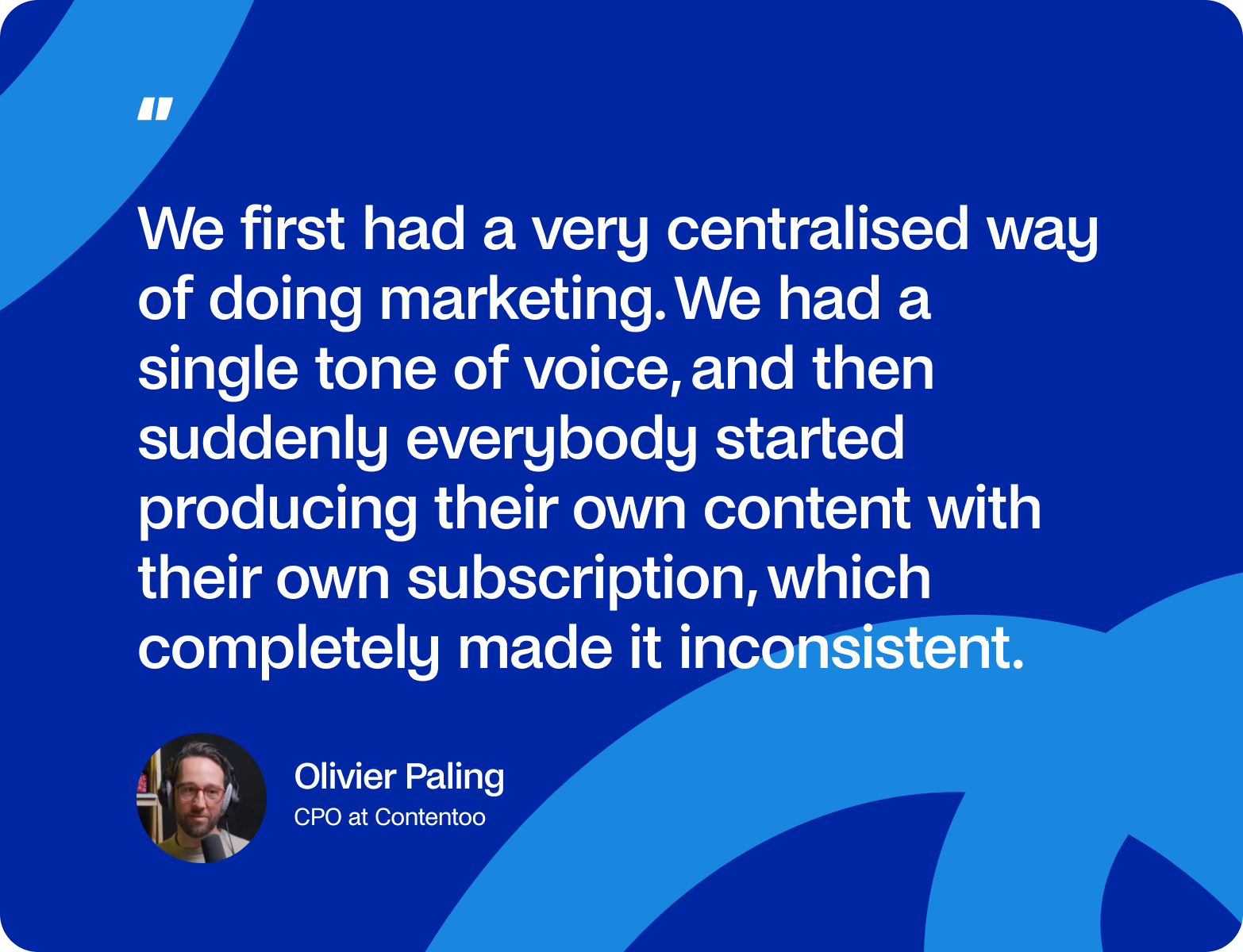
You spent years building a brand voice that felt distinctly yours. Then, six months later, every team got access to AI writing tools, and your voice started blending in with everyone else’s. The cadence drifted. The edge disappeared. You opened a piece of customer-facing copy and couldn't tell whether your own company wrote it or a competitor did.
That dissonance becomes a governance problem. And fixing it means treating brand voice governance not as a document sitting in a shared drive, but as an operating system, one with live inputs, feedback loops, and human judgment baked into the workflow.
Your tone-of-voice doc isn't governance
Somewhere in your shared drive sits a tone-of-voice guide that your comms team wrote during a rebrand, that stakeholders who have since left the company signed off on, and that nobody has touched since "content marketing" still meant blog posts and the occasional whitepaper. It has the structural integrity of a sandcastle at high tide.
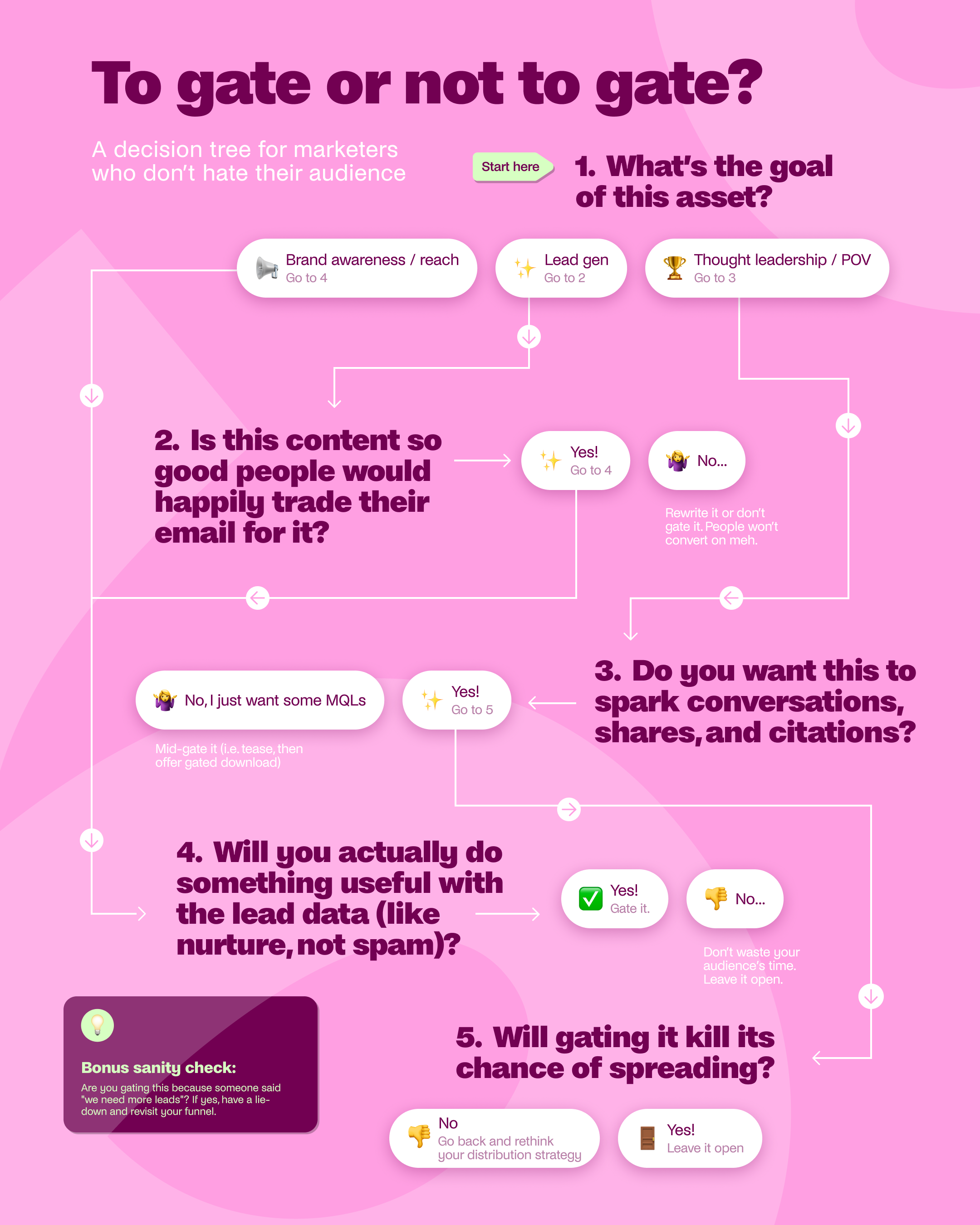
Brand voice governance is a living system and should not be treated like a static reference. Here is what separates the two:
- A static guide describes your voice in adjectives; a governance system shows it through approved examples that teams can reference before they write.
- A static guide lives in a folder nobody opens; a governance system is embedded in your content workflow, surfacing rules at the point of creation.
- A static guide assumes a small team of trained writers; a governance system assumes anyone with a laptop and an AI subscription might publish something under your name.
The fourth difference is the one that matters most right now:
- Nobody revisits a static guide more than once a year, if that; a governance system evolves as your brand, channels, and tools change.
This distinction matters because the old safety net, composed of a small team of writers who had internalised the voice through repetition, rarely exists. The stakes have shifted. 73% of consumers say inconsistent brand messaging puts them off. When your audience notices, it costs you trust, which is difficult to regain.
"Be conversational" isn't governance, it's wishful thinking
Open any brand guidelines deck, and you will find the same sentence wearing slightly different clothes: "Our tone is conversational, approachable, and human."
It sounds reasonable. It is also almost completely useless. "Conversational" does not tell your finance team whether the invoice reminder should say "hey girly pop, here's the giant bill" or "your payment is due on 15 June." "Approachable" does not tell your product team how to write a bug notification that calms people down instead of making them anxious. These words describe a feeling, not a set of rules. And feelings scale about as well as a handshake agreement in a company of 500.
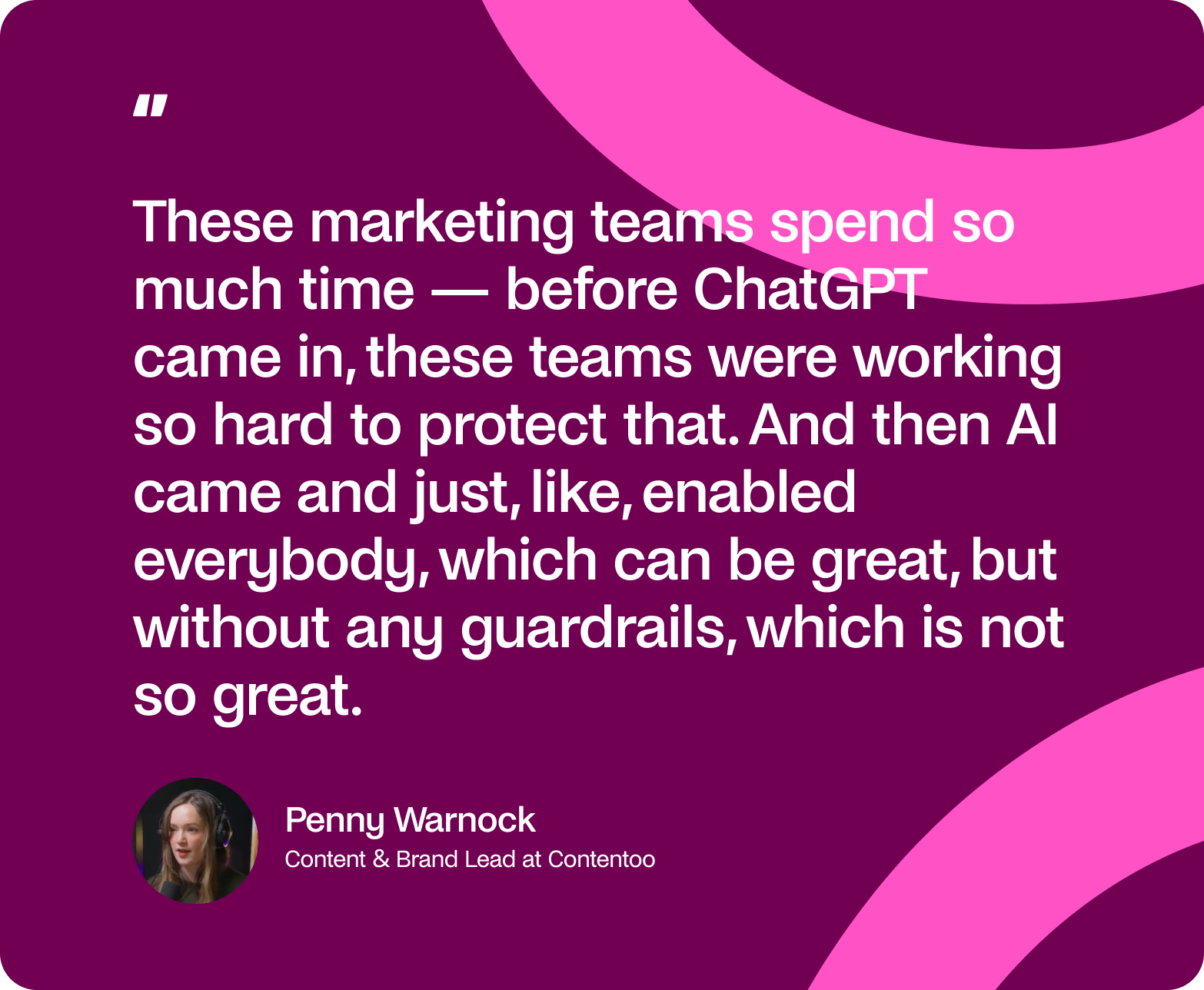
The speed problem has compounded the clarity problem. 94% of marketers plan to use AI in content creation in 2026 (HubSpot). That means more people producing more content, faster, with less editorial oversight per piece. A vague tone-of-voice document is like handing a team a destination and a compass on a cloudy day. They know where they are supposed to end up, but with no sun to orient by, everyone takes a different route and arrives somewhere slightly different.
Consider what "conversational" fails to specify:
- It does not define sentence length, punctuation style, or the acceptable level of jargon for different audiences.
- It does not distinguish between casual (social post) and clear (transactional email).
- It does not tell anyone what the brand would never say, which is often more useful than what it would.
The last gap is the one AI amplifies most:
- It does not account for the difference between a human writer interpreting tone and an AI model interpreting a prompt.
Stop describing your voice and show it with prime examples
Adjectives are decoration. Examples are infrastructure. The most effective brand voice governance systems are built backwards, and never derive from a brainstorm about "who we want to sound like." You reverse-engineer the rules from work that already resonated.
Think of it like building a recipe from a dish you love, rather than inventing a dish from a recipe you have never tasted. You take the pieces that work: the rhythm, the register, the level of detail, and codify them so others can reproduce the flavour without guessing.
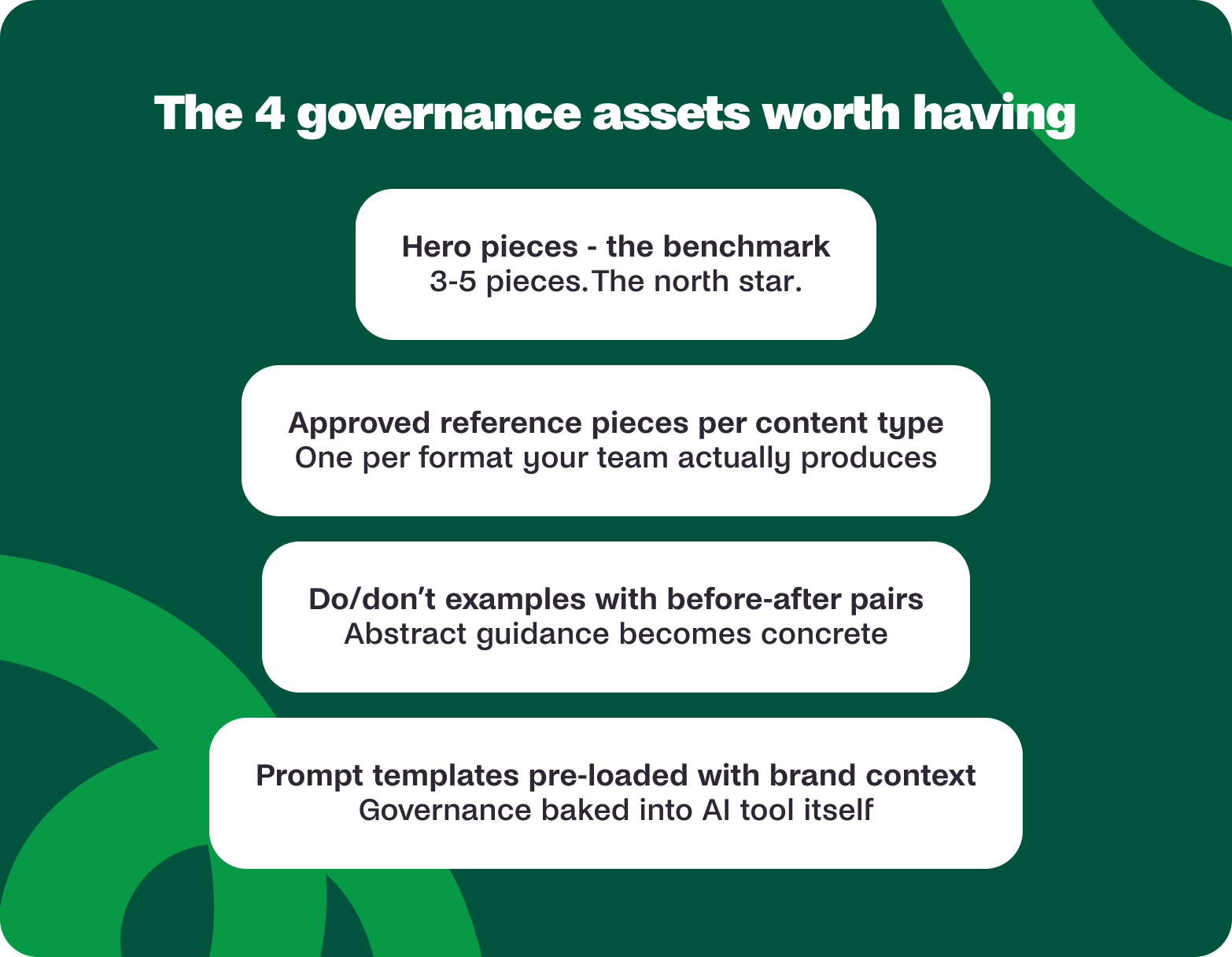
Here is a practical framework for governance assets worth building:
- Hero pieces that define the benchmark. Select 3-5 pieces of content that best represent your brand voice across different formats. These become the north star. Every new piece gets measured against them, not against a list of adjectives.
- Approved reference pieces for each content type. A hero blog post does not help someone writing a product update email. Build a small library of reference pieces that cover the formats your team actually produces.
- Do/don't examples with before-and-after pairs. Show a sentence that drifts off-brand next to the corrected version. This is where abstract guidance becomes concrete. Teams learn faster from seeing the gap between "close" and "right."
Those first three assets give your team a voice they can see, not just describe. The fourth turns governance into a tool that works at the speed of AI:
- Prompt templates pre-loaded with brand context. If your team is using AI tools, give them prompts that already include your voice parameters, banned phrases, and structural preferences. A good prompt template is one where governance is baked into the workflow.
The urgency here is real. According to Ahrefs, 74.2% of new web pages now contain AI-generated content. Without hero examples as guardrails, your brand voice becomes a statistical average of whatever the model was trained on.
Consistent doesn't mean identical everywhere
Consistency is a word most marketing teams wield the way blindfolded children attack a piñata, swinging hard, hitting whatever is in range, and calling it a win if something lands. Every channel flattened to the same tone, the same sentence length, the same beige register. Monotony, and it is its own kind of brand damage.
Your brand speaks differently depending on the context, the same way you speak differently at a board presentation than you do at a team lunch. The voice is recognisably yours in both settings whilst the register shifts.
Good governance accounts for this. Remember the invoice email example? "Hey girly pop, here's the giant bill" is a perfectly valid social media tone. It is a terrible invoice tone. Both can be on-brand if your governance system maps the adjustment.
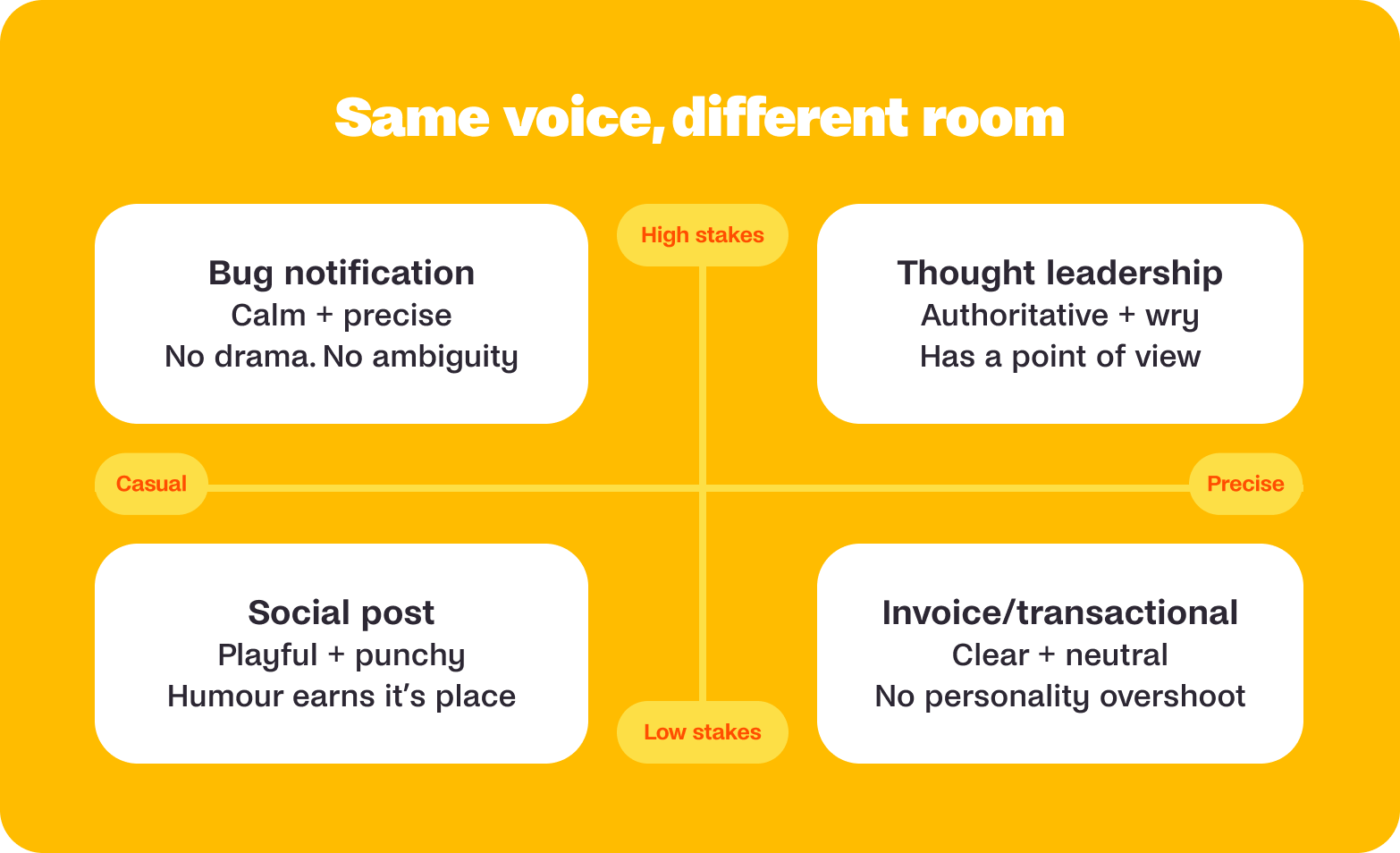
Here is how voice might flex across content types:
- Social posts can afford to be playful and punchy, willing to take risks with humour and cultural references that would feel off in any other format.
- Invoice and transactional emails should read as clear, neutral, and reassuring, with no personality overshoot, no ambiguity about what the reader needs to do.
The higher the stakes of the message, the more the register pulls towards precision:
- Bug notifications need to be calm, precise, and empathetic. They acknowledge the problem without dramatising it.
- Thought leadership earns the right to be authoritative with a streak of wryness. Confident enough to have a point of view, honest enough to admit complexity.
The governance system defines these context rules explicitly, much like a theatre script includes stage directions alongside dialogue. It does not leave them to individual judgment, because individual judgment at scale produces inconsistency.
Don't flatten your best writers into the brand document
Every governance system carries a trap door: over-standardisation. Tighten the rules too far, and every piece of content starts to read like the minutes of a meeting nobody wanted to attend. Your best writers, the very ones with distinctive perspectives, subject-matter depth, and the kind of earned authority that readers actually trust, get flattened into the brand document.
That is a mistake. And it is an expensive one.
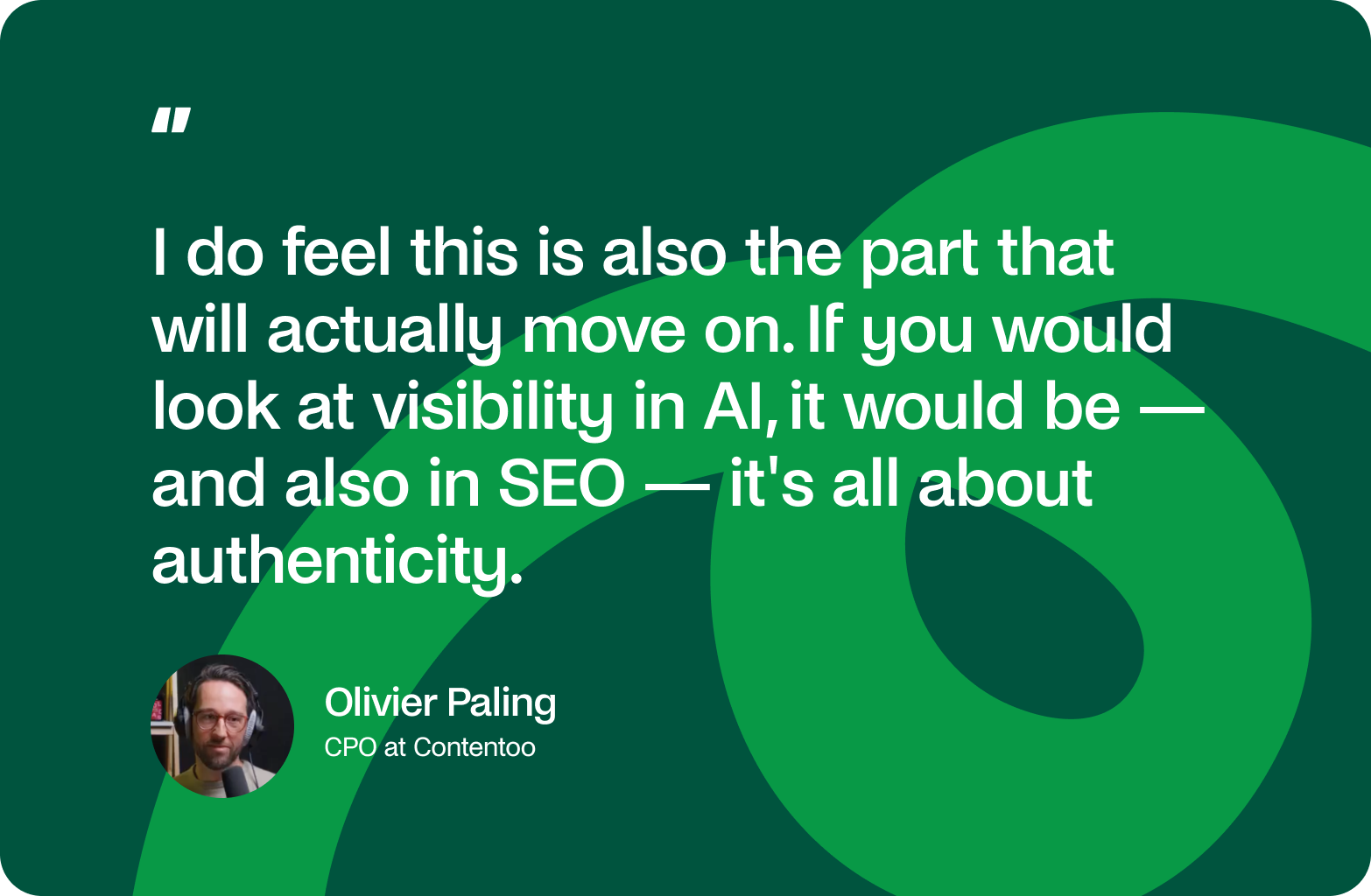
The difference matters more than it used to. Search engines and AI models are both getting better at detecting and rewarding genuine expertise. A piece written by someone who clearly knows their subject matter outperforms one that merely sounds professional.
Governance should protect that signal, not bury it in the sand. A good governance system is a trellis that gives the vine structure without deciding which direction every leaf should face.
Here is what the distinction looks like in practice:
- "Sounds like the brand doc" means generic phrasing, safe structure, zero personality. It passes the style guide but gives the reader no reason to remember it.
- "Authentic voice aligned with the brand" means a writer's expertise and perspective come through within the boundaries of brand tone. It is recognisably the brand and recognisably a human who knows what they are talking about.
According to multiple sources, brand consistency can boost revenue by up to 33%. But consistency built on bland uniformity is not the kind that drives revenue. The kind that drives revenue is consistency built on recognisable quality.
For teams focused on organic growth, Contentoo's Organic Growth use case shows how authentic expert voice and SEO performance work together rather than pulling in opposite directions.
Where to go from here
Consider brand voice governance as an operating system you maintain, adjusting inputs, updating examples, and refining rules as your brand, channels, and tools evolve.
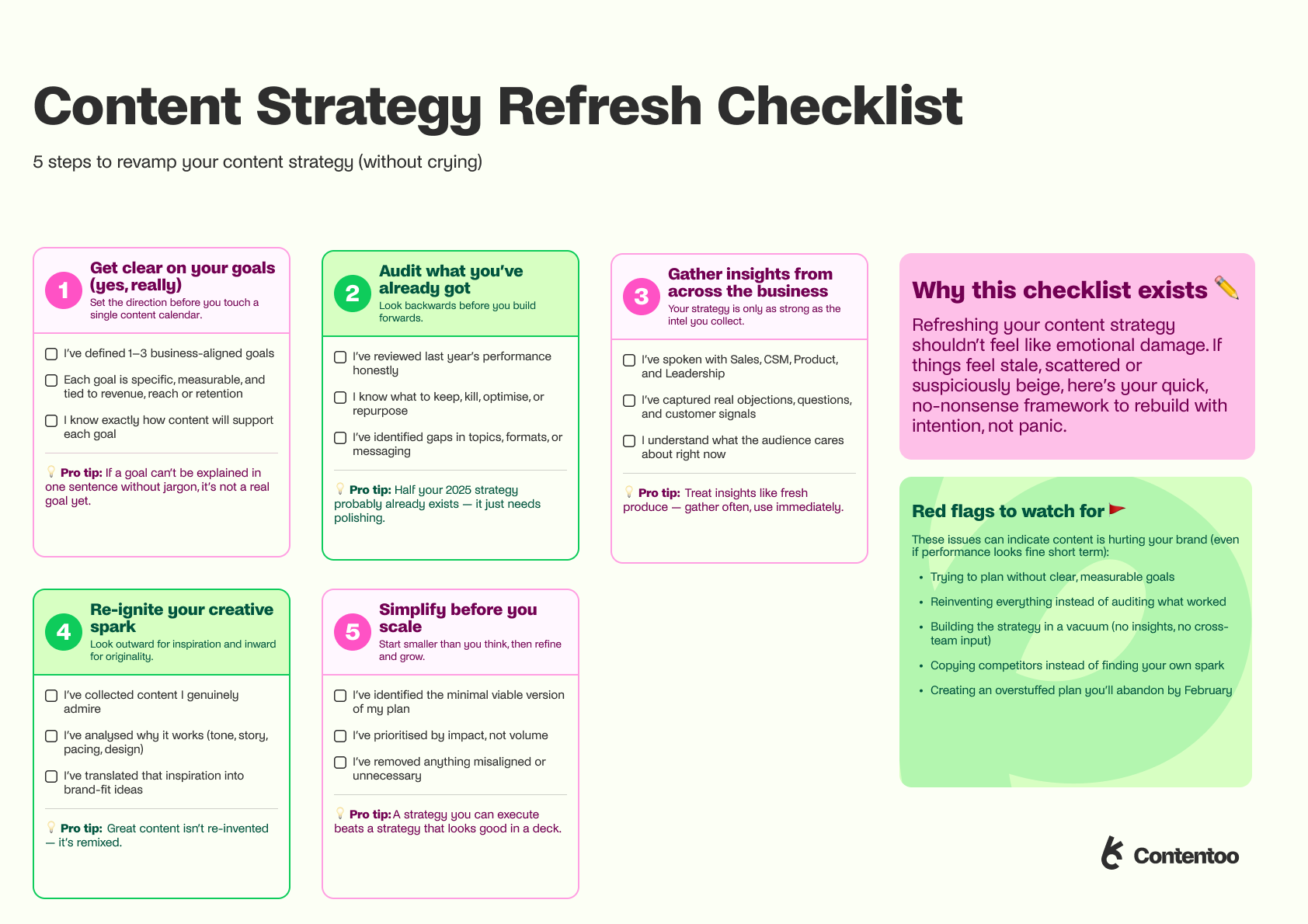
Start with two things this week: pull together your prized content trophies (the 3-5 pieces that best represent your voice), and map out how your voice should shift across your most common content types. Those two assets alone will do more for AI brand consistency than any adjective-laden PDF.
The brands that will own their voice in the AI era are not the ones with the longest style guides. They are the ones who built systems nimble enough to keep up.
Like what you read? You’ll certainly enjoy our candid (and honest) chat with Olivier. Watch the full episode.
FAQs
Why isn't a tone-of-voice document enough to maintain brand consistency?
A tone-of-voice document provides guidance, but it rarely creates consistency on its own. As content creation becomes more distributed across teams, freelancers, agencies, and AI tools, static guidelines can quickly become outdated or ignored. Effective brand voice governance requires ongoing maintenance, practical examples, review processes, and clear rules that are embedded directly into the content workflow.
How can I keep AI-generated content aligned with my brand voice?
The most effective approach is to provide AI with strong inputs. This includes current style guides, approved examples, clear briefing templates, and documented brand preferences. AI performs best when it has context to work from. Without those guardrails, outputs often default to generic language that may be technically correct but fail to sound recognisably like your brand.
What does effective brand voice governance look like in practice?
Effective governance combines clear standards with practical tools. Rather than relying solely on descriptive guidelines, teams use approved content examples, channel-specific guidance, review processes, and shared reference materials to maintain consistency. The goal is to create a repeatable system that helps everyone produce content aligned with the brand, regardless of who creates the first draft.
How do I create content that sounds consistent across different teams and channels?
Consistency starts with shared resources and agreed standards. Teams should work from the same messaging, positioning, style guides, and examples of high-quality content. At the same time, governance should recognise that different formats require different approaches. A social post, customer email, and thought leadership article may sound different, but they should still feel like they come from the same organisation.
Should every type of content use the same brand voice?
Not exactly. The core voice should remain recognisable, but the tone and level of formality should adapt to the context. High-stakes communications such as product updates, invoices, or service notifications require a different register than social media content or thought leadership pieces. Strong governance defines how the voice flexes across channels without becoming inconsistent.
How can I scale content production without losing authenticity?
Scaling successfully requires systems that protect quality rather than relying on individual contributors to interpret the brand independently. Clear governance, strong examples, structured workflows, and editorial review processes help maintain consistency as output grows. AI can support production, but authenticity still depends on human expertise, judgement, and subject-matter knowledge.
How do I balance brand consistency with individual expert voices?
The goal of governance is not to make every piece of content sound identical. Strong governance provides structure while allowing subject-matter experts to contribute their own perspectives and expertise. Readers are more likely to trust content that reflects genuine experience and insight. The most effective content combines a recognisable brand voice with authentic expert contributions that make the content memorable and credible.






.webp)