Brand tone of voice: when funny fits your B2B audience (and when it doesn't)


TL;DR
Over 70% of B2B buyers find humour effective, but only 36% see it done well, according to Journal of Business Research findings cited by IPG Mediabrands (2026). That gap is the opportunity, not the risk. So "should B2B be funny?" is the wrong question: the real one is whether your tone fits your audience, goals, and strategy. Humour is an execution tactic, not the strategy, so the baseline is "don't be boring," not "be funny," and a voice only counts as real when it holds across every touchpoint.
Wondering if a funny brand tone of voice fits your B2B audience? Learn how to justify playful choices, stay consistent, and achieve business goals.
You've seen it happen. A brand you follow starts posting something loose, funny, a little unexpected, and it works. So you wonder if you could get away with the same thing. Then you try it, or even just propose it, and the questions start: why are we writing like this? Why memes? Are we trying to be funny? Most content leads have been on both sides of that moment, wondering if they could pull off what someone else clearly did.
Here's the reframe: all of that energy goes into the wrong question. Being allowed to be funny isn't the debate worth having. Whether your tone of voice fits the people you're trying to reach is the actual question.
Does your funny brand tone of voice actually fit your audience?
Start here, because this is where most teams get stuck: is funny even the right decision for your audience in the first place?
The objection dressed up as "should B2B be funny?" is really a fit problem in disguise. As Penny Warnock, Brand & Content Lead at Contentoo, put it on the podcast: "What we need to be asking is, does your tone make sense?"
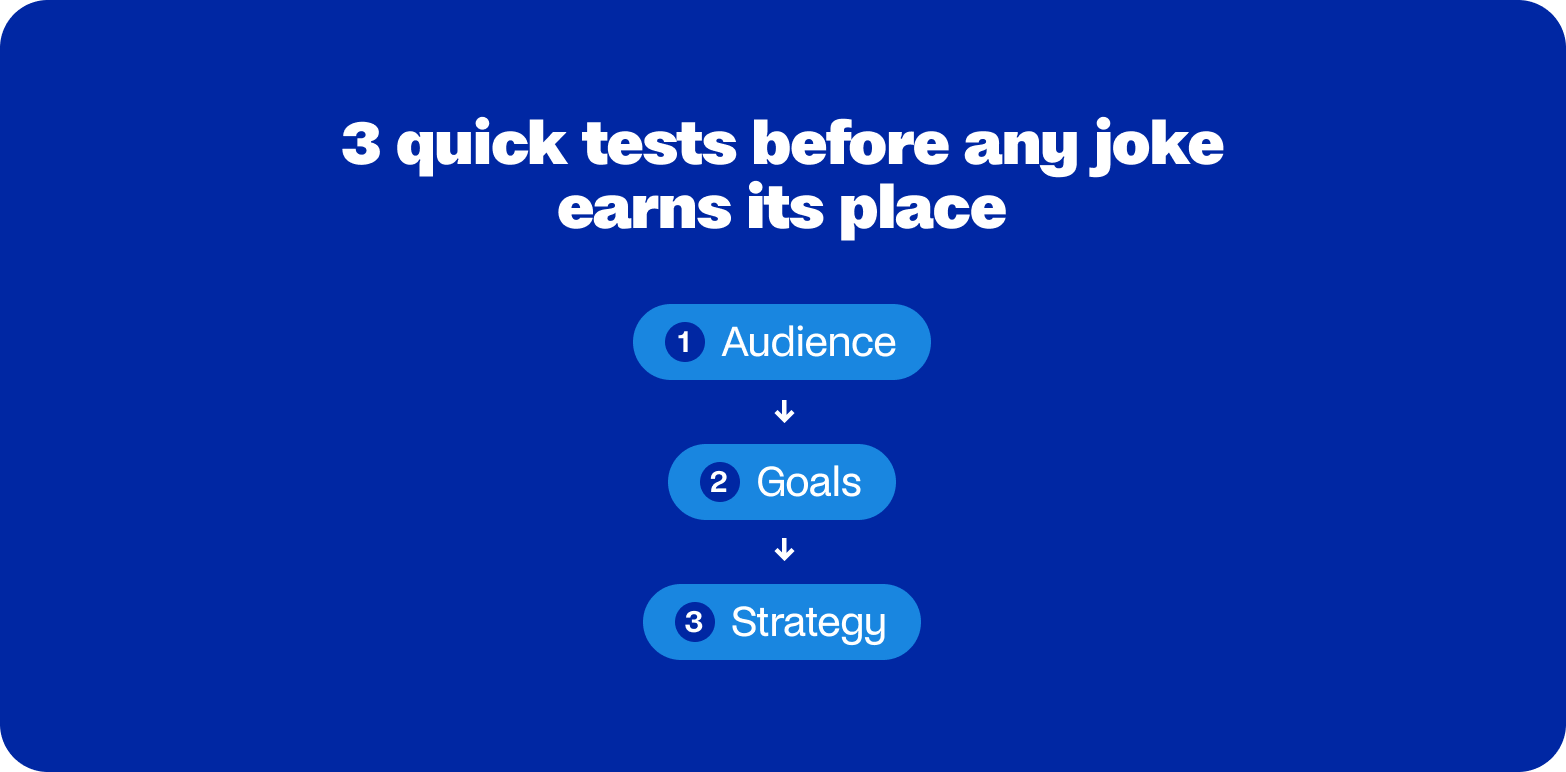
Fit comes first, and whether you're funny at all is a decision you only make once fit is confirmed. Run three quick tests before any joke earns its place:
- Audience: do the people you serve actually find this register natural, or are you performing for a room that left hours ago?
- Goals: does this choice move a commercial outcome, or does it just feel good to publish?
- Strategy: does the tone hold up as a repeatable position, or is it a one-off stunt?
Our content team passes these tests for one specific reason: the team is its own audience. Content marketers writing for content marketers can push harder, because they already know where the jokes land. Your mileage may vary depending on how well you can read the room.
Why humour should support your strategy, and not lead it
Humour is seasoning, layered onto a main course that already has to stand on its own.
That distinction does most of the work here. Humour is an execution tactic, the visible layer people see and enjoy, not the strategy itself. The strategy is what connects commercial goals to hard audience knowledge.
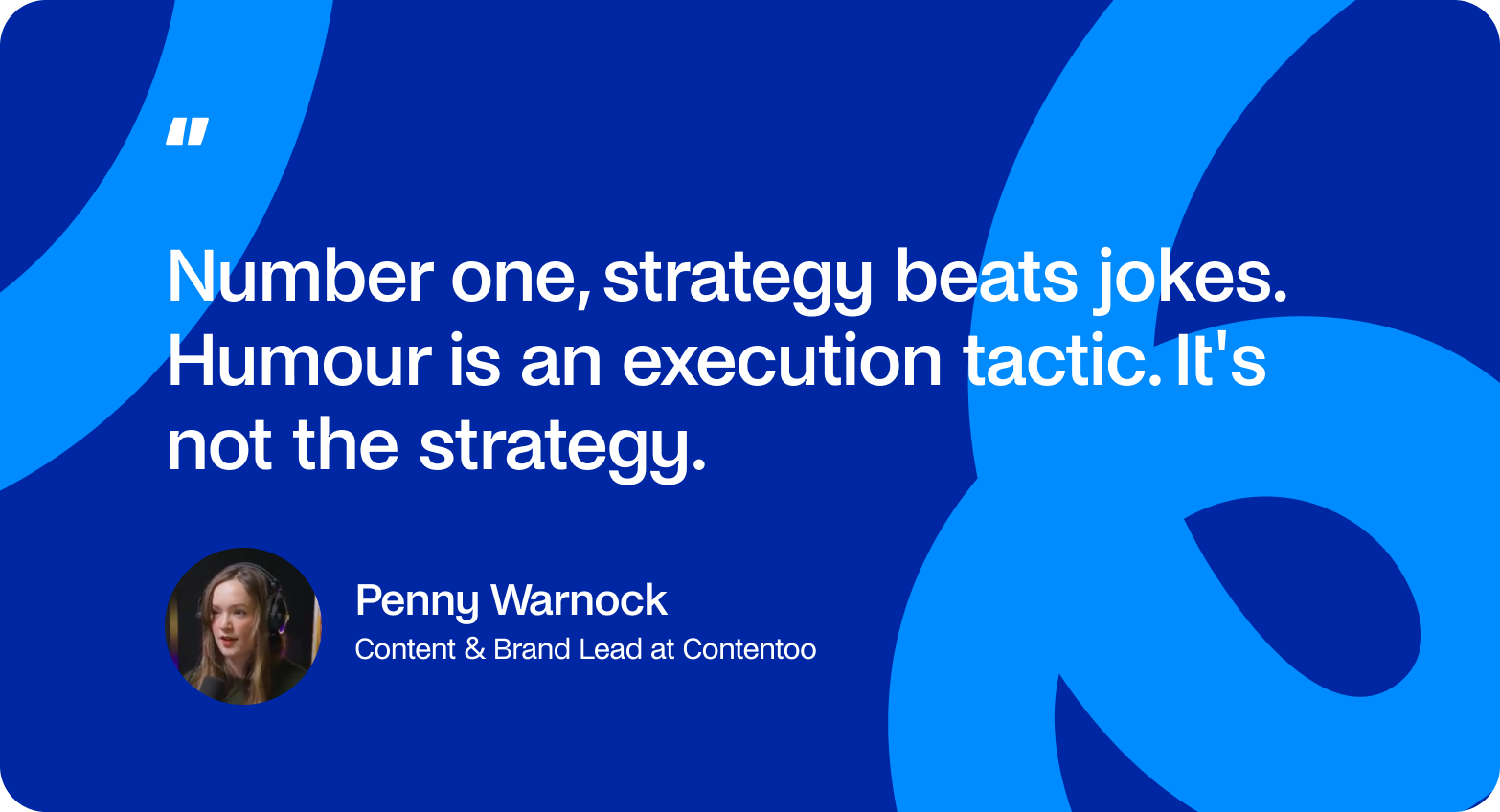
Take Contentoo's own shift to hilarious memes. From the outside, it looked like a style change, a brand deciding to loosen up. Inside, it was the result of three decisions made in order: know the audience, know the goal, then pick the tone. The humour came last, and that's the order most teams get backwards:
- Audience understanding: know exactly who you are writing for.
- Goal clarity: know what the content has to achieve.
- Then tone: choose the register that carries both.
Lead with the joke, and you get content for content's sake. Lead with strategy, and the joke earns its keep.
Where you sit on the serious-to-chaotic tone spectrum
Here's the baseline, and it's a low bar: don't be boring.
You don't owe your audience jokes. You owe them a personality worth paying attention to. Within that, tone is a spectrum you pick from on purpose. Nielsen Norman Group's four dimensions of tone of voice (formality, humour, respect, and energy) map naturally onto that spectrum and give you a steadier reference point than "serious vs. funny" alone:
- Serious: measured, authoritative, no winking. A defensible choice for a law firm.
- Warm: kind and human, the register of a good support reply.
- Witty: dry, quick, confident enough to trust the reader to keep up.
- Chaotic: fully unhinged, memes and all, when your audience genuinely lives there.
Pick a spot deliberately. A law firm can be serious and still refuse to put readers to sleep. The failure is landing nowhere, by accident.
How to keep your brand tone of voice consistent everywhere
Voice consistency is where most B2B brand voices sink or swim.
A brand voice is the same person, speaking in every room they walk into, not a costume that comes off the moment a real conversation starts. If the personality only shows up on social, it wasn't a voice to begin with.
So the test is boring, unglamorous consistency across every place you speak:
- Support replies: the same warmth when someone is annoyed, minus the memes.
- Onboarding emails: friendly and human, guiding people instead of performing.
- Invoices: clear and kind, because nobody wants a joke attached to a bill.
- Internal docs: the vibe holds even where no customer will ever see it.
- LinkedIn: where you can go all in, because the context invites it.
As Nike put it, you adjust the dial for context without swapping the person: "you're not gonna write an invoice email... lol girly pop."
The person writing that invoice email should still feel like the person writing the LinkedIn post. Same character, different room. Our content quality checklist covers exactly this kind of cross-channel discipline, so the personality survives contact with the unglamorous touchpoints too.
The tone of voice guardrails that keep you human, not off-brand
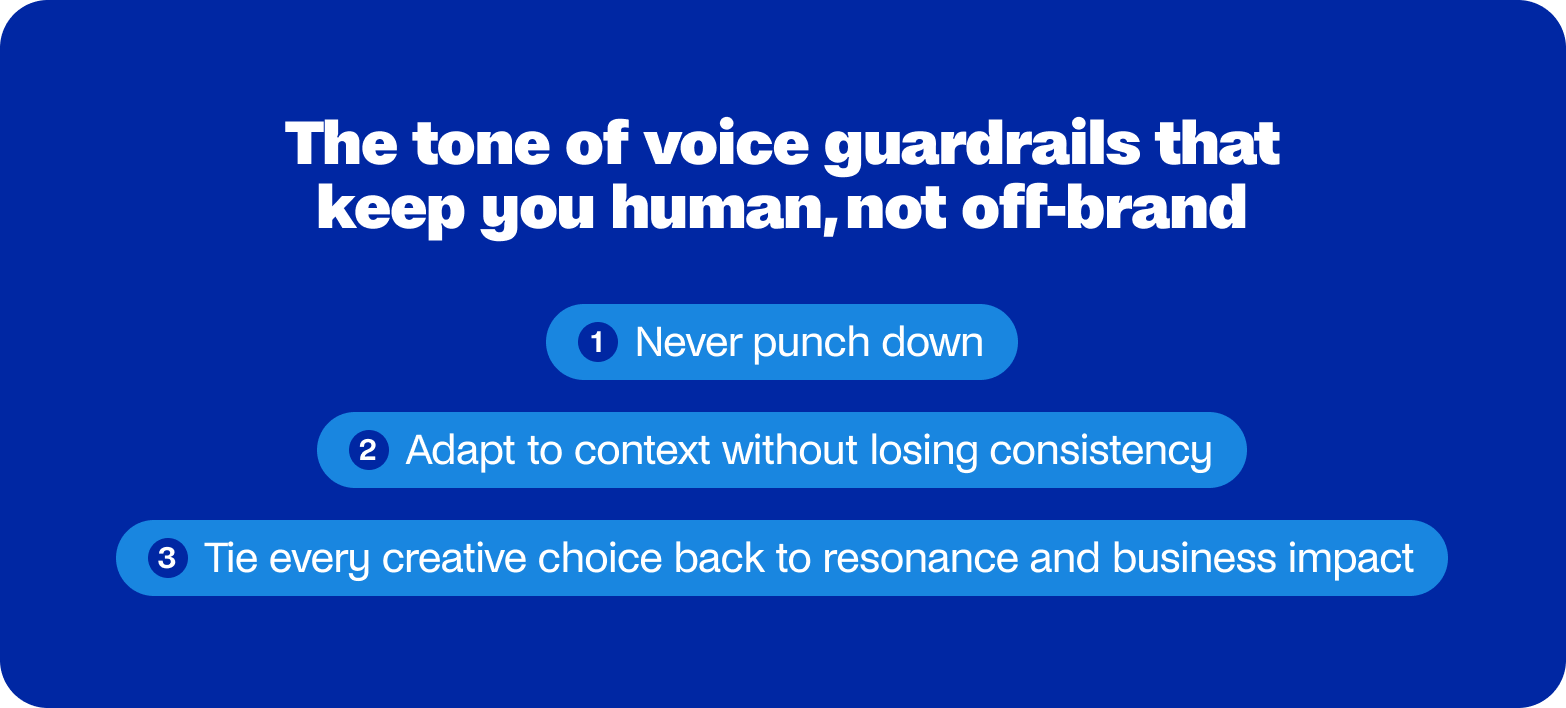
A distinctive tone without rules is a liability waiting to happen. Guardrails are what turn "we're funny" into something a whole team can execute uniformly:
- Never punch down. This is the ethical spine, and it deserves weight. We've written it explicitly into our tone and style guide, because "what I think is funny" and "what someone else thinks is funny" are wildly different. Other humour-led brands have taken real backlash for ignoring their own version of this rule. It protects the audience first, and the brand second.
- Adapt to context without losing consistency. You can shift the register between a newsletter and a platform-outage notice. What you can't do is become a different company between them. Humour doesn't have to be everywhere all the time, but the person behind it does.
- Tie every creative choice back to resonance and business impact. Even the silliest posts carry a commercial goal. If a choice can't be traced to "does this resonate, does it build trust, does it help the business," it shouldn't be published.
None of this arrives for free. We earned it through what the team only half-jokingly calls a "mini battle" for internal trust. Leadership started at "why are we doing this, this is weird." Through constant explanation and visible traction, the CEO ended up writing his own posts.
That battle matters more than it sounds like it should. Contentoo's own State of Content Teams 2026 report found that 40% of teams cite too many stakeholders diluting the message as a top quality killer, and tone is exactly where that dilution shows up first. A joke that survives five rounds of committee feedback rarely survives as a joke. The guardrails above aren't just ethical or stylistic; they're what let one person make the call instead of a room sanding the personality down to nothing.
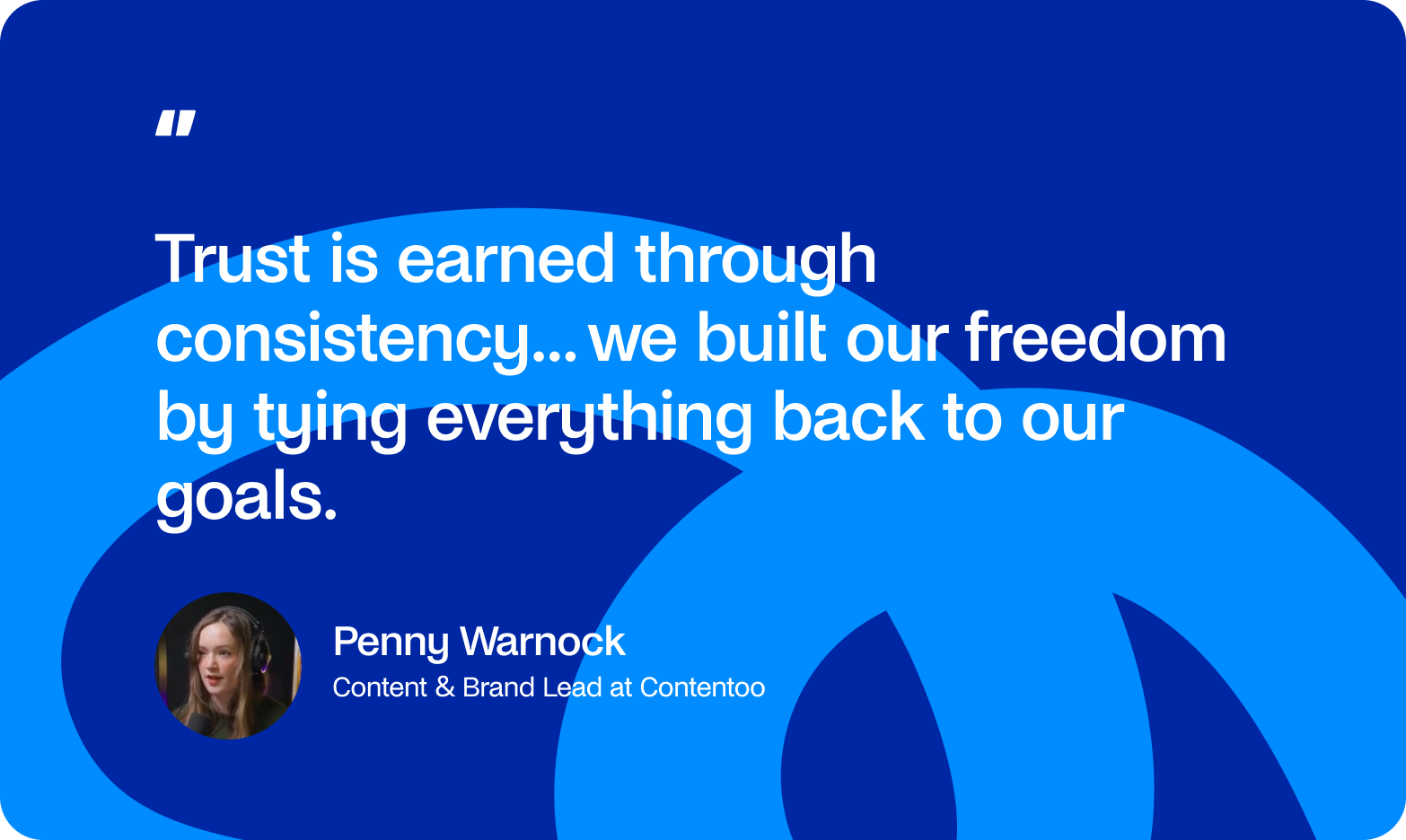
That's the trade. Guardrails first, freedom second.
What your tone is really telling your audience
Everything you publish makes a promise about who your brand is. When the LinkedIn post is playful and the support reply is a wall of corporate concrete, your audience notices, even if they never name it.
The brands that win the tone question are the ones whose voice survives the unglamorous moments: the invoice, the apology, the internal memo nobody was meant to enjoy.
So the real work is deciding who your brand is, then being that person in every room you walk into.
Want to hear it straight from the source? Watch the full episode of Permission to Rant.
FAQs
How do I convince sceptical leadership that a playful tone is worth the risk?
Show the commercial thread, not the jokes. Tie every playful choice back to a goal leadership already cares about, then let visible traction do the persuading. Contentoo's CEO went from "this is weird" to writing his own posts once the results were his own. Expect it to take a few rounds of explanation before the buy-in sticks.
What if my audience is genuinely conservative, like in finance or law?
Then sit at the serious end of the spectrum and stay there on purpose. A conservative audience still deserves a personality; they just want it measured instead of chaotic. Clear, warm, human writing reads as respect in those categories. Boring reads as indifference.
How do I get support and operations teams to hold the same voice?
Treat consistency as an operations problem, not a copywriting one. Give the teams that write invoices, tickets, and onboarding emails simple guidance on what the voice sounds like at their end of the dial. The register drops the memes; the person stays the same. Without shared rules, quality drifts as you scale.
Where exactly is the line on "never punch down"?
Punching down means the joke lands on someone with less power than you: your customer, a struggling team, a vulnerable group. The safe direction is inward or upward, at your own quirks or at shared industry pain. Write the rule into your style guide in plain language so it is not left to individual taste, because what one writer finds funny another will find cruel.
How much of our content actually needs to be funny?
Less than you think, and that is the point. Humour is seasoning, so use it where it genuinely serves the moment and skip it where it would jar. A brand voice reads as confident when it knows when to hold back. Consistency of personality matters far more than frequency of jokes.
How do I keep a distinctive voice from slipping as the team grows?
Guardrails, written down and shared. As headcount and output climb, taste alone can't keep up, so the rules have to uphold the standard in your place. Document the spectrum you sit on, the lines you never cross, and the goals every choice ties back to. That is what lets new writers sound like the brand without needing you in the room.

.png)



.webp)