9 best AirOps alternatives in 2026: AI visibility tools vs content operations


TL;DR
AirOps does two jobs, AI search visibility and content production, so the right alternative depends on which one you're replacing. For AI search visibility, look at Profound, AthenaHQ and Conductor. For content operations and production, the options are Contentoo, a managed content workflow for teams publishing across markets and languages; Jasper and Writer for AI writing with brand control; Slate as a content engine; Pepper as a managed SEO and AI search service; and n8n if you want to build your own. Teams adopted these tools for speed, and the tools sped up drafting but left the team as editor, QA and publisher. That's why many teams replace AirOps with a pair: a visibility tool to show where they appear, and a production partner to run the work.
The dashboard flags 40 pages that AI answers have stopped citing. The workflow drafts refreshes for all of them by Friday. Then the drafts land in a review queue that was already full, and half of those pages also exist in German, French and Dutch. By the end of the month, the insight is old and most of the fixes are still waiting for someone to check them.
That queue is where many AirOps evaluations start. The platform did what it promised: it found the gaps and produced the drafts. The work that piled up sits around the drafts, in briefing, checking, localising and sign-off, and it's the same work behind most AI content workflow mistakes.
Nobody in that queue is doing their job badly; there's simply more of it than the workflow was built for.
This list covers the options that come up most when teams look for AirOps alternatives, in search results and in AI answers, split into visibility tools and production options. Ratings, prices and features were checked on each vendor's site and G2 in November 2026. Contentoo publishes this list and appears in it, assessed against the same criteria as every other option.
Why do teams look for AirOps alternatives?
AirOps combines AI search visibility with content production. It tracks how a brand appears in answer engines, then runs workflows and Playbooks that turn those insights into briefs, refreshes and new pages. It's also bought in three ways: some teams operate it themselves, some add AirOps' enablement (solution architects and training that help the team build), and some hire a partner to build and run it. So leaving AirOps can mean changing the tool, or changing who runs it.
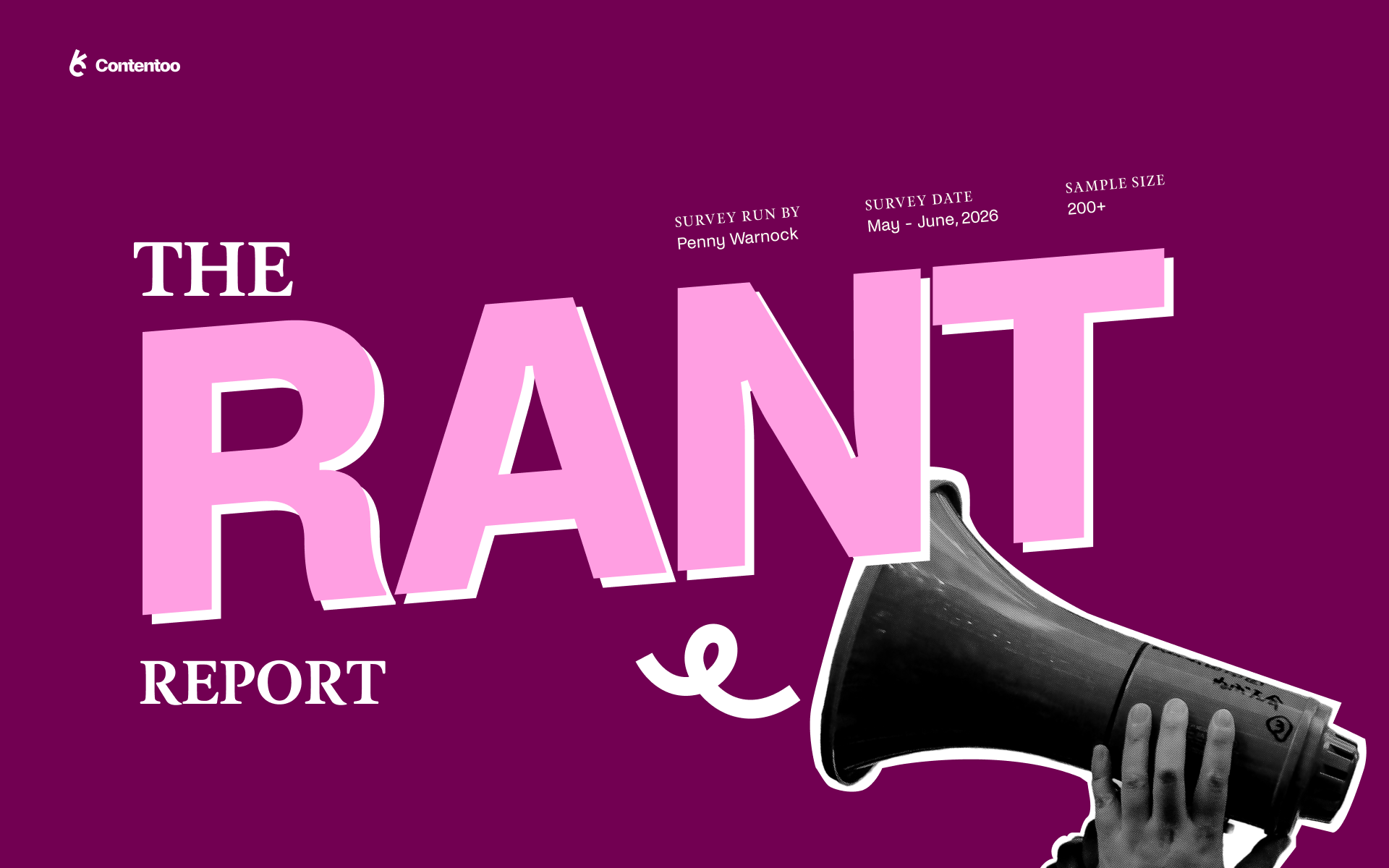
Contentoo's position on why that search starts is simple: "The market doesn't have a content-creation problem, it has a content-operations problem." In The Rant Report: State of Content Teams, 85% of content teams said they use AI regularly, yet only about 7% named over-reliance on AI as a reason content quality declines. AI adoption is already universal, and the quality problems teams describe sit elsewhere in the workflow.
The same gap shows up at leadership level: in a BCG survey of around 300 CMOs, 96% said AI is transforming their function end to end, while only about 31% had built the operating model to back it up.
What AirOps does well
AirOps is strongest where there's a large content library and plenty of data to act on. Its visibility tracking shows where a brand is cited in AI answers, and its refresh programmes connect those signals to targeted updates, routed through human review before publishing. It also handles programmatic content from structured data, and teams can choose the model for each Playbook. Plan details matter here: in November 2026, the Solo plan covered ChatGPT insights only, with broader answer-engine coverage from Pro.
And the honest concession: AI genuinely does remove real drafting time. AirOps is one of the tools that proves it.
Where the work stays with your team
What AirOps can't remove is the work around the draft: building and maintaining workflows, encoding feedback so a correction carries into the next piece, editing, approvals and localisation. When the team operates AirOps itself or with AirOps' enablement, that work stays with the team. With a partner-run setup, some of it moves to a separate contract, and the scope varies from partner to partner. Every market you add multiplies the work, and quality becomes a coordination problem.
Approvals are the part most often underestimated. In The Rant Report, 45% of teams cited internal review and approvals as a major bottleneck, ahead of unclear briefs (41%) and the first draft (40%). The industry is optimising the wrong stage: AI that speeds up generation while ignoring approvals may improve task speed without improving throughput. Teams with six or more stakeholders are also considerably more likely to take two weeks or longer to publish.
The cost of unmanaged AI output shows up outside content teams too. The Guardian reported in September 2026 that freelance listings for fixing AI output rose 87% on Freelancer.com, while Upwork's AI-remediation work grew 70% year on year, and freelancers said clients underprice fixes that can take as much effort as starting over. In Contentoo's experience, building a workflow is the smaller part of the job; keeping it running as markets, products and positioning change is the larger one.
Which job are you replacing: AI visibility or content production?
Google's AI Overview and ChatGPT both split AirOps alternatives along the same line, and it's the most useful question to answer before comparing vendors. Are you replacing the data that shows where you appear, or the work of writing, checking and shipping content? Some teams need one, many need both.
If you need AI search visibility
Look for engine coverage (ChatGPT, Perplexity, Gemini, Claude, Google AI Overviews and AI Mode), prompt and citation data, the markets and languages tracked, and whether recommendations connect to your analytics. These tools do handle genuinely new mechanics, such as how answers are extracted and which sources get cited. The data still needs someone to act on it. MarketingProfs summed up the current state in August 2026: "GEO is everyone's part-time job and no one's real one". And no tracking tool fixes the underlying problem: you can't GEO your way out of having nothing interesting to say.
If you need content operations and production
Here the criteria shift to who does the work: who briefs, who checks, who encodes feedback so fixes stick, where subject-matter expertise enters the brief, and who owns native-language judgement in each market. An engine fed SERP research and competitor pages can cover every subtopic and develop few of them; depth comes from expertise brought into the brief upstream.
With 85% of teams already using AI regularly, the question is who reviews it. Forbes reported in July 2026 that 75% of content is now AI-touched and 93% of businesses hit content problems rule-based asset management can't solve, because teams scaled AI generation without changing who reviews the work before it ships.
If you need both
Many teams pair a visibility tool with a production partner. The tool shows where you appear and which pages are losing citations; the partner turns those signals into briefs, refreshes and localised pages. Agree upfront who feeds insight to whom, and how often. The refresh load is real: WordPress VIP's CMO shifted her team's capacity from 80% new content and 20% maintenance to 70/30, because AI search resurfaces stale pages as current fact, as CMI reported in August 2026.
AirOps alternatives at a glance
The first columns ask the same four questions of every option: who briefs, who QAs, who owns multi-market delivery and what you still run yourself. Where an option can be self-serve or supported, the table shows the lightest route and the entries below cover the rest.
Best AirOps alternatives for AI search visibility
These tools answer "where do we show up?" rather than "who writes and checks it?". The entries are compact, because for most teams leaving AirOps the bigger change sits on the production side.
1. Profound: best for enterprise AEO tracking at depth
You need to know in detail how AI answers describe your brand across engines and markets, and lower-tier tracking doesn't cover enough of them.
New York-based Profound tracks brand visibility, citations and prompt volumes across answer engines, up to nine on its Enterprise plan, including ChatGPT, Perplexity, Gemini, Claude, Google AI Mode and AI Overviews. It has added agents that turn insights into content workflows. Brands can test it on a free seven-day trial (50 prompts a day across ChatGPT, Gemini and Google AI Overviews, in one language and region); the ongoing brand plan is Enterprise, sold through sales, and agencies have their own plans.
Who briefs: Your team, from Profound's prompt and citation data.
Who QAs: Your team.
Who owns multi-market delivery: Your team; Profound tracks markets but doesn't localise the content.
What you still run yourself: Turning insights into briefs, plus drafting, review and localisation.
Reviews and pricing: 4.5/5 on G2 from more than 1,100 reviews. Reviewers praise the easy setup and responsive account support, and some mention a learning curve and difficulty proving ROI. On Profound's pricing page, the trial lasts seven days and the Enterprise plan is priced on request.
The trade-off: The deepest visibility data in this list, at enterprise pricing. It tells you what to fix, and the production work still needs an owner.
2. AthenaHQ: best for visibility tied to recommendations and analytics
Your leadership wants AI visibility connected to traffic and conversions, and a citation count alone won't convince them.
AthenaHQ, a Y Combinator-backed platform founded by former Google Search and DeepMind team members, tracks visibility across the major answer engines and generates recommendations mapped to the passages AI models pull from. Its GA4 integration connects visibility to site traffic and conversions.
Who briefs: Your team, using AthenaHQ's recommendations.
Who QAs: Your team.
Who owns multi-market delivery: Your team.
What you still run yourself: Acting on the recommendations, drafting, review and localisation.
Reviews and pricing: 4.9/5 on G2 from 32 reviews. On AthenaHQ's pricing page, the Essential plan is free with 300 credits, Starter costs $295 a month and Enterprise is priced on request.
The trade-off: A lighter entry point than the enterprise suites, with recommendations that point at specific fixes. Making those fixes is still your team's job.
3. Conductor: best for enterprise SEO and AEO in one platform
Your SEO, AEO and site-health data live in three tools, and nobody owns the joins between them.
Conductor combines AI and traditional search visibility (Conductor Intelligence), AI-assisted content creation (Conductor Creator), round-the-clock site monitoring and AgentStack for agent workflows. It's sold as an enterprise licence with usage-based tiers and no per-seat charges.
Who briefs: Your team, with Conductor's content guidance.
Who QAs: Your team.
Who owns multi-market delivery: Your team.
What you still run yourself: Workflow setup, review, approvals and localisation.
Reviews and pricing: 4.5/5 on G2 from 776 reviews. Reviewers value the breadth of the platform, and some mention a learning curve and rigid reporting. On Conductor's pricing page, pricing is usage-based and quoted on request, with a free trial on the Essentials plan.
The trade-off: One platform for SEO, AEO and monitoring, with content creation built in. It replaces the most tools, and asks the most of the team that runs it.
Best AirOps alternatives for content operations and production
Every option in this group takes on some of the work AirOps leaves with the team, in a different way: AI writing tools, a content engine, a managed SEO and AI search service, build-your-own automation or a managed content workflow. Each entry uses the same template, including who encodes feedback and where expertise enters, and separates self-serve from supported options where both exist. Contentoo is scored on the same criteria as every other option.
1. Contentoo: best content automation for complex, multi-market workflows

Drafts are fast now. Everything around them still lands on your team: the briefing, the checking, the revisions, and the same again for every language you publish in.
Amsterdam-based Contentoo runs the production operation around your standards: briefing, expert sourcing, quality control, revisions, localisation and delivery, with a dedicated customer success manager. Your team sets the strategy, standards and approval points.
The workflow is designed around each client rather than a fixed sequence, and the human and AI mix is chosen per content type, from fully human for high-stakes pieces to agents drafting with human review. It draws on 3,000+ vetted industry experts across 49+ languages, and publishing scope, including any CMS publishing, is agreed per engagement. Meister cut its content management time by 50%, and Sendcloud went from 10 to 40 localised pieces a month across seven European markets without growing its internal team.
Who briefs: Contentoo, from your approved context and the expert input agreed for each engagement.
Who QAs: Contentoo editors, with quality checks and revisions handled before a draft reaches your reviewers.
Who owns multi-market delivery: Contentoo, with native-speaking experts in each language.
What you still run yourself: Your strategy and standards, expert input where the engagement needs it, and your internal approvals.
Reviews and pricing: 4.5/5 on G2 from 32 reviews, where reviewers single out responsive account management and flexibility. Work starts with a paid pilot; after that, Contentoo's pricing page quotes each subscription on content volume, languages and level of collaboration.
The trade-off: You hand over production, sourcing and revisions, and keep the decisions and approvals. The model pays off with several markets, contributors or a heavy review load; with one market and two reviewers, an AI writing tool and a good editor may be enough. You also need to agree how your reviewers' corrections reach the approved context the experts work from. For those interested in learning more about Contentoo vs. AirOps, our guide will help you in narrowing down your choice.
2. Jasper: best for brand-controlled AI writing for marketing teams
Your marketers produce plenty of copy with AI, and it drifts off-brand from one person to the next.
Jasper is an AI marketing platform built around brand voices, knowledge assets and marketing agents. Pro is self-serve; Business adds custom agents, an app builder, API access, admin controls and dedicated account management.
Who briefs: Your team.
Who QAs: Your team, against the brand voice set up in Jasper.
Who owns multi-market delivery: Your team; Jasper can draft in other languages, and native review is yours to organise.
What you still run yourself: Briefing, editing, approvals, localisation and keeping brand settings current.
Reviews and pricing: 4.7/5 on G2 from around 1,300 reviews, with some reviewers finding output generic without strong inputs. On Jasper's pricing page, Pro costs $59 per seat a month billed annually ($69 monthly) after a seven-day free trial; Business pricing on request.
The trade-off: Strong brand controls for teams that already have editors and owners. It speeds up the writer, and the editing, sign-off and upkeep of brand settings stay with you.
3. WRITER: best for governed AI content in regulated enterprises
Legal and compliance need to trust every AI output before it ships, and your current setup can't show them why they should.
WRITER is an enterprise AI platform with its own Palmyra models, a Knowledge Graph that grounds outputs in company data, and agents built in AI Studio, with governance and compliance controls throughout. Starter is self-serve; Enterprise adds custom agents at scale and wider support.
Who briefs: Your team, through the agents you configure.
Who QAs: Your team, supported by built-in brand and compliance checks.
Who owns multi-market delivery: Your team.
What you still run yourself: Agent setup and maintenance, review, approvals and localisation.
Reviews and pricing: 4.4/5 on G2 from 127 reviews. Reviewers value the Knowledge Graph grounding, and some mention a learning curve in AI Studio and enterprise-level pricing. WRITER's plans page offers Starter as a per-seat plan with a 14-day free trial, without listing the seat price; Enterprise pricing on request.
The trade-off: The strongest governance in the AI-tool group. Someone on your side still has to build and maintain the agents, which is the same ownership question AirOps raises.
4. Slate: best for SEO and AEO content from one system
You want the refresh loop, from flagged page to published update, without engineering every workflow yourself.
Slate combines AI visibility tracking across ChatGPT, Gemini, Perplexity, Claude, Google AI Overviews and AI Mode with recommendations, content refresh, programmatic SEO and one-click CMS publishing. It positions itself as an AirOps alternative that executes as well as diagnoses.
Who briefs: Your team, starting from Slate's recommendations.
Who QAs: Your team.
Who owns multi-market delivery: Your team. Language coverage is unconfirmed: G2 lists English as the only supported language and Slate's site doesn't state its coverage, so ask before you commit.
What you still run yourself: Review, approvals, corrections and any non-English work, until Slate confirms its language coverage.
Reviews and pricing: 4.9/5 on G2 from 14 reviews, where reviewers single out how it links visibility tracking to content execution. On Slate's pricing page, Growth costs $499 a month and Scale $999 a month, both with a free trial.
The trade-off: A shorter path from insight to published page than building it yourself, with your team still briefing, reviewing and keeping its own corrections current. It's a young product with a small review base and unconfirmed language coverage, so multilingual teams should test it before they commit.
5. Pepper: best for outsourcing SEO and AI search growth to one team
You want one team to deliver SEO and AI search results against targets written into the contract.
Pepper has moved from a content marketplace to an outcome-based managed service. Its Agent Atlas platform monitors AI search, and a US-based team of strategists, writers and editors turns that data into content, with digital PR and technical SEO in scope. It also lists an on-demand talent marketplace.
Who briefs: Pepper's strategists, led by a named strategist who owns your KPIs; Pepper doesn't publish how briefs are written or approved.
Who QAs: Pepper's editors; the QA steps aren't published, so ask for them in the proposal.
Who owns multi-market delivery: Not published; Pepper describes a US-based team, so confirm markets and native-language review before you sign.
What you still run yourself: Business context and your approvals; everything else depends on the contract scope.
Reviews and pricing: 4.6/5 on G2 from around 500 reviews, mostly from small businesses, with some reviewers noting how quickly the product has shifted from marketplace to AI platform. Pepper sells an annual commitment with KPIs written into the contract and sets pricing after a growth audit; it publishes no price list.
The trade-off: One team owns the SEO and AI search outcome against contracted KPIs, on an annual commitment. You keep the business context and approvals, and because Pepper doesn't publish how briefing, QA, languages or corrections work, get each one in writing before you sign.
6. n8n: best for building your own content workflows
You have automation skills in-house and want full control over every step, model and integration.
Berlin-based n8n is a workflow automation platform with a free self-hosted Community Edition, cloud plans and AI agent nodes. Teams use it to rebuild AirOps-style pipelines with their own models, data sources and CMS, and it's one of the few European options that come up when teams look for AirOps alternatives.
Who briefs: Your team, inside the workflows you build.
Who QAs: Your team, at the review steps you design.
Who owns multi-market delivery: Your team.
What you still run yourself: Everything: building, hosting or paying for executions, maintenance, review and localisation.
Reviews and pricing: 4.7/5 on G2 from 283 reviews. Reviewers praise the flexibility and integrations, and some mention a learning curve. The Community Edition is free to self-host; on n8n's pricing page, cloud plans start at €20 a month billed annually, after a free cloud trial.
The trade-off: Maximum control at the lowest licence cost. You become the content engineer, so price in the time to build and maintain it, including every correction you write back into the workflow.
Building it in-house: best when you can staff every step
You want full control of the workflow, the brand rules and the knowledge behind them, and you have the budget to hire for it.
Doing it well takes an owner for the workflows, automation skills, an editor for each language and time to maintain prompts as models change. The cost and control trade-offs are the same ones behind the wider agency vs in-house decision.
Who briefs: Your editors.
Who QAs: Your editors and reviewers.
Who owns multi-market delivery: Your market teams or translators.
What you still run yourself: Everything.
Reviews and pricing: Not applicable. The cost is salaries, tools and expert time.
The trade-off: The most control, and the slowest to build. It works when headcount is secure and markets are few.
How do you switch from AirOps without losing what works?
Split the move by job. First decide whether you keep AirOps' visibility data, replace it with a dedicated tool or drop it. Then decide who owns each production step: briefing, drafting, review, localisation and publishing. Before you cancel, export what you've built, including prompts, briefs, Brand Kit rules and the feedback you've already encoded as guardrails, so the next setup starts from your lessons. Run one content type in parallel for a month before moving the rest.
Questions to ask AirOps competitors before you sign
- What happens to a correction made in round one by the time you reach round five?
- Who updates the workflow, rules and prompts when your positioning or products change?
- Who adapts content for each market, and who reviews it in that language?
- How do usage, scope or volume turn into cost as you grow?
- If a service is included, exactly which steps does it cover, and what stays with your team?
- If the engagement ends, what do you keep: workflows, rules, prompts and glossaries?
Which content operations alternative fits your team?
The production options differ less in output than in who owns the workflow. AI writing tools like Jasper and Writer fit teams that already have owners and editors in each market, because briefing, review, native-language checks and brand settings all stay in-house. Slate fits teams publishing mainly in English that want one self-serve system from flagged page to published update, with their own team reviewing every page. Pepper fits teams that want to buy an SEO and AI search outcome from one team on an annual, KPI-based contract, provided its briefing, QA and language coverage hold up in the proposal. n8n fits teams with automation skills that want full control and can maintain every workflow and correction themselves. A managed content workflow like Contentoo fits when publishing across markets, languages and reviewers is the bottleneck and you want to keep strategy and approvals, and in-house fits when you can staff every step and own every market.
Where a vendor or partner can run a tool for you, compare that route with a managed workflow on the same terms: who briefs, who checks, who owns each market and what you keep. Pepper and Contentoo are the two managed routes in this list, so here is how they compare on those questions, based on what each published in November 2026:
- Briefing: Pepper assigns a named strategist who owns your KPIs, and its strategists, writers and editors turn Agent Atlas data into content; it doesn't publish how briefs are written or approved. Contentoo manages briefing from your approved context. In either proposal, ask who writes each brief and who signs it off before drafting starts.
- QA: Pepper lists editors in its team but doesn't describe a QA step. Contentoo builds structured quality checks into every stage, with editors handling revisions before a draft reaches your reviewers. Ask both to show the checks a piece passes and what counts as a fail.
- Native-language review: Pepper doesn't publish its language coverage or how native review works. Contentoo has native localisation specialists across 49+ languages, and native experts review every piece before it reaches you. If you publish outside English, ask Pepper which markets its team covers and who reviews in each.
- Keeping corrections current: neither publishes how a reviewer's correction is written back into the guidance. Contentoo's experts and agents work from one approved context, and Pepper's strategists run weekly reviews against your baseline. Ask both who updates the guidance after a correction, and how quickly it reaches the next piece.
The commercial models differ too: Pepper sells an annual commitment with KPIs in the contract, priced after a growth audit, while Contentoo starts with a paid pilot and a quote-based scope. Pepper fits teams that want to buy an SEO and AI search outcome; Contentoo fits teams that want to keep strategy and approvals and hand over production across markets.
The Rant Report backs the shift from tools to workflow. Teams that redesigned their workflows around AI were 20 percentage points more likely to be very confident in their quality than teams using AI to go faster inside the old process (54% vs 34%). And only about 7% of leaders mainly want more budget and 13% more headcount, while 48% want better workflows. The ask has moved from more to better.
Not every team wants to hand over production. Some want to stay close to it for quality-control reasons, and for them a tool or an in-house team is the better route. For everyone else, the system beats the tool, whichever system they choose.
FAQs
Which AirOps alternative is best for content operations?
The best AirOps alternative for content operations depends on who you want to run the work. Jasper and Writer suit teams with editors in every market, Slate suits English-language teams that want one self-serve system for SEO and AEO content, Pepper suits teams buying an SEO and AI search outcome on an annual contract, n8n suits teams with automation skills, and a managed content workflow such as Contentoo suits teams publishing across several markets and languages.
Which AirOps alternative is best for AI search visibility?
Profound offers the deepest tracking for enterprise teams, AthenaHQ ties visibility to recommendations and analytics at a lower entry price, and Conductor combines AI visibility with SEO and site monitoring in one enterprise platform. All three show where you appear, and turning that into published content still needs an owner.
Is there an AirOps alternative for multilingual or European teams?
Yes. Contentoo, based in Amsterdam, runs content production with native-speaking experts across 49+ languages, and n8n, based in Berlin, lets teams build their own multilingual workflows. Most visibility tools track several markets, so check the language coverage of each one before you buy.
Is there a cheaper alternative to AirOps?
A cheaper alternative to AirOps can't be confirmed like for like, because AirOps doesn't publish plan prices and quotes on task volume instead. Some alternatives have lower published entry points: n8n's Community Edition is free to self-host and its cloud plans start at €20 a month billed annually, AthenaHQ has a free Essential plan and a $295-a-month Starter plan, and Jasper Pro costs $59 per seat a month billed annually. Free trials from Profound, Jasper, WRITER, Slate and n8n let you test before you buy, but they aren't ongoing plans. Each option also replaces a different part of AirOps, and none includes the people, review and localisation time that is the larger cost for most teams.
Do we still need human review if we use an AI content tool?
Yes. In The Rant Report, 85% of content teams use AI regularly, while only about 7% blame over-reliance on AI for weaker quality, which puts the quality problem in the workflow around the tool. Freelance demand for fixing AI output has also risen sharply in 2026, a sign that unreviewed AI content tends to come back as cleanup work.