8 best fintech content marketing agencies in 2026


TL;DR
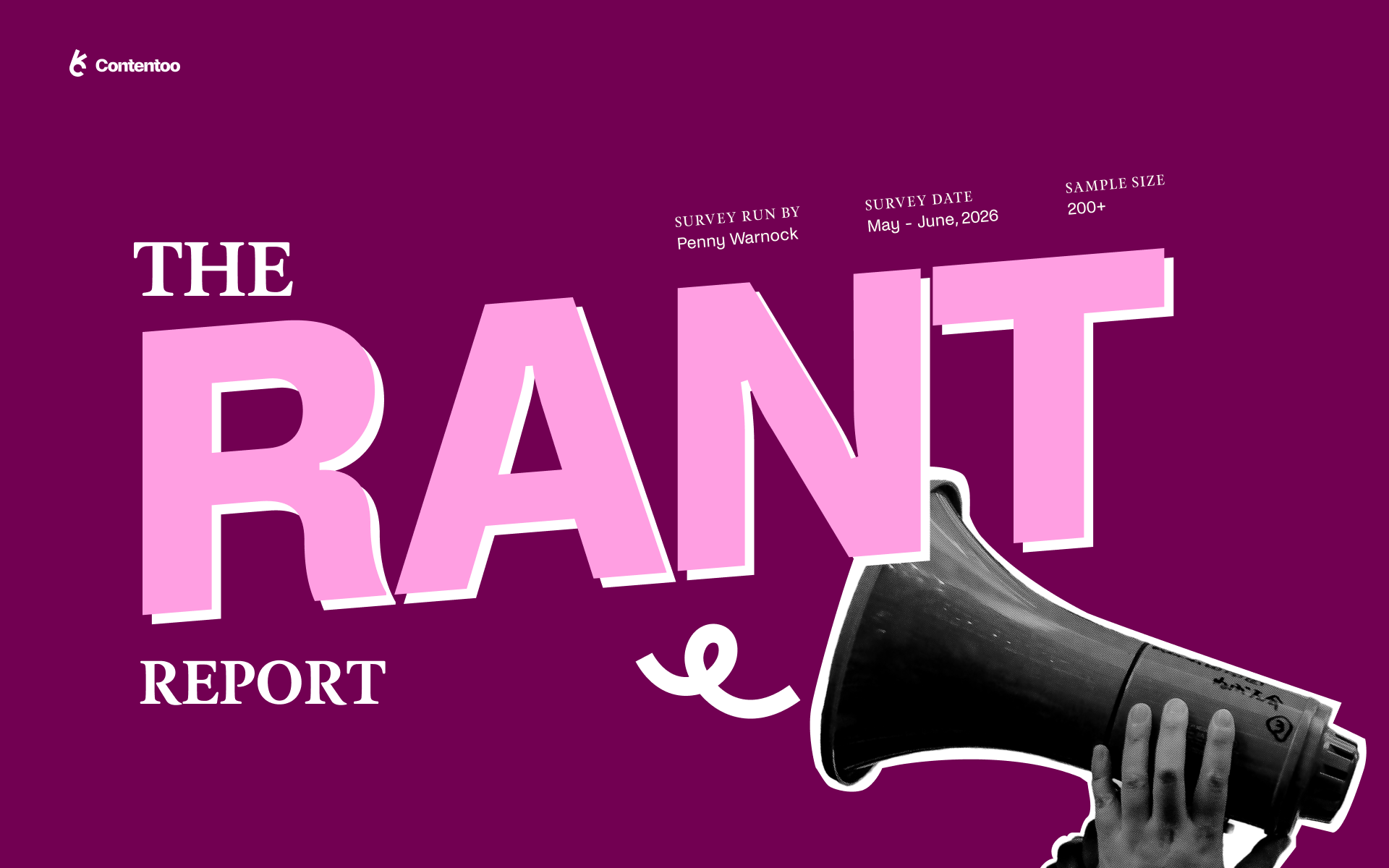
The right fintech content marketing agency depends on who checks every claim, and how fast the work clears review, as much as on who knows fintech. Contentoo suits teams producing regulated content across several European markets and languages; Mint Studios, Contentworks Agency, and Proper Expression are fintech specialists; Grizzle, Siege Media, and TSC (formerly The Starr Conspiracy) suit SEO-led and B2B content programmes; and Contently suits financial services teams that want credentialed and compliance review built into an enterprise platform. Building it in-house remains the alternative for teams that can staff every step. In The Rant Report, 45% of content leaders cite internal review and approvals as a major bottleneck, compared with 40% who cite the first draft. So judge each agency on its review path as closely as on its writing samples.
The launch copy is approved. English is signed off and goes live on Tuesday. The German version is sitting in legal's inbox, the French one is waiting on a product manager who's at a conference, and the Dutch one hasn't been briefed, because nobody is quite sure who owns it.
Nobody in that chain is doing anything wrong. Compliance is doing its job, and so is the product manager. The trouble is the route the content has to travel: a country lane built for one market, now carrying traffic for four. If that route sounds familiar, it's worth mapping your content review workflow before you bring a new partner into it.
This list is for fintech and financial services teams that know what they want to say and need a partner to get it right in every market. We chose eight content-led agencies rather than performance or PR shops, checked each one's site, review profile, and published pricing in November 2026, and scored them all on the same criteria. Contentoo publishes this list and appears in it, scored the same way as everyone else.
What does a fintech content marketing agency do?
A fintech content marketing agency plans, produces, and publishes content for companies whose products sit inside regulated money: payments, banking-as-a-service, lending, wealth, and insurance. A financial services content marketing agency does the same for banks, insurers, and asset managers. The deliverables look like any B2B programme (SEO articles, research, product pages, thought leadership, customer stories), with one extra layer that changes everything around them. Every claim about a rate, a licence, a guarantee, or a regulator has to be accurate, and someone whose job is to say no usually has to sign it off.
That layer explains a pattern many fintech content leads will recognise. Finding a writer who can explain an IBAN is the easy part. Getting the explanation published, accurately, in every market, before the launch has come and gone is the hard part.
Where the time goes once a fintech draft is written
The week a fintech piece loses is often lost after the draft is done. The Rant Report found that pattern across content teams in general: 45% cite internal review and approvals as a major bottleneck, 41% cite unclear briefs, and 40% cite the first draft. Internal review is a bigger reported bottleneck than drafting, which is why we'd argue the industry is optimising the wrong stage.

The number of people in that review matters as well. About 70% of teams involve two or three stakeholders, and about 20% involve four or five. Teams with six or more are considerably more likely to take two weeks or longer to publish. Regulated content tends to add reviewers by design: legal, compliance, a product owner, and sometimes a local entity in each market.
Each reviewer often has a narrower job than the process hands them. In many teams, legal has the final word on claims and disclaimers while the introduction stays with marketing, and the product owner confirms accuracy without rewriting the headline. Where your reviewers agree on a split like that, review tends to get shorter without anyone losing their say, and a good agency builds its process around the split you agree instead of adding another round on top.
Fintech marketing agency or fintech content agency?
Search for a fintech marketing agency and you'll find two kinds of partner under one label. Full-service fintech marketing agencies run paid acquisition, PR, launches, and often HubSpot or RevOps work, with content as one channel among several. Fintech content agencies go deep on the material itself: articles, research, guides, thought leadership, and the localisation of all of it.
If your main problem is pipeline from paid channels, a full-service agency is the more natural fit. If your main problem is publishing accurate, credible content at a steady pace in more than one market, start with the agencies below. Proper Expression sits closest to the line between the two, so it's here for teams that want content inside a wider demand programme.
How to choose a fintech content marketing agency
Once an agency can show it understands fintech, most shortlists stop there. The questions below separate agencies that write well from agencies that get regulated content published, and they're worth asking before you decide what to outsource and what to keep in-house.
Who briefs and who checks the claims
Start with four questions, in this order: who briefs, who QAs, who owns multi-market delivery, and what the client still has to run themselves. The answers tell you whether you're buying output or buying a process. An agency that writes beautifully but expects your team to brief every piece, check every figure, and chase every market has handed you a second job.

Then ask who checks a regulated claim before anyone in legal sees the draft. The best answer names a person or a step, such as a finance specialist or a check against your approved claims and disclaimers. "Legal will catch it" moves the agency's quality control into your compliance team's week.
Accuracy in every market you sell into
Fintech terms don't travel well on their own. A legal entity name, an account type, or a regulator's title can be exactly right in French and wrong in German. Swan, the Paris-based banking-as-a-service company, learned this when it first localised its website. As Constance Laux, Swan's Marketing Lead, put it: "When we localised our website in German, it was traumatising. It was such a complicated experience. Not everyone understands the FinTech space well enough to localise it the way it should be."
So ask each agency how terminology is kept consistent per market, who reviews in each language, and whether the person reviewing understands the product as well as the language.
How compliance sign-off fits the process
The agencies worth shortlisting help you agree, before the first brief, what each of your reviewers approves. One arrangement that often works is for legal and compliance to approve claims and disclaimers, the subject expert to approve accuracy, and marketing to approve tone, but the right split depends on the content, the product, and the market, so settle it with the people who carry that responsibility in your company. Ask how claims are reviewed early, on an outline or a claims list, rather than on finished copy, since a rejected claim in a finished draft often means rewriting the paragraphs built on it.

Ask, too, what happens when something legitimately changes mid-piece: a new regulatory requirement, a legal concern, a product change. A good process says who decides the change is real, what it does to scope and deadlines, and where the decision is recorded, so the change gets in without every new opinion reopening the draft.
Best fintech content marketing agencies rundown
The table scores every agency on the same four questions, then on markets and pricing. Where an agency offers more than one way of working, the last column describes the lightest route and notes that it varies.
The 8 best fintech content marketing agencies in 2026
Contentoo, which publishes this list, comes first. The other seven fall into three groups: fintech specialists, B2B content and SEO agencies with fintech practices, and an enterprise content platform. Every entry, Contentoo's included, follows the same template, starts with the problem it solves, and ends with the trade-off you'd be making.
1. Contentoo: best content automation for complex, multi-market workflows

The pain it solves: content approved in one market still has to be right, and compliant, in five more.
What it does: an Amsterdam-based expert content production and operations partner that manages briefing, expert sourcing, production, quality control, revisions, localisation, and delivery, with the human/AI mix chosen per content type. At Swan, translation-quality complaints fell from multiple a week to one or two a quarter.
Who briefs: you set strategy and standards; Contentoo turns them into briefs.
Who QAs: Contentoo's specialists and native experts.
Who owns multi-market delivery: Contentoo, across 49+ languages.
What you still run: internal and legal approvals.
Reviews and pricing: 4.5/5 on G2 from 32 reviews, where reviewers mention the time saved localising content; pricing depends on the scale of the project and is adjusted for teams that scale, with a free demo as the way to get a figure.
Best for: fintech teams producing regulated content in several European markets.
The trade-off: with one market and one reviewer, there's less coordination for Contentoo to take off your plate, and approvals stay with you either way.
2. Mint Studios: best for B2B fintech content tied to search

The pain it solves: your blog attracts readers who will never buy, and nobody on the team has the hours to write for the ones who would.
What it does: a fintech content agency founded by Araminta Robertson that specialises in fintech and financial services companies, focused on purchase-stage content, SEO, and visibility in AI search. Its own case study reports 2.8x organic inbound leads for Yapily.
Who briefs: the agency, building briefs from interviews with your internal experts.
Who QAs: agency editors, then your compliance team.
Who owns multi-market delivery: we couldn't find a localisation service on its site (checked Nov 2026), so ask which languages it covers.
What you still run: compliance review, and localisation beyond its languages.
Reviews and pricing: it has no Clutch or G2 profile of its own (the Clutch listing under the same name belongs to an unrelated video studio); pricing isn't published.
Best for: B2B fintech teams in English-language markets that want content to drive pipeline.
The trade-off: it specialises in one sector; if you sell in several languages, ask who would localise and review its content in each market.
3. Contentworks Agency: best for financial brands that want a sector specialist

The pain it solves: generalist writers keep producing copy your compliance team sends straight back.
What it does: a financial services content agency founded in 2017 and based in Limassol, Cyprus, working with forex brokers, fintechs, and banks as a fully managed service, and tracking regulators such as the FCA, CySEC, and ASIC in its content.
Who briefs: the agency, as a fully managed service.
Who QAs: agency editors, then your compliance team.
Who owns multi-market delivery: we couldn't find a translation service on its site (checked Nov 2026), though its Clutch reviewers mention work across languages.
What you still run: compliance review.
Reviews and pricing: 5.0/5 on Clutch from 2 reviews, which credit its financial-markets expertise and its handling of work across languages and time zones; pricing isn't published, and both reviewed projects were under $10,000.
Best for: fintech, trading, and payments brands that want writers who already speak regulated finance.
The trade-off: sector fluency can shorten briefing; ask which languages it covers in-house before you rely on it for several markets.
4. Proper Expression: best for content inside a wider demand programme
The pain it solves: content and pipeline sit in different teams, and neither gets credit for the other.
What it does: a US B2B marketing agency, founded in 2018 and based in McLean, Virginia, with a fintech practice covering demand generation, account-based marketing, RevOps, and HubSpot work, with content and webinars as part of the mix.
Who briefs: shared, inside the wider programme.
Who QAs: the agency team, then your compliance team.
Who owns multi-market delivery: we couldn't find a localisation service among its listed services (checked Nov 2026), so ask which languages it covers.
What you still run: compliance review and localisation.
Reviews and pricing: 5.0/5 on Clutch from 12 verified reviews, which praise its creative approach to CRM and marketing problems; pricing isn't published, and reviewers report spending $5,000–$10,000 a month.
Best for: B2B fintech teams that want content, events, and sales alignment from one partner.
The trade-off: content sits inside a wider demand remit, so ask how its content team is staffed and how much of the engagement goes to content.
5. Grizzle: best for SEO-led fintech and SaaS content
The pain it solves: you rank for terms that bring traffic but not buyers.
What it does: a London-based content and SEO agency founded in 2016 for B2B SaaS and fintech companies; the clients it names include Pipedrive, PandaDoc, and Tide. TripleDart's 2026 review also lists a standalone European localisation service.
Who briefs: the agency, from its content strategy.
Who QAs: agency editors, then your compliance team.
Who owns multi-market delivery: Grizzle, through its European localisation service; ask which languages it covers.
What you still run: compliance review and localisation.
Reviews and pricing: it has no Clutch or G2 profile; pricing is on enquiry.
Best for: fintech teams where organic search is the main channel.
The trade-off: it's strong on search strategy, so ask how its review path works with your compliance team before volume grows.
6. Siege Media: best for high-volume organic programmes

The pain it solves: you need a lot of search content, quickly, and digital PR to earn the links behind it.
What it does: an Austin-based content marketing and SEO agency known for search-led content and digital PR, with financial services among the sectors in its Clutch reviews.
Who briefs: the agency, search-first.
Who QAs: agency editors, then your compliance team.
Who owns multi-market delivery: localisation isn't among the services on its Clutch profile, so ask which languages it covers.
What you still run: compliance review and localisation.
Reviews and pricing: 4.9/5 on Clutch from 46 reviews, where one reviewer wanted more in-depth interviews with internal experts on highly technical subjects; Clutch lists a minimum project of $5,000 and $100–$149 an hour.
Best for: growth-stage and enterprise fintech brands with budget for volume.
The trade-off: a high-volume programme puts more pieces into your compliance queue, so agree the review path with your reviewers before the programme scales.
7. TSC (formerly The Starr Conspiracy): best for B2B fintech brand and demand together

The pain it solves: your content sounds like everyone else's in a category where trust is the product.
What it does: a Fort Worth-based B2B marketing agency for technology companies, founded in 1999 and now trading as TSC, combining brand, content, and demand work; financial services is one of the sectors in its Clutch reviews.
Who briefs: shared, inside wider brand and demand programmes.
Who QAs: the agency team, then your compliance team.
Who owns multi-market delivery: localisation isn't among the services on its Clutch profile, so ask which languages it covers.
What you still run: compliance review and localisation.
Reviews and pricing: 4.9/5 on Clutch from 4 reviews, which praise its paid media strategy and flag some challenges with budget alignment; Clutch lists a minimum project of $10,000 and $100–$149 an hour.
Best for: B2B fintech brands that want positioning and content from one partner.
The trade-off: content sits alongside brand and demand work, so ask how content is staffed and scheduled inside a wider programme.
8. Contently: best for credentialed review inside an enterprise platform
The pain it solves: content runs through spreadsheets and inboxes, and nobody can see what's in review.
What it does: an enterprise content platform for regulated industries that pairs a network of credentialed creators, including CFAs and FINRA-registered reviewers, with a dedicated managing editor and a compliance pre-screen before legal sees a draft. Its financial services page describes jurisdiction-aware localisation across 14 markets, and a case study reports 252 localised articles in 24 hours for a $35B financial services firm.
Who briefs: a dedicated Contently managing editor, from your strategy.
Who QAs: Contently's editors and credentialed reviewers, with a compliance pre-screen.
Who owns multi-market delivery: Contently, through jurisdiction-aware localisation.
What you still run: legal sign-off in each region.
Reviews and pricing: 4.6/5 on G2 from 96 reviews, where reviewers rate its ease of use highly; pricing isn't published.
Best for: financial services teams that want credentialed and compliance review built into an enterprise platform.
The trade-off: its compliance workflow names US frameworks such as FINRA and the SEC alongside GDPR and MiFID, so ask how its reviewer pool covers the regulators and languages in your markets.
Building it in-house
The alternative to all eight is a team of your own: finance-literate writers per market, a compliance reviewer with time set aside for content, and glossaries someone keeps current. It gives you the most control and the most to run, and the choice between an agency and an in-house team usually comes down to how much of that running you want to own.
How do you keep compliance review from slowing every piece?
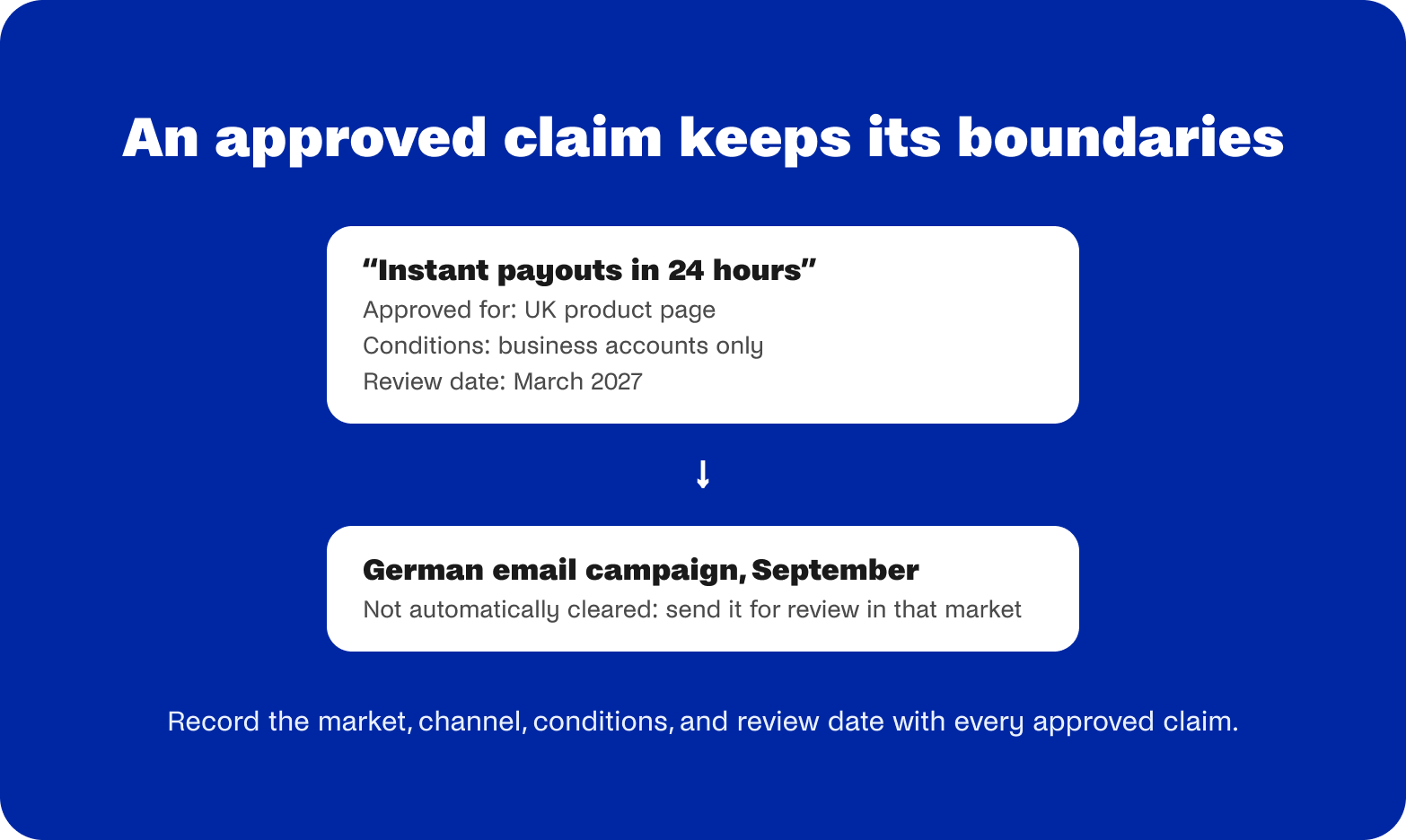
Whichever agency you choose, the review path is something you design together, and a few habits keep it short. Agree with your responsible reviewers what each of them approves before the first brief, using a split like the one above as a starting point. Keep approved claims, disclaimers, and terminology in one shared library, and record with each item the market, channel, conditions, and review date it was approved for. A claim cleared for a UK product page in March, for example, isn't automatically cleared for a German email campaign in September, so writers can start from approved wording without treating it as cleared everywhere. And decide in advance who settles conflicting feedback, so two reviewers' opinions don't turn into two more rounds.
Timing matters as much as roles. A claim rejected on a one-page claims list costs a sentence; the same claim rejected in a finished draft can take three paragraphs with it. In our experience, agencies that send claims for review early, before the writing is polished, need fewer rounds at the end.
Hiring fintech content marketing support without adding a review round
When you hire fintech content marketing support, ask the agency to walk you through one past piece from brief to publication: who touched it, in what order, and how long each step took. If it can't describe the review path, you'll end up building it. The same scoped approvals apply to executive content, where leadership sign-off adds a round of its own.
Which fintech content marketing agency fits your team?
The right choice depends on where your content gets stuck, so start there.
If you sell in one or two English-speaking markets and want writers who already know the sector, a fintech specialist such as Mint Studios or Contentworks Agency will need the least explaining. If organic search matters most and you have budget for volume, Siege Media or Grizzle fit. If content has to live inside a wider demand or brand programme, Proper Expression or TSC keep it in one place. If you want credentialed and compliance review built into an enterprise platform, Contently is built for it.
Contentoo fits when regulated content has to land in several markets and languages and the review path, more than the writing, is the bottleneck. Your team sets the strategy and standards and approves the work; Contentoo runs the operation in between.
That model doesn't suit everyone. Some teams want to stay close to production for quality-control reasons, and full delegation can feel like losing control rather than gaining time. If that's your team, a specialist agency or an in-house setup keeps you nearer the work, in exchange for running more of it.
Fintech buyers are, almost by definition, deciding whom to trust with money. The content they read before they ever speak to you is part of that decision, and it only earns trust if it's right in every language they read it in.
Producing regulated content in more than one market? Contentoo runs briefing, expert sourcing, native review, and delivery around your approval path, while your compliance and legal teams keep the final say. Book a free demo and walk us through one of your workflows.
FAQs
How much does a fintech content marketing agency cost?
Fintech content marketing agencies usually charge by the hour, by the project, or on a monthly retainer, and many share prices only on request. Before comparing quotes, add the time your own team will spend briefing, reviewing, and coordinating, because two quotes that look far apart can end up closer once your compliance team's hours are counted. Ask each agency how many review rounds and how many languages its fee covers.
Can one agency handle fintech content for both the UK and the EU?
One agency can handle both markets if it has native experts in each one and a process for keeping terminology consistent across them. Ask who reviews in each language and how a term approved for the UK is handled in Germany or France, where the regulator, the product name, and the legal entity can all differ.
Who should sign off fintech content: marketing, legal, or compliance?
In many fintech teams, all three sign off, each on a different part of the piece. One common arrangement is for legal and compliance to approve claims, disclaimers, and regulatory references, subject experts to approve technical accuracy, and marketing to approve tone and structure, though the split depends on the content, the product, and the market. Agreeing those boundaries with your reviewers before the first brief helps keep a three-reviewer process from turning into a two-week one.
What's the difference between a fintech marketing agency and a fintech content agency?
A fintech marketing agency usually runs paid acquisition, PR, events, and demand generation, with content as one channel among several. A fintech content agency goes deeper on the content itself, from research and articles to thought leadership and localisation, and suits teams whose main problem is publishing accurate content at a steady pace.
Can a content agency localise regulated fintech content?
A content agency can localise regulated fintech content when the people doing it understand the product and the regulation as well as the language. Swan, a banking-as-a-service company, extended its work with Contentoo from marketing content to product UX keys and support articles, and complaints about translation quality dropped from multiple a week to one or two a quarter. Certified translation of legal documents is a separate service that usually sits with specialist translation agencies.