Content briefs and stakeholder alignment: agree on the goal before you produce anything


TL;DR
A brief is not a to-do list. It's a contract between stakeholders about what success means, signed before a single asset gets made. Skip that signing and here's what actually happens: the request gets approved, production starts, and three weeks later, in review, you discover Sales thought this was pipeline content, Product thought it was a feature announcement, and Brand thought it was thought leadership. Nobody lied. Nobody was wrong. They just never agreed, because nobody asked them to. This article is about the handshake that has to happen before production starts: one goal, one audience, one metric, one person who breaks the tie when the other three don't fit together.
Briefs get a bad reputation. When you're already running at capacity, when every request arrives marked urgent, stopping to fill out another form feels like a luxury you cannot afford. So the brief gets waved through, the way everyone waves through anything that looks like paperwork standing between them and a deadline.
Here is what actually happens next. The request gets approved. Production starts. Three weeks later, the draft lands in review, and Sales says this was supposed to drive pipeline, Product thought it announced the new feature, and Brand was expecting a thought-leadership piece that would get shared, not sold. All three read the same one-line request and walked away with a different idea of what "done" looks like. The content team, caught in the middle, has somehow been asked to satisfy all three at once, with one asset.
Nobody in that room lied, and nobody is wrong, exactly. They just never agreed on what success meant, because nobody made them agree before the work began. A brief that only captures a topic and a deadline is not a brief. It is a request. A real brief is something closer to a contract: a record of exactly who agreed to what, before anyone spent a dollar or an hour making it real.
Why teams skip the brief and pay for it later
Speed pressure makes the brief feel like admin. Teams are stretched thin. Stakeholders want output yesterday, so the brief becomes a box-tick: a few words, no due date, "ASAP", and goal: "more leads". Done.
That brevity is not efficiency, and the cost compounds downstream:
- The production team builds the wrong asset because "thought leadership" and "drive demos" were never distinguished in the original ask.
- The review cycle stretches from two days to two weeks because three stakeholders walk in with three scorecards nobody compared.
- The paid budget goes live behind content that was never tested against a real audience need, and the campaign limps along until someone pulls it.
- The post-mortem asks "what did we learn?" and the honest answer is: nothing, because there was no agreed hypothesis to test.

What looks like ten minutes saved on the brief becomes a borrowed week somewhere else.
How a brief gets stakeholders aligned before work begins
The brief is not about the document; it's about the conversation the document forces you to have.
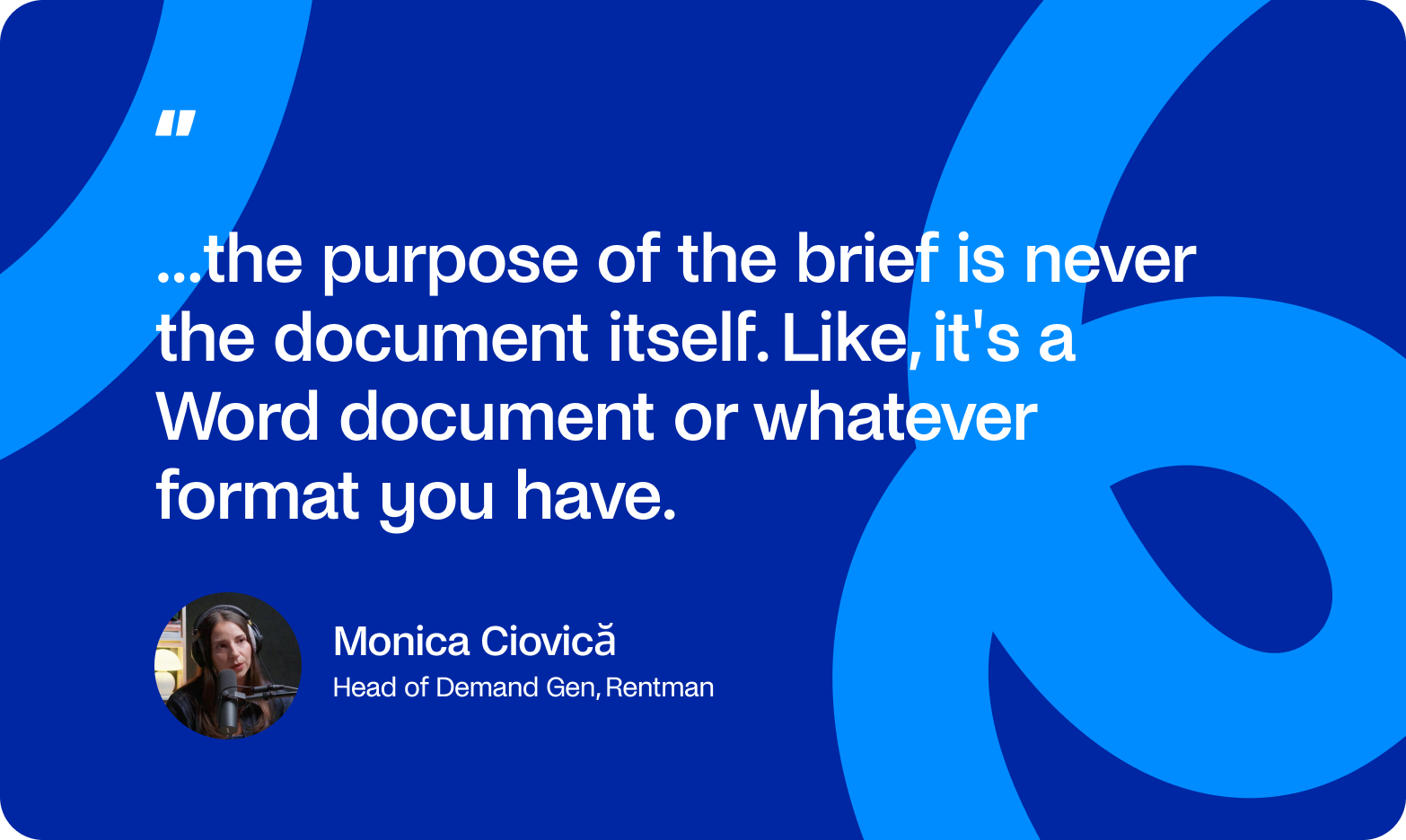
The real value is the pause. The brief is a moment where you stop and actually think: what do I want to do, why do I want to do it, and for whom? It is a sanity check disguised as paperwork.
And when the thinking happens upfront, everything afterwards accelerates. The production is cleaner, the review is shorter, and the stakeholders arrive on the same page because they were all in the room when the page was written.
This is what separates a strategic brief from a performative one. A strategic brief is a thinking tool, while a performative brief is a formality with two words in each field and a deadline that says "next week".
📌 Worth reading: Turn that thinking into a repeatable brief: The expert guide to creating great content briefs
The go/no-go questions to answer before approving any asset
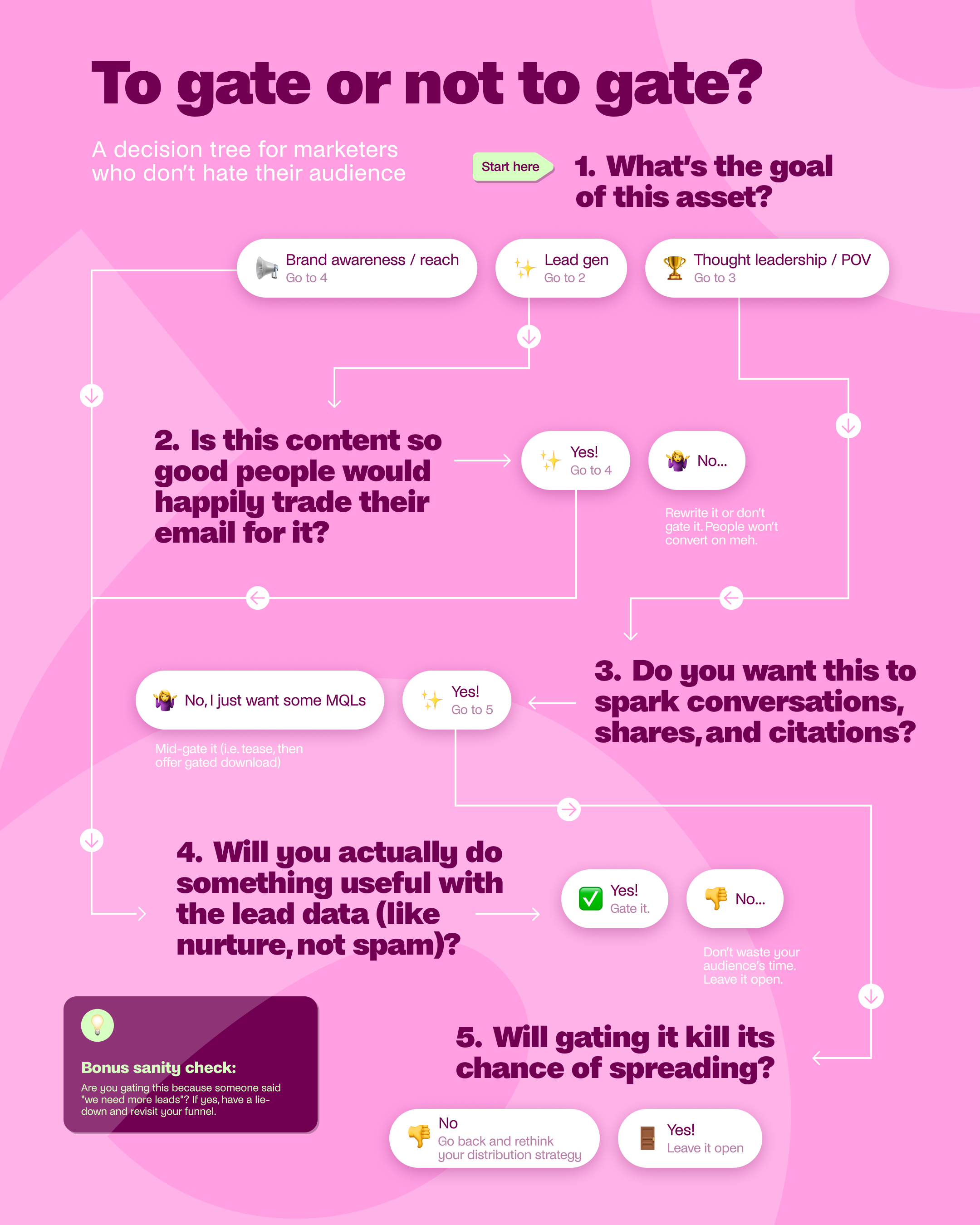
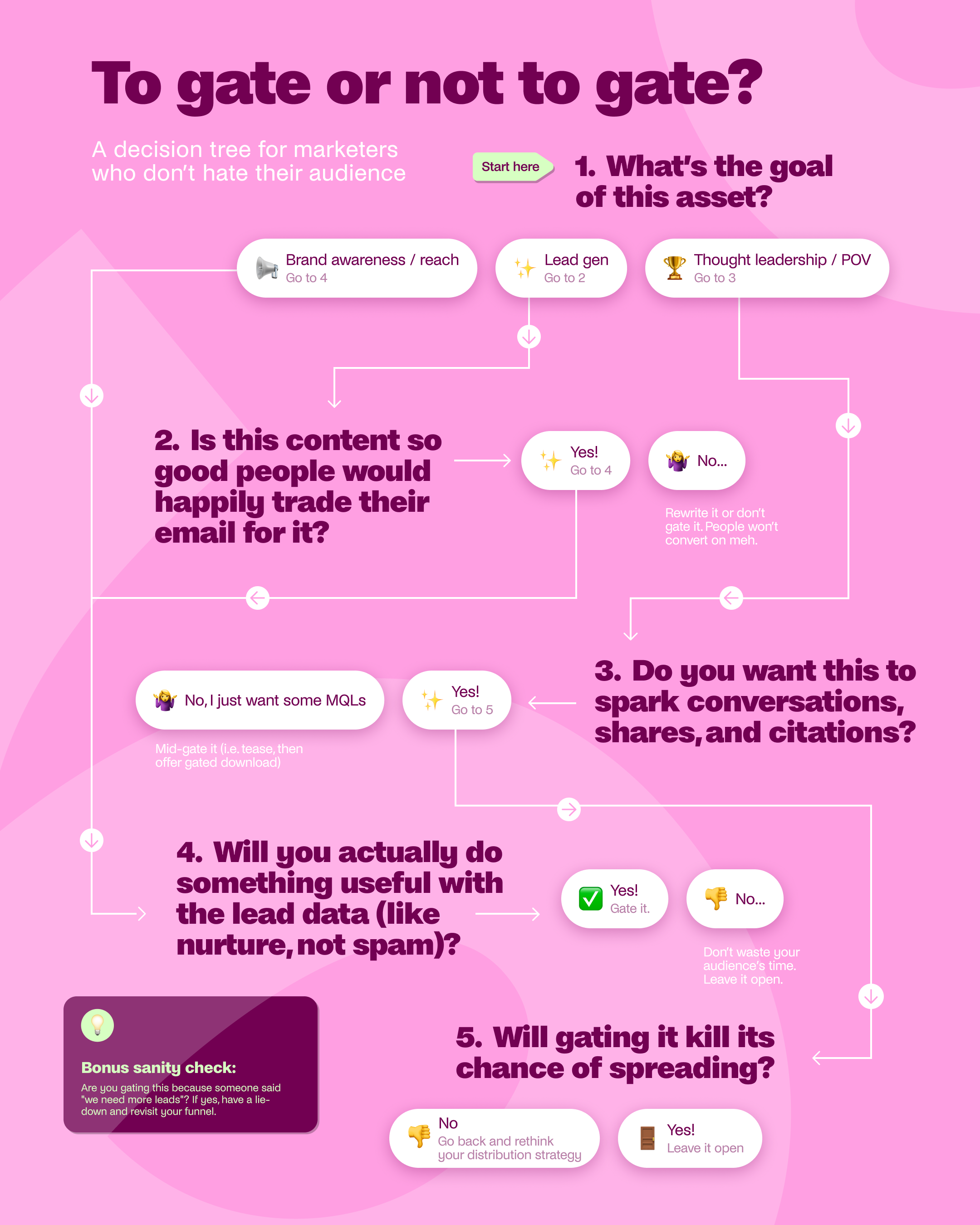
Think of the brief less as a form and more as a gate. It's a strategic checkpoint, not a box to tick for compliance. If you cannot fill it in, that signals that the project is not ready.
The brief becomes a go/no-go checkpoint. Can you answer the following?
- What is the goal? A measurable outcome tied to a business priority, specific enough to evaluate when the campaign ends.
- Who is the audience? A real answer to the question: why would this person stop scrolling?
- How will we measure success? A metric agreed before production, not retrofitted after the campaign tanks.
- What is the distribution plan? Great content stuck in a review queue misses the moment; plan the handoff.
- Do all decision-makers agree on the answers above? Not "has everyone seen the brief", has everyone who can derail the work later actually signed off on what success means. A goal, an audience and a metric sitting in a document is not alignment if a fourth stakeholder shows up in review with a different idea of all three.
If the answer to any of these is "I don't know", the work stops until someone does. That is the brief doing its job.
How vague briefs turn into costly reviews, and who actually gets to break the tie
A vague brief is an open invitation for stakeholders to project their own expectations onto the same asset. One person thinks the LinkedIn post is supposed to drive demo requests. Another thinks it's brand-building thought leadership. Same post, different scorecards, and the recipe for inevitable disappointment.
Contentoo's The Rant Report: State of Content Teams found that 56% of content teams cite poor or incomplete briefs as the number one quality killer. Another 40% name too many stakeholders diluting the message. Both problems trace back to the same root: a brief that never forced anyone to agree on what success looked like before the first draft existed.
The fix is not fewer stakeholders. Sales, Product and Brand all have a legitimate reason to care about the same asset, and excluding any of them from the conversation just moves the disagreement to review, where it's far more expensive to resolve. The fix is deciding, before production, who gets a vote and who gets a say.
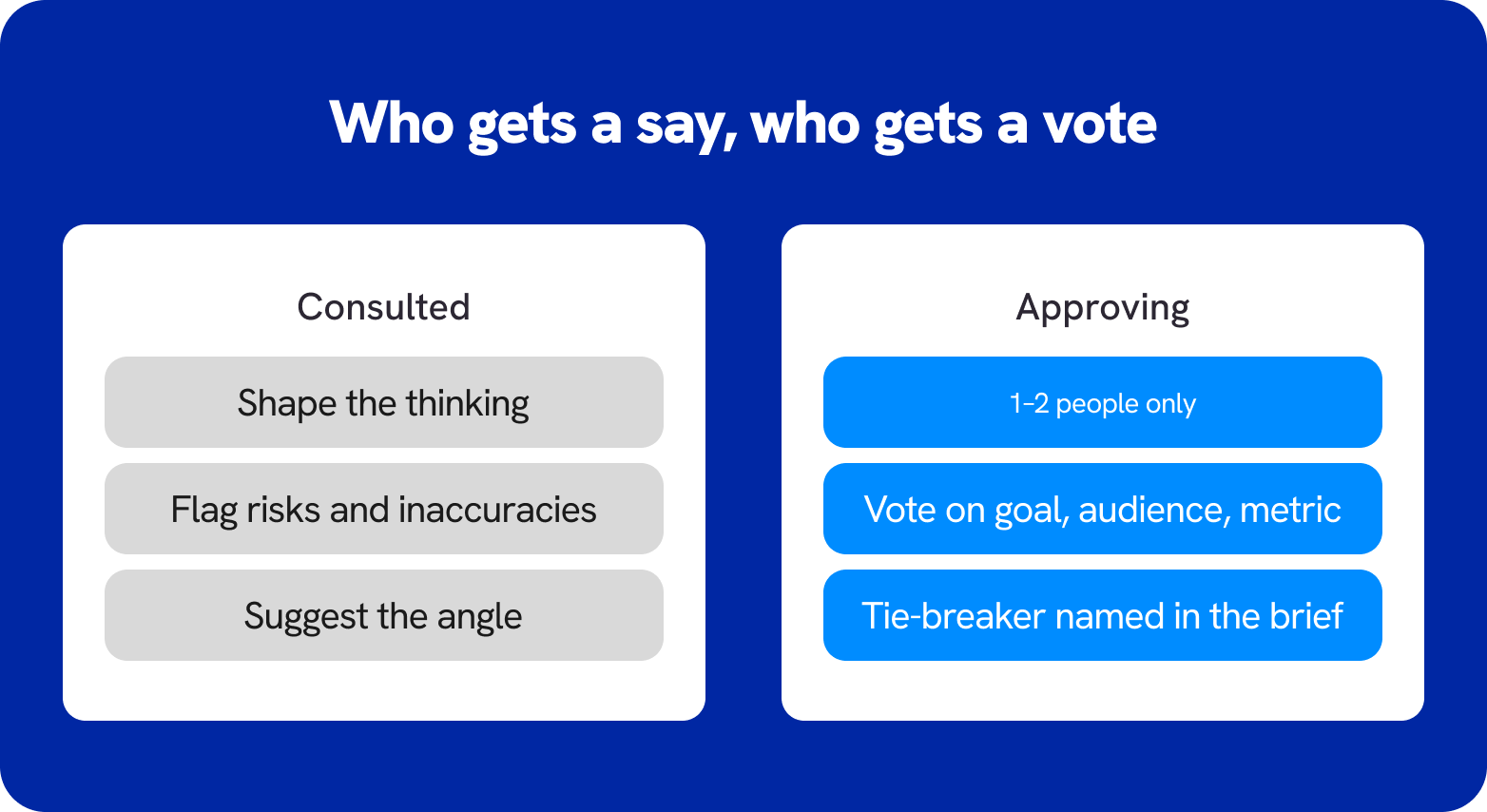
Split every stakeholder on a brief into one of two categories:
- Consulted. They can shape the thinking, flag a risk, suggest an angle. Sales might point out the objection prospects keep raising; Product might flag a claim that's technically inaccurate. Their input makes the brief sharper. It does not give them the right to redefine the goal after the fact.
- Approving. They hold a vote on whether the goal, audience and metric in the brief are the right ones. This should be a short list, one or two people, not everyone who will eventually see the asset.
📌 Worth reading: This same consulted-versus-approving split shows up at the review stage too, see Content workflow bottlenecks: it's your process, not your strategy and The content approval process: how to protect quality without killing momentum
Here's the scenario that actually breaks teams: Sales wants the piece to drive demo requests. Brand wants it to build reach and reputation. Both are reasonable goals for a single asset to carry some of, but a piece cannot be optimised for both at once, a demo-focused CTA and a reach-focused distribution plan pull against each other. Someone has to decide which one wins for this specific asset. That person is the tie-breaker, named in the brief itself, before production starts, not whoever is loudest in the review thread three weeks later.
Without a named tie-breaker, here's what actually happens: the asset gets built to a compromise nobody asked for, pulling slightly toward demos and slightly toward reach, serving neither goal well. The post-mortem then blames the content, the writer, or the format, when the actual failure was a decision nobody made.
The cost compounds fast. Run the maths on what a week-three review debrief actually costs: the hours of five people sitting through a conversation nobody wanted to have, plus the paid spend already committed to an asset built on two different ideas of success. That number is larger than the ten minutes your team "saved" by skipping the alignment conversation upfront.
And when the brief never resolved that tension, the reporting afterwards is useless. You cannot tell Sales whether the asset worked, because it was never clearly built for their metric. You cannot tell Brand whether it worked either, for the same reason. Everyone just quietly agrees not to look too closely at the numbers.
📌 Worth reading: Why quality is in the eye of the stakeholder: How to win in content quality
Feature launches: the clearest proof that alignment, not audience research, was the real gap
Feature launches are where misalignment bites hardest, and not because teams forget to think about the audience. It's because a feature launch is the single clearest case of multiple stakeholders arriving with genuinely different, genuinely valid reasons for wanting the same piece of content to exist.
Product wants an announcement that proves the roadmap delivered. Marketing wants a story that fits the quarter's broader narrative. Sales wants something they can forward to a prospect mid-deal, this week, to justify the wait. Leadership wants proof, to whoever's watching, that the team ships. None of these people are wrong. They're all reading the same feature launch and building a different brief in their heads, exactly like the Sales-versus-Brand problem above, just with one more voice in the room.
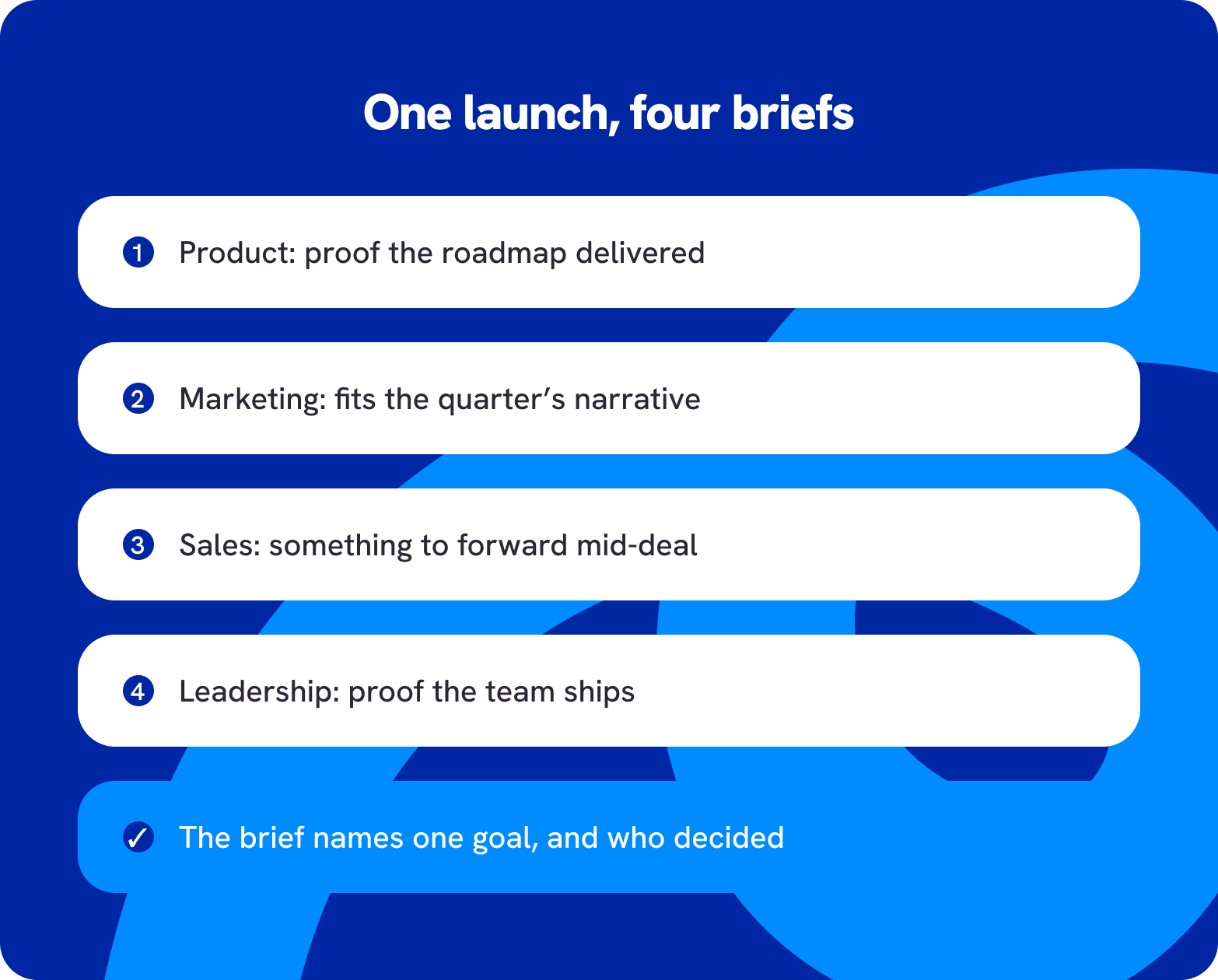
The dev team spent six months building the thing. Internally, everyone is attached, the roadmap is finally clear, excitement is high. But excitement is not alignment. If Product, Marketing, Sales and leadership never agreed on which one of their four goals this specific piece serves, the brief inherits all four, and the asset ends up serving none of them well, the exact failure mode the tie-breaker role exists to prevent.
A good brief for a feature launch names the single goal this particular asset is serving, announcement, sales enablement, thought leadership, or proof of momentum, and names who had the authority to make that call. The other three groups still get to be consulted. They don't get to redefine the goal in review.
📌 Worth reading: How to structure a brief so writers can deliver on one clear goal: How to write the perfect freelancer content brief
The brief is where the workflow earns its keep
Everything discussed here sounds simple. It is. But simple is not the same as easy when you are under pressure, and the stakeholder already has "just one more request".
Here's what agreement actually looks like, in practice, before production starts:
✅ The sign-off checklist
- One primary goal. Not a list of nice-to-haves. The single thing this asset is being judged against.
- One primary audience. The specific person it has to land for, not every audience it might also reach.
- One agreed success metric. Decided before production, not retrofitted once the campaign is live.
- One final decision-maker. Named in the brief, with the authority to resolve a disagreement between consulted stakeholders without reopening the whole conversation.
Everyone else, Sales, Brand, Product, whoever else has a stake, can and should contribute context. None of them gets to walk into review with a different definition of success than the one the brief locked down. That's the difference between a brief that's been seen by five people and a brief that five people actually agreed to.
The brief is not overhead. It's the upstream layer that protects everything downstream: the creative work, the review process, the budget, and the team's morale when the campaign launches. Get it right, and the rest flows. Skip it, and you relocate the disagreement into every step that follows, at a much higher price.
So the next time someone asks you to move fast, remember that speed without agreement is just an argument you're having later, with real money already spent.
And in Monica's words: "Please write a better brief."
Want to hear it straight from the source? Watch the full episode.
FAQs
Who should have final approval on a content brief, and who should just be consulted?
Approval should sit with one person, usually whoever owns the budget or the business outcome the asset is meant to serve. Everyone else with a stake, Sales, Brand, Product, should be consulted for context and expertise, but consultation is not a vote. If every stakeholder who's consulted also gets to approve, you don't have an approval process, you have a popularity contest, and popularity contests don't resolve disagreements, they just delay them until review.
What happens when two stakeholders want the same asset to do different things?
Name it in the brief rather than letting it surface in review. If Sales wants demo requests and Brand wants reach, pick the one this specific asset is optimised for, and say so in writing before production starts. The other stakeholder's goal doesn't disappear, it just waits for a different asset built to serve it properly.
How do I get busy stakeholders to actually agree on a brief instead of just skimming it?
Don't send a document and wait for silence to count as approval. Ask the specific question you need answered: "Is pipeline the primary goal for this piece, yes or no?" A yes/no question gets a real answer. A circulated document gets ignored until someone disagrees in review, which is the most expensive place to discover a disagreement.
Can AI help resolve stakeholder disagreements in a brief?
No, and it shouldn't try to. AI can summarise what each stakeholder said, flag where their stated goals conflict, and draft the brief once a decision is made. Deciding whose goal wins is a judgement call about the business, not a synthesis task, and it has to stay with the named decision-maker.
What if the brief is signed off, but a new stakeholder shows up in review with different expectations?
That's a sign the sign-off list was incomplete, not that the brief failed. Go back and ask who approved the brief and why this person wasn't on that list. Fix the list for next time. For the asset in front of you, the named decision-maker still gets the final call, a late objection from someone who wasn't part of the original agreement doesn't get to reopen it.
How should I brief a campaign when the goal is genuinely unclear?
If the goal is unclear, the campaign is not ready. Use the brief to surface that ambiguity before anyone spends budget or creative hours. A brief that exposes a missing strategy is more valuable than a campaign built on a guess.

.png)



.webp)