AEO and GEO explained: why it's still just SEO


TL;DR
For two years, marketers scrambled to master AEO, GEO, and every other acronym promising a secret handshake with AI search. Google has now published official guidance that folds it all back into plain SEO. The fundamentals never moved. Titles, headings, structure, digestibility: still the whole game. The frantic volume play that followed the ChatGPT moment built a content landfill, and Google is politely telling us to stop. If you want AI Overviews and AI Mode to surface your content, write something worth surfacing. The machine everyone rushed to feed does not need feeding. It needs something worth saying.
Penny admitted it mid-episode with a laugh that sounded more like relief than embarrassment: "I myself have been a victim of pretending I know about GEO when I didn't, because everyone's lying and pretending they know." If you've nodded along to a LinkedIn post about "optimising for LLMs" while silently Googling what that actually means, welcome to the club. Most of us joined during the great SEO panic of 2024 and stayed because admitting confusion felt riskier than faking expertise. Underneath the panic sat one shared assumption: that AI search was a new, hungrier machine, and the only way to be seen was to learn its diet. That assumption is what this piece is going to take apart.
But something shifted. Google published its official guidance on optimising for generative AI features, specifically AI Overviews and AI Mode inside Google Search itself, and the subtext reads like a polite call-out. AEO and GEO explained in one sentence by the company that actually runs the search engine: it's all just SEO. The relief in the Permission to Rant studio was palpable. Let's get into it.
Do you actually need a separate AEO or GEO strategy?
The short answer is no. The longer answer is still no, but with receipts.
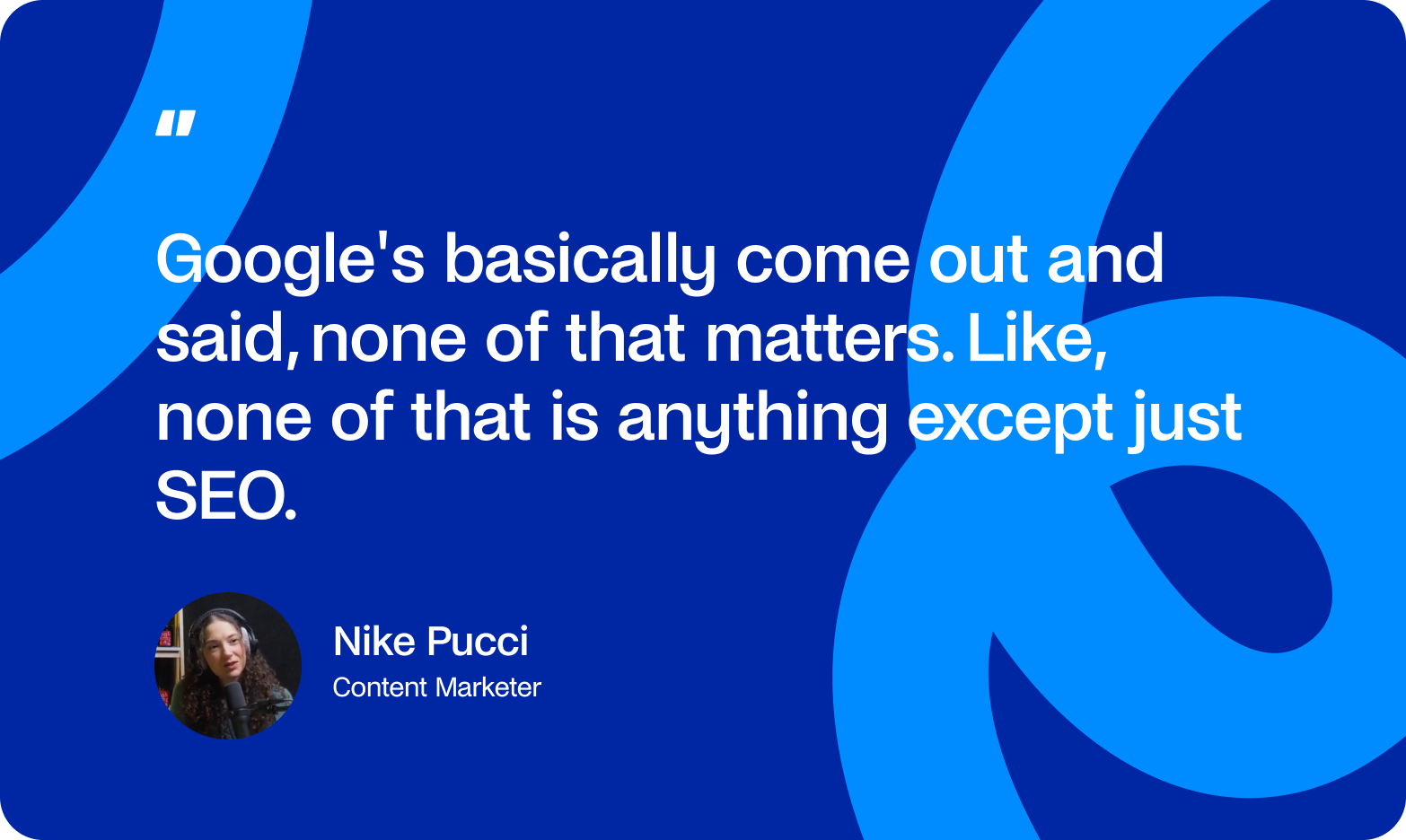
That quote from the podcast landed because it named what content marketers suspected but couldn't prove. For two years, the industry treated Answer Engine Optimisation (AEO) and Generative Engine Optimisation (GEO) as distinct disciplines, each requiring its own budgets, retainers, and consultants. Google's guidance says otherwise: "optimizing for generative AI search is optimizing for the search experience, and thus still SEO." No second playbook. No hidden lever.
This is validation, not novelty. Is SEO still worth it in 2026? The answer hasn't changed, and neither have the rules. Structure your content. Make your headings descriptive. Write something a human would actually want to read. That remains the price of entry for any search surface, AI-powered or otherwise.
AEO and GEO explained: what actually helps AI understand your content
If AEO and GEO are just SEO, then what does "just SEO" look like when the results page includes AI Overviews and conversational AI Mode answers?
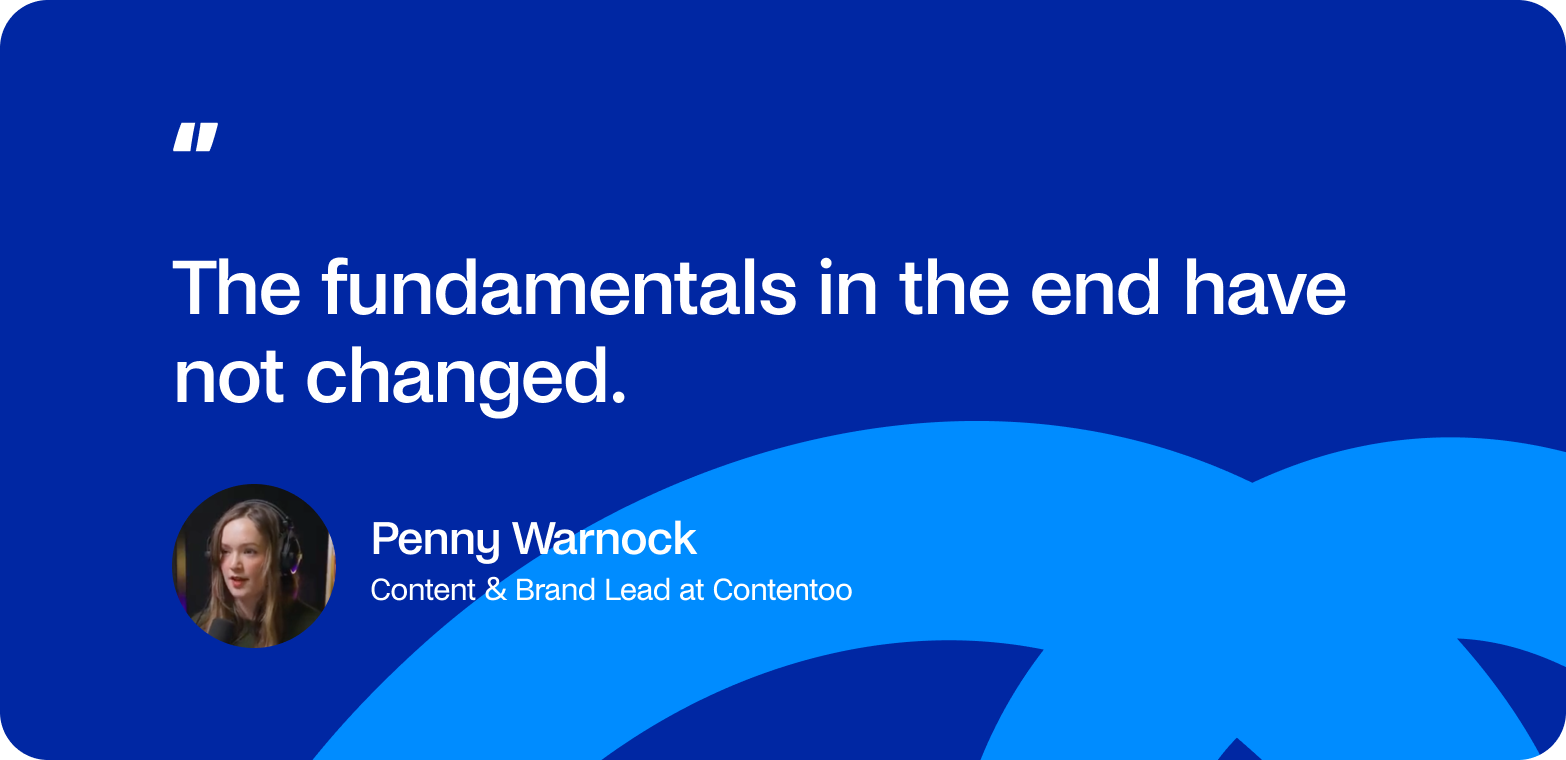
The podcast hosts kept returning to this point like a refrain. Titles, H2s, digestibility, structure: the bones of good web content since the early 2010s remain the bones of good web content now. The things that make content understandable and useful to humans, clear structure, descriptive headings, useful information, are also what Google recommends for its own AI search experiences. Write for the human, and you have written for the machine.
Google's guidance confirms this. It explicitly names what you can skip: no special llms.txt file, no "chunking" your content into machine-readable fragments, no AI-specific rewriting, no heavy schema markup beyond what you'd already do for standard SEO. Most of them were unnecessary, and some were actively counterproductive.
The thing is, AI rewards clarity, and if your article is structured like a story (beginning, middle, end, chapters, signposts), it's already optimised for AI search visibility. Alas, that's less exciting than a "GEO masterclass," but it has the advantage of being true.
Why publishing more AI content can hurt your visibility
Panic has a favourite button: do more. When ChatGPT went mainstream, content teams pressed it hard, certain they'd found the new machine's diet: more pages, more speed, more coverage. The logic felt sound. If AI can write faster, we should publish more. If competitors are scaling, we need to match their volume.
The result, as the podcast put it, is "a graveyard of crappy content across the Internet."
Google's guidance now explicitly names this. Its spam policies define scaled content abuse as generating many pages primarily to manipulate rankings, citations, and mentions, including with generative AI tools, without adding value. That's a policy about deceiving Google's systems, not a claim about conversion rates, but the business case for restraint doesn't need Google's help to stand: traffic that never converts isn't doing much for your team either way, whatever the algorithm makes of it. A site flooded with thin, top-of-funnel articles that exist only to capture keywords reads less like authority and more like noise.
The wild west of AI visibility captured the chaos of this moment. Everyone threw content at the wall hoping it would stick, sure they were feeding a hungry new system. For a while, some of it did stick, and then the wall got pickier. Volume without a point is just noise, and Google has started treating it that way.
The lesson is uncomfortable but simple: the quickest path to ranking runs through slower, more deliberate production of content that actually says something. Quality problems are upstream problems. Fix the brief, the angle, the evidence base, and the output follows.
How to make your content less generic and more defensible
Google's guidance introduced a phrase that deserves attention: non-commodity content. This is content that exists because a specific person with a specific experience made it. Commodity content is the opposite: stuff anyone could create, including AI.
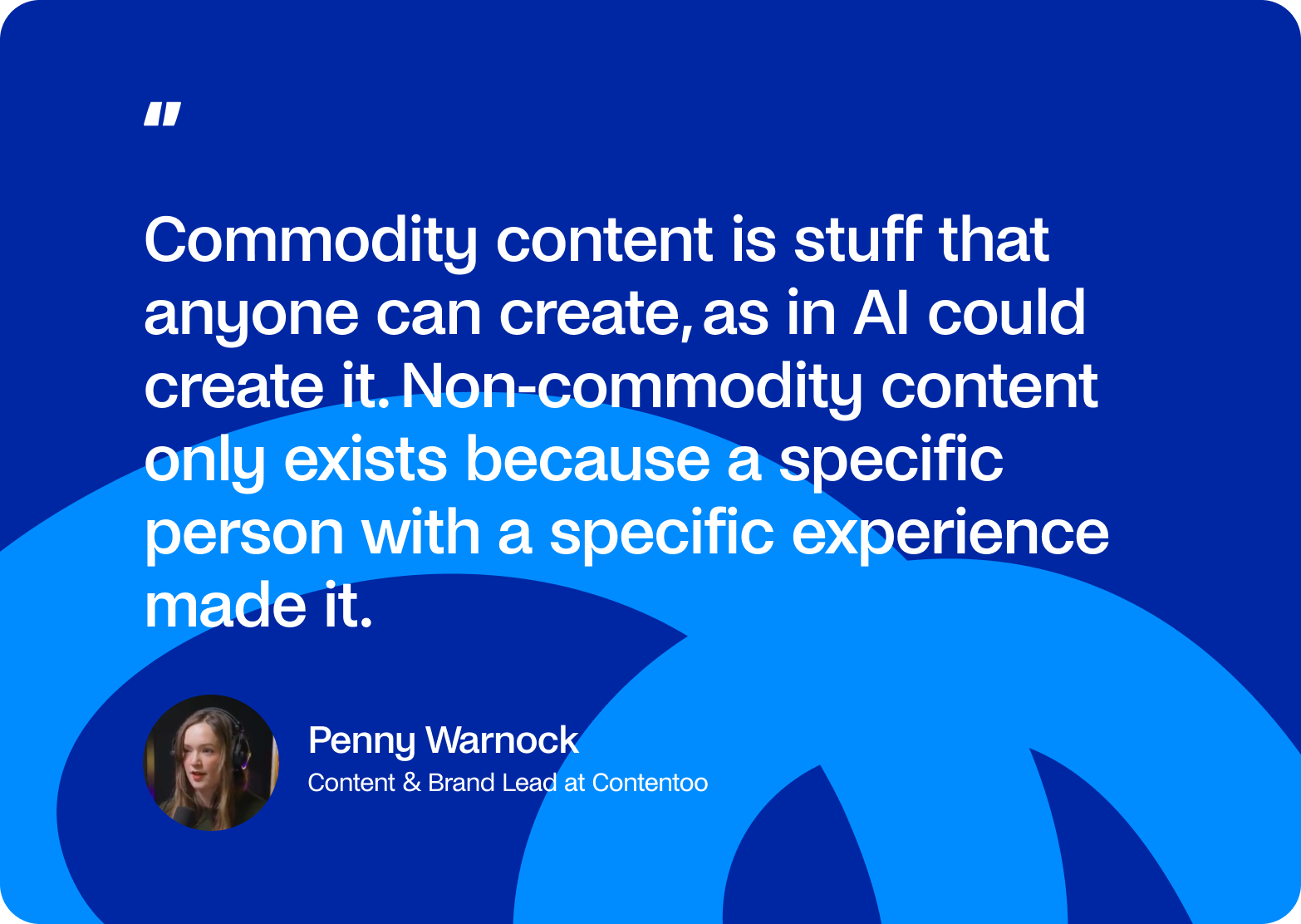
The hosts illustrated this with a test. Ask yourself: what is an apple? If your article reads like a dictionary entry, it's commodity content. If ChatGPT could produce it in four seconds for free, it earns nothing.
Then came the counter-example. A woman suspected Google Maps was routing her around a wealthy street. She didn't tweet about it. She downloaded the expected steps-per-minute from Maps, found a playlist matching the beats per minute to her stride, and walked the route herself. The detour was real, and that video is non-commodity content.
This distinction is a filter: your content either exists because of a specific point of view, or because the brief said "write something about X." Using AI doesn't disqualify you from the first category. You can co-create with AI and still produce non-commodity content, but it takes editing, prompting, and injecting the detail only you can provide.
The human edit is the secret ingredient. AI can draft. It cannot decide what's worth saying. Your content quality checklist should include one binary question: would my competitor publish this unchanged and no one would notice? If yes, rethink.
Which AI optimisation tactics you can safely ignore for Google AI
Some advice circulating during the AEO/GEO hype cycle was expensive, time-consuming, or simply wrong. Google's guidance gives you permission to skip:
- An llms.txt file. Google confirmed it receives no special treatment.
- "Chunking" your content into machine-readable fragments. Normal semantic structure (headings, paragraphs, lists) already does the job.
- Chasing manufactured brand mentions. Google says seeking out inauthentic mentions "isn't as helpful as it might seem" and flags them to its spam-blocking systems. Its spam policies also list buying or selling links for ranking purposes, and excessive "link to me, and I'll link to you" exchanges, as link spam. Paid placements and link swaps won't earn you the visibility you're after.
"You do not need to have an LLM dot text file." That line got a laugh in the podcast because it named the anxiety. So many marketers had been told they needed this. The relief of being told otherwise was audible. That being said, you might find these tactics useful for pickup in other LLMs.
How to improve AI-era visibility without rebuilding your whole strategy
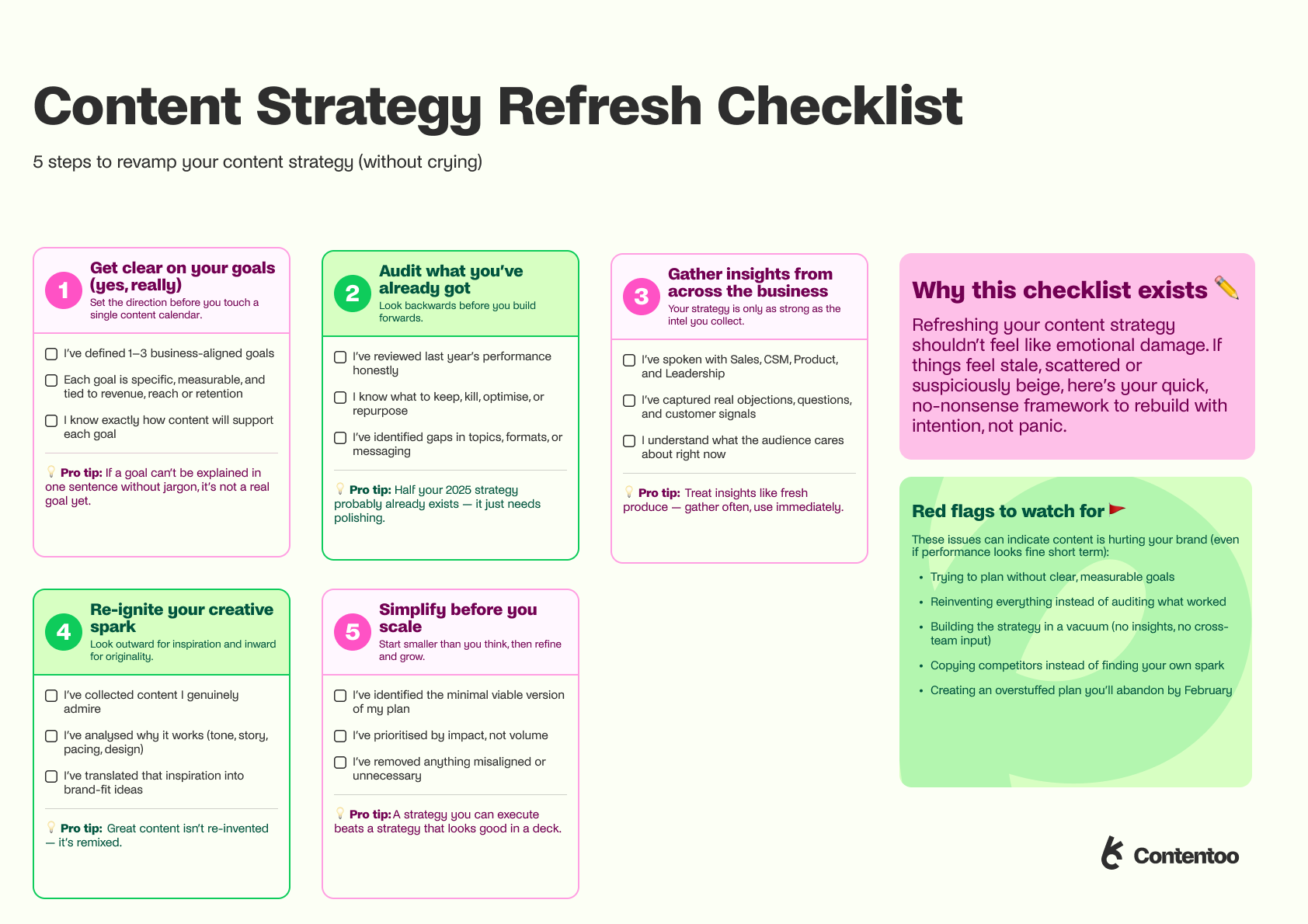
Here's the reset: a return to fundamentals with the stakes raised, not a teardown and rebuild.
Start with what you already know works:
- Titles that describe the content.
- Headings that create a logical flow.
- Evidence that supports claims.
- A point of view that justifies the article's existence.
If your SEO basics are solid, you're most of the way there.
Then raise the bar on specificity. Creating engaging content that people actually want to read requires the same inputs AI-era search rewards: original data, customer stories, subject-matter expertise, and a distinct angle competitors haven't taken.
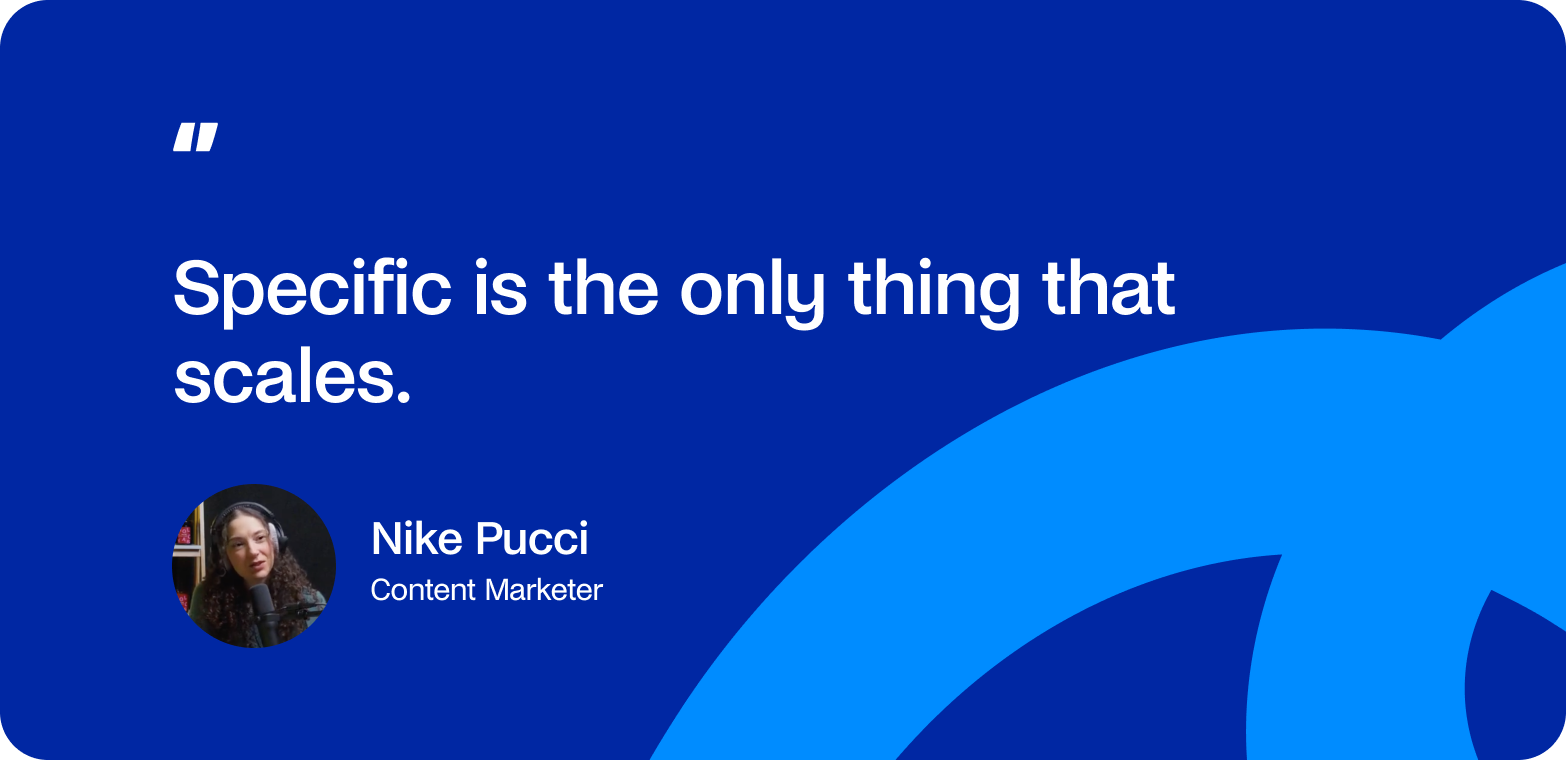
That quote from the podcast inverts the usual volume logic. You don't scale by producing more generic content; you scale by producing specific content that earns links, citations, and AI surface placements because nothing else covers that ground.
Context is the rate-limiting input, and if your briefs are weak, your output will be weak, regardless of whether a human or an AI writes it. A structured workflow with insights from internal experts, comprehensive research, and in some instances, proprietary data, fixes the upstream problem. Get the inputs right, and the downstream quality follows.
For teams focused on organic growth, the practical implication is clear: audit your existing content for commodity risk, strengthen your briefing process, and invest in the human point of view that makes content defensible. AI makes the workflow more important, not less.
The machine that doesn't need feeding
Two years of hype trained marketers to see AI search as a hungry new beast requiring a new diet. Feed it structured data. Feed it LLM-readable formats. Feed it volume.
Google's guidance reads like a gentle correction. The beast is not new: it eats the same food it always ate: clear writing, useful structure, genuine expertise, original insight.
The question worth sitting with is whether your content has a reason to exist beyond the keyword you're targeting. If it does, you're ahead. If it doesn't, no optimisation tactic will save it.
Want to hear it straight from the source? Watch the full episode.
FAQs
Can I still rank in AI Overviews if I use AI to write my content?
Yes, but the bar is higher than "prompt and publish." AI-written content ranks when it's edited, enriched with original insight, and structured for clarity. The risk is producing commodity content, which anyone (including AI) could create, and which earns no visibility advantage. Treat AI as a drafting partner, not a replacement for your point of view.
Does Google actually penalise content written by AI?
Google penalises low-quality, bulk-produced content that violates its spam policies, regardless of how it was created. The guidance doesn't target AI as a tool. It targets content that lacks originality, usefulness, or editorial value. If your AI-assisted content meets the same quality bar as your best human-written pieces, you're not at risk.
What's the difference between AEO and GEO, and does it matter anymore?
AEO (Answer Engine Optimisation) emerged to describe optimising for featured snippets and zero-click answers. GEO (Generative Engine Optimisation) extended this to conversational AI search results. The terms described real changes in how results appear. But Google's guidance confirms the underlying optimisation strategy is unchanged: structure, clarity, and relevance win across all formats. The acronyms describe surface presentation, not a new discipline.
Should I remove my llms.txt file if I already created one?
You don't have to remove it, but it's not helping you. Google confirmed llms.txt receives no special treatment. If creating or maintaining it takes time from more valuable SEO work, deprioritise it. Spend that time improving your content instead.
How do I know if my content is "commodity" or "non-commodity"?
Ask whether your content could be replaced by a ChatGPT prompt. If the answer is yes, it's commodity. Non-commodity content exists because of a specific experience, research, angle, or expertise. The boots-on-the-ground test: could anyone else have written this, or does it require something only you (or your subject-matter experts) bring?
What should I prioritise if I only have time for one improvement?
Fix your briefs. Weak briefs produce weak content regardless of who writes it. A brief that includes a clear angle, defined audience, required evidence, and a reason the piece should exist gives any writer (human or AI) the context needed to produce something worth publishing. Context is the rate-limiting input.



.webp)