Five content commandments for building trust in B2B


Marketers, much like magpies, are easily distracted by the allure of new, shiny objects—be it trendy technologies, new tactics or platforms that promise the world.
We see brands like Duolingo or self-aware SaaS companies on LinkedIn, and are tempted to lean into humour as the "holy grail" we need to chase. However, adopting humour without a clear understanding of your goals, your audience, and your commercial reality means you are simply pursuing the newest fad.
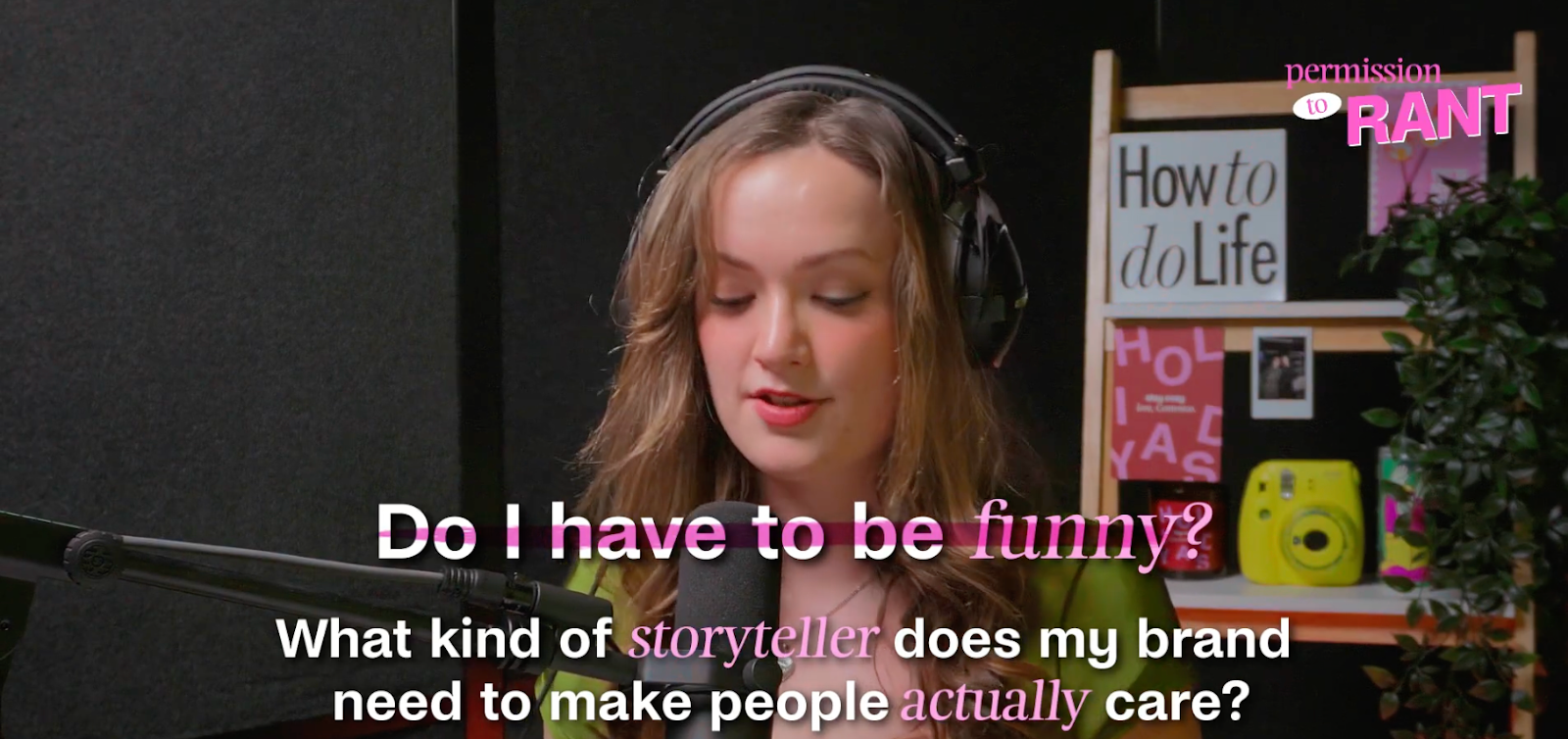
This week, on Permission to Rant, we picked a topic that refuses to die: Is B2B allowed to be funny?

As Nike shared, “The real question is: does your tone make sense for your brand, your goals, and your audience?”
Because the moment you start asking whether your brand is allowed to be funny, you’ve already drifted into the shallow end of the conversation. The better question, the one that’s actually worth asking, is whether you should be funny, what exactly that would mean for your brand, and whether that tone makes sense for your audience, your goals, and your reality.
In the episode, we outlined five content commandments that guide how we approach content marketing, not because they are universal laws handed down from the marketing gods (wouldn’t that be nice), but because they’re the principles the Contentoo marketing team operates by.
Let’s get into it.
Read: How Schouten & Nelissen became thought leaders in education
Content commandment I: Strategy before jokes
Humour is an execution tactic. It is not a strategy.
In the episode, I reflected on our own content strategy here at Contentoo. Although we lean into humour and have a lot of fun, we didn’t set out with a ‘let’s be funny’ content strategy.
The thing is, we know our commercial goals, our team’s OKRs and the wider organisation’s priorities. We know what we are trying to achieve. And from there, we layered in tone, format, humour, creative angles, but never the other way around.
Humour is seasoning. It’s on the plate, but it is not the main course.
At the same time, something being funny doesn’t mean it’s not strategic. Those two truths can coexist. A campaign can be playful and commercially grounded. A skit can still ladder up to the pipeline. A meme can still support positioning.
But if you cannot trace the work back to business impact, whether that’s trust, reach, authority, lead quality, brand differentiation, then it’s just a shiny decoration. It might still be worth doing. It might still be fun. But it’s not a strategic priority.
TLDR: Always start with the goal, then decide whether humour makes sense.
Content commandment II: The baseline is human, not hilarious
Lately, as brands lean into authenticity and try to build audience trust, a lot of us default to humour, but it’s slightly overrated. Not all of us are comedians, and not every brand needs to be witty. And that’s fine.
The baseline isn’t ‘be funny’. The baseline is: be clear, human, and specific.
I can say with confidence that nobody needs more vague corporate language. We don’t need another paragraph that could belong to any competitor in your category. We do, however, need real storytelling, real editorial judgement and actual points of view.
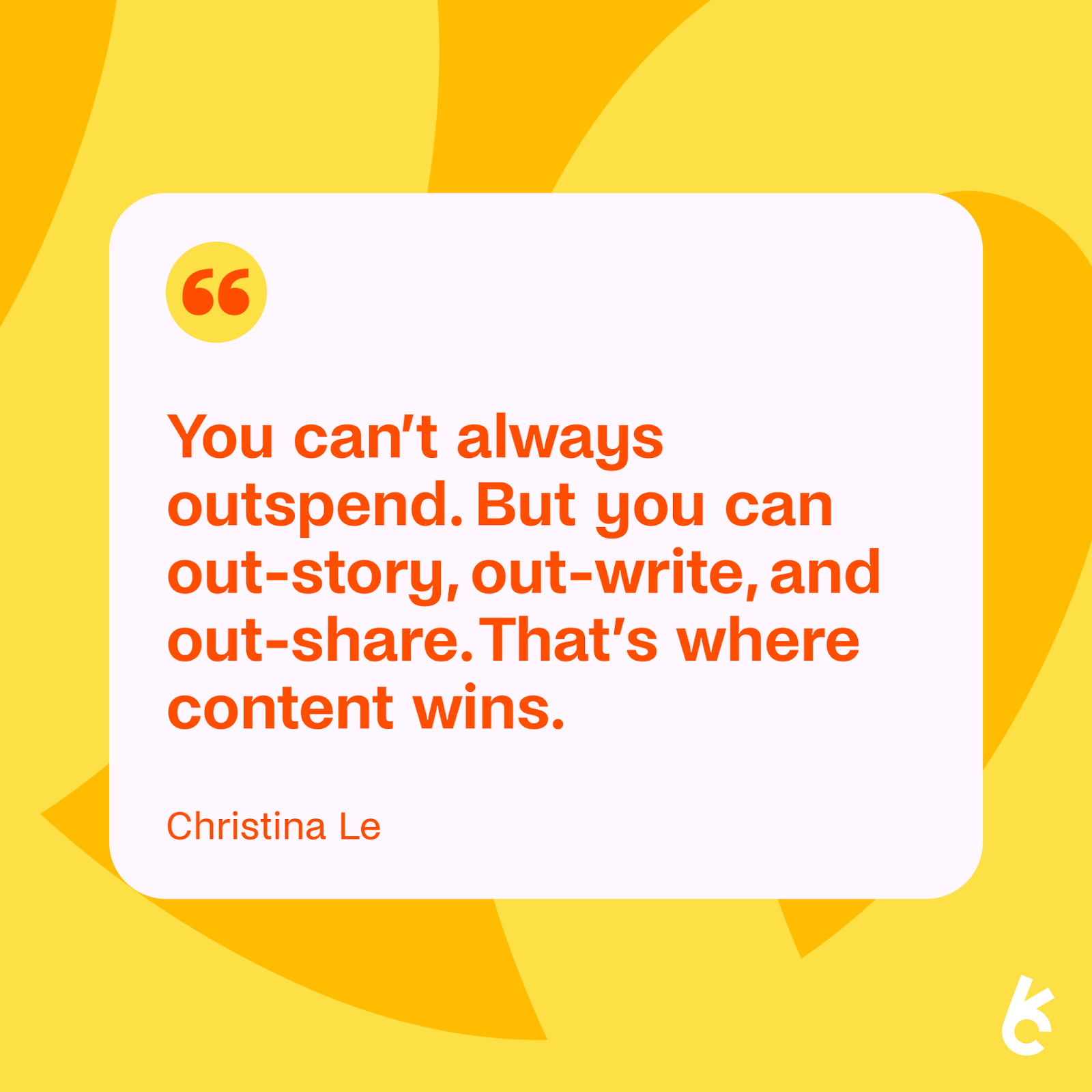
There was a moment in the episode where we referenced a Wall Street Journal article about AI companies hiring storytellers because narrative builds trust. After firing humans and going all-in on automation, they realised they needed the humans back.
Weird. Who could’ve predicted that?
Storytelling builds trust, and we marketers are in the business of trust. The dashboards measure, but trust is the outcome.
TLDR: Basic storytelling beats forced humour every time.
Read: How to create engaging content people actually want to consume in 2026
Content commandment III: The angle is everything
You start with the goal. You define what you need to do in order to achieve it. But then you ask: how can we present this in a way that earns attention?
We cannot buy attention in B2B in the same way consumer brands can. What we can do is earn it. That requires effort and asking, “Why would anyone care?”
When we launched our product video, we could have created a standard explainer. Instead, we combined a skit, our bread and butter, with a product animation that clearly explained our offering. It entertained and informed, it earned attention and delivered clarity. Plus, we had tonnes of fun when making it.
TLDR: If your competitor could publish your content unchanged and no one would notice, you need to rethink.
Quality content: Why it’s in the eye of the stakeholder
Content commandement IV: Guardrails create freedom
Creative thrives with boundaries.
We lean into humour; it’s part of how we show up, but we have guardrails.
For example, one of our strict guidelines with humour is that we never punch down. Another is that we stay consistent, and we understand that context matters.
An invoice email is not a time for a meme. A difficult client conversation is not the place for girlie-pop-chaos. Tone exists on a spectrum, and you have to choose intentionally.
When Contentoon rebranded, we started shifting our tone, and we felt some internal resistance. There were questions.
Why are we writing in lowercase? Why are we posting memes? How does this translate to leads?
Those questions are all fair. But, as the saying goes, Rome was not built in a day. Trust is built through consistency, through tying creative work back to commercial goals. Through beating the drum of strategy internally until people stop asking why and start asking what’s next.
TLDR: Consistency builds creative credibility, which buys you freedom.
Content commandment V: Expectation setting is part of strategy
Content takes time; anyone pretending otherwise is lying.
In our confessional, a marketer wrote in saying leadership wanted pipeline results a week after publishing a piece of content. That pressure is real, exhausting, but common.
86% of content teams told us they were overwhelmed and under-resourced.\

Things are hard enough. So, part of the strategy has to be expectation setting.
Internal marketing is part of what we do. You have to explain what you’re doing, why you’re doing it, and what realistic timelines look like. You have to advocate for your team and manage up.
Brand familiarity and trust both compound. Authority compounds. But only if you give it time.
TLDR: Managing expectations is not an annoying extra task. It is core to making content work.
So, is B2B allowed to be funny?
If you’re still asking whether you should be funny, then go back to the beginning of this article.
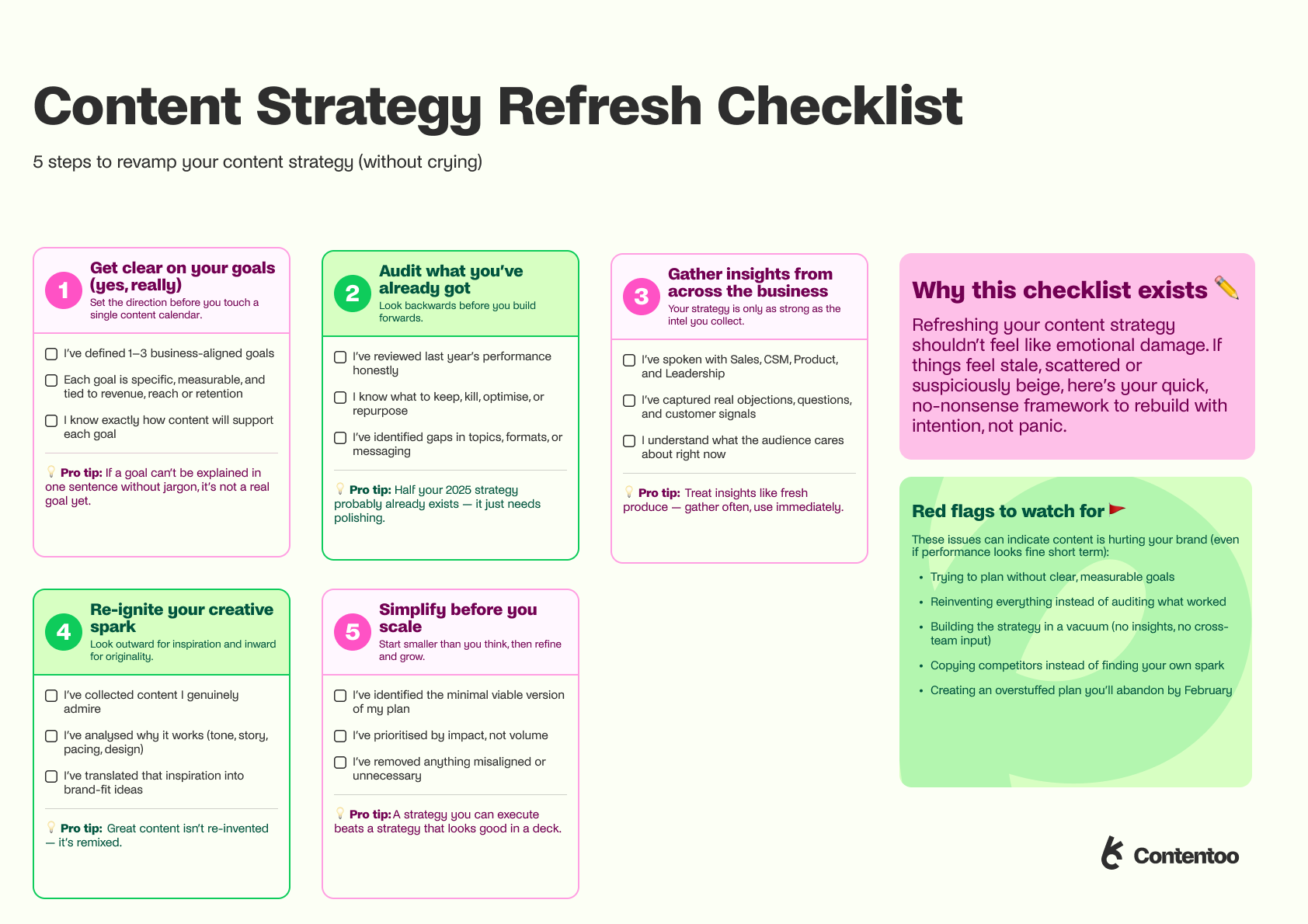
Now that you’re back, take these commandments with you. Download the free content quality checklist here. Thank us later.
Remember: the point is whether your content is earning attention, building trust, and serving a purpose. Whether your tone of voice aligns with your goals, your creativity is grounded in strategy, and whether your work can stand up to commercial scrutiny. That’s how you tell the difference between quality content and just… content.
The five commandments, simply put:
- Strategy before jokes.
- The baseline is human, not hilarious.
- The angle is everything.
- Guardrails create freedom.
- Expectation setting is part of strategy.
If this resonates, we unpack it all in the first episode of Permission to Rant. Watch the full conversation, share it with a fellow marketer and stay tuned, new episodes drop every other week.
And in the meantime, remember: you are more than a Slack notification.





.webp)